
A gift voucher template gives an issuer a layout for a defined redeemable benefit. State the value or service, issuer, redemption route and relevant conditions clearly. The design should communicate an actual offer rather than imply that a printable document creates a funded balance.
Use coupon templates for a discount rather than stored value, compare benefit prices in a price list and record redemptions in a sales log. Label issued, redeemed and cancelled vouchers separately so the same benefit is not counted twice.
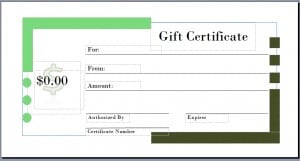
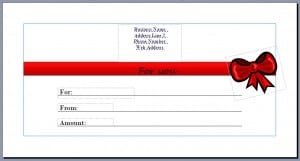
The two original previews below link to RAR archives whose names refer to DOC resources. Inspect the archive contents before assuming a particular editable file or feature. Keep the voucher’s working format distinct from the issuer’s records of issue and redemption.
A company profile can explain an issuer’s services, a general invitation communicates an event, and a cash receipt records a received payment in its stated context. A voucher should clearly describe its own benefit rather than presenting those other documents’ functions as interchangeable.
Free Gift Voucher Template
A free gift voucher template provides a convenient starting point for creating personalized vouchers without designing the document from scratch. You can add your business name, logo, voucher amount, recipient information, validity period, redemption instructions, and special conditions.
Businesses can use an editable gift voucher template for birthdays, anniversaries, holidays, customer rewards, promotional campaigns, special sales, and loyalty programs. A professionally presented voucher can also reinforce your brand and make a discount or gift feel more valuable.
Gift Voucher Template for Business
A business gift voucher can be an effective marketing and sales promotion tool. Restaurants, salons, spas, retail stores, hotels, online shops, service providers, and other businesses can offer vouchers for specific services or fixed monetary values.
For example, a salon could issue a $50 gift voucher for selected services, while a restaurant could offer a voucher redeemable against a future meal. Businesses can also create promotional vouchers to attract new customers or encourage existing customers to return.
The voucher should clearly state its value, eligible products or services, redemption process, expiration date where applicable, and important restrictions.
Printable Gift Voucher Template
A printable gift voucher template is useful when you want to create physical vouchers at home or in an office. After customizing the design, you can print it on suitable paper and present it as a gift or distribute it as part of a business promotion.
A digital version can also be created for email or online delivery. The appropriate format depends on how customers will receive and redeem the voucher.
Gift Voucher vs. Gift Certificate
The terms gift voucher and gift certificate are often used similarly, although businesses may define them differently. Both can represent a monetary value or entitlement to specific goods or services.
A voucher may be designed specifically for a particular promotion, product, service, or discount, while a gift certificate is often presented as a broader stored-value gift. The exact meaning and legal treatment can vary by business and jurisdiction.
These two free gift voucher templates provide a simple foundation for creating personalized vouchers for personal gifts, business promotions, customer incentives, and special events.
Decide what the voucher represents
Distinguish a fixed monetary value, a specified service, and a promotional discount. A voucher for fifty units of currency differs from one for a named appointment or a percentage discount. Write the benefit precisely so that the recipient understands what can be redeemed.
Identify whether the voucher was purchased, issued as a promotion, or given under another real arrangement. Those circumstances can affect its treatment. Do not choose terms solely because another sample uses them, and do not imply that changing the document’s title changes its legal category.
For a personal gift, name the actual giver and promise only what that person intends to provide. Avoid branding it as another business’s voucher without authorization. An attractive design should not suggest that a retailer issued or funded an offer it has never accepted.
Keep terms consistent with applicable requirements
Expiry, fees, refunds, and redemption restrictions need review under the applicable rules. The United States CFPB's gift-card regulation contains requirements and exclusions tied to defined products. A generic expiry field does not give an issuer permission to choose any date or charge.
Use terms suitable to the actual voucher and jurisdiction, with appropriate review where needed. A purchased stored-value product, promotional discount, and personal promise can have different circumstances. This template guide does not establish one universal expiry period for every type of offer.
Make the terms understandable and accessible before the relevant purchase or redemption decision. Tiny text on a decorative border can leave important conditions difficult to read. A separate terms reference should identify the current terms clearly rather than point to an unspecified policy.
Name the issuer and redemption route
Show the authorized issuer’s name and an appropriate contact route. Identify where and how the voucher can be redeemed, such as a named location or booking process. Do not imply acceptance at every branch or online channel when that arrangement does not exist.
If booking is required, explain the process and avoid suggesting guaranteed appointment availability. A voucher can represent a benefit while the actual booking remains subject to the applicable arrangement. The wording should help the recipient understand the next action without inventing a confirmed reservation.
For a digital voucher, distinguish the delivery method from redemption. Sending a PDF by email does not itself create an online checkout integration. The issuer’s actual process determines how staff validate the document and record use.
Use identifiers without relying on decoration
Give issued vouchers distinguishable references when the process needs tracking. The identifier should connect the printed or digital voucher with the issuer’s appropriate record. Two copies of one voucher should not become two independent funded benefits simply because the file was printed twice.
A barcode, serial number, or signature image is only useful when the actual process can interpret or verify it. Adding a random graphic does not create fraud prevention or an automated redemption system. Keep the layout’s claims within the features genuinely implemented.
For sample files and demonstrations, use invented identifiers and clear sample labeling where appropriate. Remove any actual customer or redemption data from a reusable master. The blank layout should not contain an already-issued reference that another user might mistake for a valid voucher.
Fictional example: a fixed-value gift
Imagine an invented business issuing a voucher with a value of fifty units of currency. Its real process allows partial redemption. When an eligible purchase uses thirty, the issuer records that transaction and a remaining balance of twenty under the example’s stated arrangement.
The printed voucher and the balance record are separate parts of the process. Writing fifty on the original layout does not prove that fifty remains after redemption. Staff need the actual issue and redemption information before deciding the current usable benefit.
If the voucher instead represents one specified service, that service needs a clear description. The same fifty-unit arithmetic would not automatically apply. The form should reflect the chosen offer rather than reuse monetary balance fields for an unrelated entitlement.
This example illustrates structure and recordkeeping only. It does not establish refund rights, expiry terms, fees, or tax treatment. A real issuer needs the applicable rules and actual terms before using those fields.
Explain partial use and additional payment
Where partial redemption is permitted, make the process clear and maintain the remaining benefit through the actual record. Do not rely on crossing out a printed amount without a traceable update. The recipient and staff should understand which record establishes the current balance.
Where a purchase exceeds the usable value, explain how any additional payment is handled under the real arrangement. The voucher does not automatically settle the whole transaction merely because it is presented. Keep the payment and redemption records distinguishable.
Questions about unused amounts, refunds, transfer, or replacement need the actual applicable terms and rules. Do not invent restrictions to fill a narrow terms box. A sample can indicate topics to resolve, but it cannot decide the recipient’s rights.
Proofread the benefit and customer details
Check the amount or named service, issuer details, reference, and redemption instructions against the issue record. A misplaced decimal or wrong service name can create confusion even when the design looks professional. Review the content separately from the visual appearance.
Recipient names and personal messages can make a gift more specific, but include them only where appropriate. A name field does not establish whether transfer is allowed or prohibited. The actual terms need to explain that question if it matters to the offer.
Keep examples clearly distinguishable from issued vouchers. A preview used for marketing should not contain a real redeemable identifier unless that is genuinely intended and controlled. Demonstration values should not be mistaken for an active balance.
Check printing and digital readability
Inspect the filled layout at the intended size. The benefit, issuer, reference, and essential instructions need to remain readable after printing or viewing on a phone. Decorative elements should not obscure text or make the identifier difficult to distinguish.
Leave enough space for variable information. A longer service name or recipient name can wrap differently from the sample. Adjust the layout deliberately rather than shrinking important terms until they are too small to read.
If delivering a digital copy, use the appropriate file and distribution process. A printable design does not automatically provide accessible form controls, database validation, or a customer account. Describe the file’s real capabilities rather than treating digital delivery as a complete voucher platform.
Keep issue and redemption records connected
Record the actual issue and relevant value or benefit through the issuer’s process. Link redemptions to the correct reference and preserve adjustments where required. A voucher layout can support communication while the working records show what happened.
If a duplicate or replacement copy is requested, follow the actual validation process. Printing a new copy should not silently create another benefit. Keep the relationship between replacement and original records clear enough for staff to avoid inconsistent treatment.
Review recurring questions from recipients and staff. If the same redemption step is unclear, improve the wording after appropriate review. A useful design reduces ambiguity while the issuer’s actual terms and records remain the basis for decisions.
Download Free Gift Voucher Templates:

Frequently Asked Questions
Does editing the template create a funded voucher?
No. The issuer needs an actual offer and issue process. A document’s printed value does not establish that funds or services have been committed.
Are the two resources direct Word files?
The preserved destinations are RAR archives with DOC-oriented names. Inspect their contents before assuming a particular file format or editing feature.
Can I choose any expiry date?
No. Review the applicable rules and actual voucher type. An expiry field in a sample does not establish permission for a particular term.
Is a discount voucher the same as stored value?
No. A discount and a fixed-value benefit describe different offers and can have different treatment. State which offer the voucher actually represents.
Does a barcode make the voucher secure?
A graphic alone does not provide verification. It needs a real process that can validate the identifier and record use.
How is a remaining balance recorded?
Use the issuer’s actual redemption records where partial use applies. The original printed value alone does not show what remains.
Can I use another business’s logo?
Use branding only through the appropriate authorization. A personal gift should not imply that another business issued or accepted it.
What should I clear from a reusable master?
Remove actual identifiers, customer data, issue details, and redemption information. Retain the approved layout and current applicable terms.

