
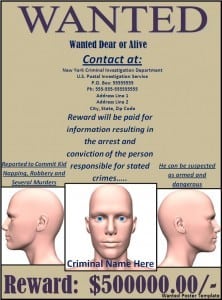
A wanted poster template provides a layout for a fictional prop, themed activity or appropriately authorized notice. Identify the purpose and use accurate, suitable text and images. Keep fictional designs visibly separate from real notices that could mislead readers about a person or event.
Coordinate a themed event with party invitations, set out preparation checks on a checklist and create matching small print pieces with bookmark templates. Keep private planning notes out of publicly displayed materials and label fictional examples clearly.
The original resource below has one image preview and a ZIP destination. Inspect the archive contents before assuming a particular editable format. The earlier claims that the template could find anything quickly or prevent errors were not supported by the resource.
For a themed occasion, the party invitation guide covers event communication. A checklist can organize the final design review, and an action plan can identify preparation steps. A wanted-style prop should remain clearly fictional rather than becoming an unsupported accusation about a real person.
Choose the purpose before the wording
Decide whether the poster is a fictional prop, an educational example, or a real authorized notice. These purposes require different content and handling. The familiar visual style does not make them interchangeable.
For a fictional project, use invented characters and a visible indication of its context. A film prop, game poster, or classroom example can use the design without suggesting an actual criminal allegation. The page should remain understandable when seen outside the immediate activity.
For a real public notice, use the appropriate authority’s or organizer’s actual approved information and process. Do not create allegations or official claims from a generic sample. A template can supply layout ideas while the real issuer determines content and authorization.
Keep fictional identity clear
Use an invented character name and appropriate sample wording. A game clue or playful fictional description can communicate the theme without attaching a real person’s identity to an accusation. The distinction should be visible in the finished design.
For example, a fictional adventure poster could identify “Captain Cedar” and describe a story objective. A label such as fictional game prop explains why the poster exists. It need not include a realistic criminal charge or imitate a specific authority’s document.
If the prop is photographed or shared separately, retain the context label. A small explanatory note hidden outside the crop will not help a reader who sees only the poster. Review the final public-facing version rather than relying on what the original participants know.
Distinguish missing-person and other notice types
A missing-person notice, lost-pet notice, lost-item notice, and fugitive notice have different purposes. The earlier suggestion that they can all use the same wanted wording was too broad. Choose a title and structure that accurately describe the actual situation.
A missing-person case needs the relevant authority or appropriate organization’s guidance and approved information. Do not label a missing person as a criminal merely because a decorative wanted layout is available. The correct communication process matters more than the template’s theme.
For a lost item or pet, use a layout appropriate to that purpose and accurate information through the organizer’s process. This article does not promise recovery. A clear notice can communicate facts while the actual situation determines the appropriate next steps.
Use real official notices through their source
The FBI's wanted-poster distribution FAQ describes controlled distribution of its fugitive material for direct law-enforcement purposes. A privately edited template is not an FBI-issued poster. Use an actual authority’s approved notice through the relevant source where that context applies.
Do not add a copied government seal, invented case number, or unrelated contact route to make a prop appear official. A formal-looking graphic cannot establish an issuer’s authority. A fictional design can have a strong visual identity without borrowing that identity.
This guide does not provide investigative instructions or a legal framework for publishing allegations. It explains design and purpose distinctions. A real notice should follow the actual authorized process rather than an improvised accusation based on a template.
Build a clear visual hierarchy
Make the purpose or headline immediately readable, then give the portrait or illustration and essential description appropriate space. Supporting text should remain legible at the intended viewing size. A decorative texture should not obscure the message.
Choose a limited set of fonts and use size and spacing to distinguish levels of information. A large headline can coexist with readable smaller text. The design should not rely on excessive capitals or dense paragraphs to convey every detail.
Keep the fictional or sample label part of the hierarchy. It should be visible enough to establish context without requiring a magnifier. The exact style can match the project, but the meaning should survive ordinary viewing and cropping.
Select images appropriate to the project
For a fictional character, use an appropriate original or authorized illustration or photograph through the actual project process. The resource’s sample image is a layout reference, not proof of permission to use every portrait in another context.
Check the crop at the final size. A small face or illustration can become unclear when stretched, while an overly tight crop can remove identifying fictional details important to the story. Keep a suitable original copy before making layout changes.
Do not use an unrelated real person’s photograph as the subject of an invented accusation. A fictional project can use invented character art without creating confusion about someone’s real identity. The image choice should reflect the stated purpose.
Fictional example: a classroom adventure poster
Imagine an invented classroom activity in which participants follow story clues about Captain Cedar. The poster identifies the character, includes a fictional illustration, and names the classroom game. Its description gives a story objective rather than alleging a real offense.
The poster uses “Fictional activity prop” as a visible context label. The teacher’s actual activity instructions appear through the normal classroom route, while the poster supplies atmosphere and a short clue. It does not contain a real authority’s seal or tip number.
A second version designed for a noticeboard needs larger supporting text than a version viewed on a tablet. The project reviews each at its intended size. The same content can have a different layout while retaining the fictional purpose.
This example illustrates design choices only. It is not a real wanted notice, a missing-person procedure, or a promise that a poster produces a particular result. Use the actual project requirements and appropriate approval for the intended audience.
Write descriptions for the intended audience
Keep the text focused on what the viewer needs to understand. A fictional clue can be short and specific, while a design-analysis example can explain its sample status. Avoid adding irrelevant personal detail to fill the space.
Use neutral, accurate wording for an authorized real context and follow the approved source. Do not turn a suspicion into a declared fact through a bold heading. The template’s visual emphasis cannot supply evidence the issuer does not have.
For themed designs, humor should fit the participants and occasion. A playful description should not embarrass or target an uninvolved person. An invented character can supply the theme while leaving the actual audience’s personal details out.
Review rewards and response instructions
A reward field in a sample is optional design content rather than evidence of a funded promise. For a fictional prop, label fictional amounts as part of the story or remove the field. Do not suggest that a real organization offers a reward without its actual authorization.
If a real notice has approved response instructions, keep them accurate and connected to the actual issuer. Do not replace an official route with an unrelated personal contact merely to personalize the design. The correct process determines how responses are handled.
A fictional project can omit a contact field or use an explicit story instruction. A fake phone number that resembles someone’s real number can create confusion. Choose wording that communicates the project without inviting unintended contact.
Inspect the archived layout and final output
The ZIP resource’s actual contents determine its editable format. Review the file rather than assuming Word features or an online generator. A preview image shows the design idea without establishing what controls the working document provides.
Check that long names, descriptions, and context labels fit. Use a filled proof at the intended print size and digital dimensions. A page that looks balanced on screen can become unreadable when reduced or printed with clipped margins.
Clear sample data before preparing a new master and remove any actual private information from public examples. Keep approved fictional props distinguishable from drafts. A reusable layout should not carry forward a real contact or allegation from another use.
Make the design’s limits clear
A useful wanted-style template communicates a defined purpose in a recognizable format. Its value can lie in storytelling, education, or appropriately authorized presentation. The layout does not establish a legal claim or guarantee a search result.
Accurate context, appropriate images, readable wording, and a clear issuer help viewers understand what they are seeing. Those choices matter more than making a generic poster look official. Use the design within its actual role and review the final version for that role.
Download Free Wanted Poster Template:
Here is the link

Frequently Asked Questions
Does the template create an official wanted notice?
No. A layout does not establish authority, a warrant, or an allegation. Real notices need the appropriate authorized process.
Can it be used as a fictional prop?
It can support a clearly fictional design using invented characters and visible context. Keep that identity clear in shared or cropped copies.
Is a missing-person notice the same as a wanted poster?
No. They have different purposes. Use the appropriate title, approved information, and process for the actual situation.
Is the resource a direct Word file?
The preserved destination is a ZIP archive. Inspect its contents before assuming a particular editable format.
Must the design include a reward?
No. A sample field does not establish a funded promise. Remove it or keep a fictional reward clearly within the story context.
Should a fictional prop use a government seal?
No. Use a suitable fictional visual identity rather than implying issuance by an uninvolved authority.
What should be checked before printing?
Review the purpose, images, text, context label, readability, margins, and any response instructions for the intended audience.
Does a poster guarantee recovery or identification?
No. The resource does not establish a guaranteed result. It supplies a communication layout for a defined purpose.
