
A birthday invitation template gives guests a clear occasion, date, time, venue and response route. Choose a design suited to the honoree while keeping practical details readable. Confirm the arrangements before printing so decoration does not hide information guests need.
Compare wording in party invitations, review adaptable layouts in printable invitation templates and prepare a shopping list for agreed supplies. Keep public invitation details separate from private planning notes and use a consistent RSVP deadline.
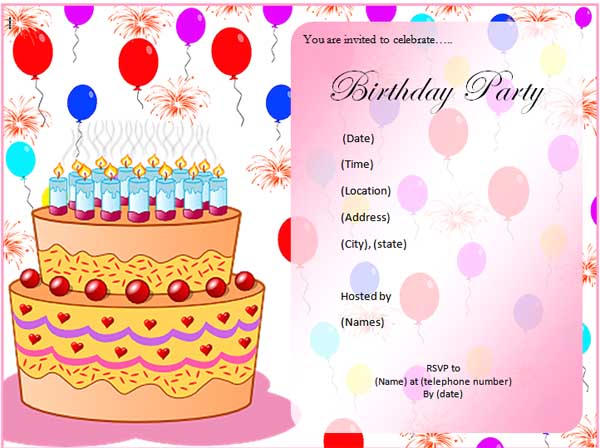
The two previews below link to ZIP archives with DOC-oriented names, and their full-size images are also linked for viewing. Review the actual archive contents before selecting an editor or assuming that every element is editable. The preview image is a visual reference, not the working invitation document.
Use this guide for birthday-specific wording and attendance details. The printable invitation overview covers layout selection and print review across occasions. Keep the invitation connected to a guest list so a sent card and a confirmed attendee are recorded as separate facts.
Confirm the birthday event details first
Write the honoree’s name as it should appear and decide whether an age belongs on the invitation. Including an age is optional; do not assume that every adult birthday card needs it. If the event is a surprise, use the actual plan and response route without distributing details in a way that defeats the surprise.
Confirm the event date rather than copying the honoree’s birthday automatically. A celebration may occur on another day. Check any weekday against the chosen date, include the year where useful, and use a date format the intended guests can interpret.
State the start and, where relevant, end time. A child’s activity at a booked venue may need a clear arrival or collection arrangement, while an adult evening gathering may use a different format. Describe the actual arrangements without inventing a venue policy or assuming how every guest will travel.
Write a concise opening and a clear details area
The opening can name the celebration and invite the recipient. It does not need a long account of why birthdays matter. Put the practical details in a recognizable area so a guest can find the date and location quickly when checking the card later.
A simple structure includes the occasion or honoree, a short invitation line, date and time, venue information, and reply instructions. Add details that affect attendance, such as an actual theme or confirmed activity, where needed. Avoid including every planning note in the invitation simply because the template has several decorative text boxes.
Keep the tone suited to the honoree and audience. A playful invitation can still be clear, and a formal one can still sound natural. Do not copy a sample promise about entertainment, food, or party favors unless those arrangements are actually part of the event.
Fictional sample: a family birthday gathering
The following wording uses invented names and no real event details. “Please join us to celebrate Rowan’s birthday with an afternoon gathering. The date, time, and venue are listed below. Please reply to the host through the stated contact route by the reply date and tell us how many invited guests will attend.”
This example keeps the purpose and response request clear. For a real card, replace the fictional name and all field labels with confirmed details. A sentence saying “listed below” should not remain if the final design omits the details area or places the information elsewhere.
If the invitation is addressed to a family group, specify the actual invitation scope and ask for the relevant attendee count. Do not assume that one reply means one person or that every recipient may bring additional guests. The host’s guest list can keep the group and people counts distinguishable.
Fictional sample: a child’s activity party
A suitable structure might say, “You are invited to celebrate Rowan’s birthday with an activity party. Please review the event time, venue, and host’s response details below. The host will confirm the arrival and collection arrangements through the stated contact route.”
This is a wording framework, not a venue’s operating instructions. A real invitation needs the actual confirmed arrangements and any relevant information supplied through the host and provider’s process. Do not assume that adults are expected to stay or leave simply because another sample describes a different party.
Make the parent or guardian communication route clear when it is relevant. Ask for the information needed for planning through the appropriate direct route, and avoid putting private child details or personal arrangements on a broadly shared card. The invitation should explain how to contact the host without becoming a public personal-information sheet.
Fictional sample: an adult evening celebration
A concise example is, “Please join us for an evening celebration of Rowan’s birthday. We would be delighted to see the invited guests at the time and venue listed below. Please send your response to the host by the reply date so we can confirm the seating arrangements.”
For a real event, say accurately whether it is a meal, drinks gathering, activity, or another form of celebration. A guest may make different plans depending on what is offered. Do not use a sample phrase such as “dinner provided” merely because it sounds welcoming.
If a dress or theme instruction is genuinely needed, state it briefly and clearly. The design’s color scheme does not itself communicate a required dress code. Distinguish an optional theme suggestion from a requirement so guests do not have to guess.
Make the reply instructions practical
State who receives replies, the appropriate route, and the actual reply date. Ask for a confirmed attendee count where the invitation covers more than one person. If the host needs a particular planning detail, explain the request rather than relying on an unexplained “RSVP” abbreviation.
Track replies in the maintained list. Accepted, declined, awaiting response, and tentative are different statuses. Do not count all invited people as confirmed or interpret silence as agreement. If an important response remains unresolved near the planning cutoff, use the host’s actual follow-up process.
Keep the reply route accurate and readable. A wrong telephone number or a copied email address can make an otherwise attractive invitation difficult to use. No real contact details are supplied in the fictional examples here; your own card needs the actual host’s approved route.
Include useful location and timing information
Give enough venue information for the intended guests to identify the place. If the venue has a particular entrance or meeting point relevant to the actual event, include or provide that confirmed instruction. A decorative venue name without a usable location may leave guests uncertain.
Distinguish the gathering time from a later activity where that matters. If the host wants guests to arrive before an activity begins, explain the real timing. Avoid giving different times on the invitation and follow-up message without identifying which information is current.
A daily schedule can help the host plan preparation and event activities, but the guest-facing invitation should contain the information guests need. Internal setup tasks, supplier calls, and cleanup duties do not automatically belong on the card.
Review the design with the actual wording
Check that long names, addresses, and response instructions fit without making important text too small. A short sample name in a preview may fit beautifully while the actual wording wraps awkwardly. Review the adopted file and the printed or exported copy.
Print one representative sample before producing many where paper cards are used. Inspect cropping, contrast, line breaks, and any fold or cut arrangement. This review concerns your completed design; it does not establish that the historical ZIP resources have a particular print-ready feature.
Keep digital copies readable at the size recipients will likely view them. An invitation image that requires close zooming to find the reply deadline may need a simpler details area. Use a clear accompanying message where appropriate, with the same confirmed event information.
Handle changes and reuse carefully
If the date, location, or timing changes after distribution, communicate the correction explicitly and update the maintained invitation source. Identify the event and the changed detail rather than assuming guests will notice an updated image. Update the guest-planning record where the change affects replies or arrangements.
Keep the blank master separate from the completed birthday invitation. Remove actual names, ages, dates, venue details, and contact routes before using the structure again. A previous child’s party arrangement should not accidentally remain on an adult birthday card.
A template can save layout work and make the information easier to read, but it cannot guarantee replies or the quality of the celebration. Use it to communicate the actual event accurately, keep the response process clear, and give guests the details they need to decide and attend.
Download Birthday Invitation Template:


Frequently Asked Questions
What formats are linked for these two invitations?
The resource destinations are ZIP archives with DOC-oriented names. Review their actual contents; the linked preview images are visual references rather than editable invitation files.
Must the honoree’s age appear?
No. Include it only if it suits the actual invitation. An adult birthday card can simply name the honoree and occasion.
Should I use the birthday date automatically?
Use the confirmed celebration date. The party may occur on a different day, and any weekday should match that actual event date.
What should a child’s party invitation clarify?
State the actual time, venue, host’s response route, and relevant confirmed arrival or collection arrangements. Do not assume a universal venue policy from a sample.
How should a family reply be counted?
Keep the invitation group separate from the number of confirmed attendees. Ask for the actual count under the invitation’s stated scope.
Is a theme color the same as a dress instruction?
No. If a real dress or theme requirement affects guests, explain it directly and distinguish a requirement from an optional suggestion.
What should I check before printing many copies?
Review the final names, date, times, venue, reply route, deadline, readability, cropping, and line breaks in a representative output.
What if details change after invitations are sent?
Send an explicit correction through the appropriate route and update the current invitation and planning record. A quiet image change may not reach earlier recipients.
