
A funeral program template shares the confirmed order of a funeral, memorial or celebration of life. Include service details and remembrance wording approved by the family, with readable spacing and carefully checked names. The design should reflect the actual ceremony and its participants.
Coordinate attendance with a guest list, review longer documents using a table of contents when useful and adapt invitation wording for a separate gathering. Confirm practical details with the family before circulating any event materials.
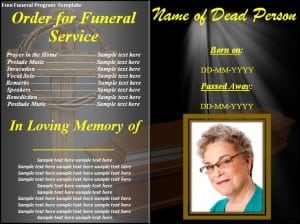
The original resource below has one image preview and a ZIP destination. Inspect the archive contents before assuming a particular editable format or folded layout. The actual file determines the page structure available for personalization.
A checklist can support a final proofread, a daily schedule can organize the preparer’s work, and a contact information form can record the designated coordination contact. Those tools can help behind the scenes while the program itself remains focused on the service and remembrance.
What Is a Funeral Program?
A funeral program is a printed document distributed to family members, friends, and other attendees during a funeral or memorial service. It provides essential information about the service while preserving memories of the deceased. A funeral service program may also serve as a keepsake that attendees can take home.
A typical funeral program template can be customized with the person’s full name, photograph, date of birth, date of passing, funeral location, service time, obituary, and other personal information. The order of service can include opening remarks, prayers, hymns, readings, eulogies, musical selections, tributes, and closing remarks.
Free Funeral Program Template
A free funeral program template can make the preparation process easier when you need to create a memorial program quickly. Instead of designing the layout from a blank document, you can replace the sample information with personal details and arrange the content according to the funeral service.
A printable funeral program template can be printed at home or through a professional printing service. Choosing high-quality paper and a clear, respectful design can create a lasting memorial keepsake for family and friends.
Funeral Program for a Memorial Service
A memorial service program can be adapted for a formal funeral, celebration of life, memorial ceremony, or another remembrance gathering. The wording and structure can be adjusted according to the family’s preferences, religious traditions, cultural practices, and type of service.
Including a meaningful photograph, short biography, favorite poem, quotation, scripture, or personal tribute can make the program more personal. The most important goal is to create a document that respectfully reflects the life and personality of the person being remembered.
How to Create a Funeral Program
Begin by collecting the essential information about the deceased and the service. Verify names, dates, locations, and other details carefully before printing. Next, decide which sections should appear in the program, such as the obituary, order of service, readings, acknowledgments, and personal memories.
An editable funeral program template makes it easier to adjust headings, photographs, text, and formatting as needed. Keep the design readable and avoid overcrowding the pages with too much information.
A funeral program is more than an event schedule. It can become a meaningful funeral keepsake that helps family members and friends remember a loved one’s life, achievements, personality, and the moments they shared together.
Confirm the service structure with the relevant people
Ask the family or designated coordinator which elements are agreed for the service. The order may depend on the venue, celebrant, religious or cultural practice, and the people participating. A template’s example sequence should not be treated as the confirmed order.
Identify who supplies and approves each part of the content. One person may confirm practical details while another reviews the remembrance wording. Clear responsibility can reduce repeated questions and avoid several conflicting versions circulating at once.
Keep arrangements awaiting confirmation distinguishable from approved information. An unconfirmed speaker or location should not appear as a final commitment merely because the page needs filling. Resolve the detail through the actual coordinator before distributing the program.
Separate practical information from remembrance
The attendee needs to understand where the service takes place, when it begins, and the relevant order. A short biography, tribute, or acknowledgment serves another purpose. Give each section clear space rather than combining essential directions with a dense paragraph of personal history.
Choose personal information with the family’s preferences in mind. A program does not need to disclose every detail of the person’s life or death. The intended audience and the family’s agreed wording should guide what is included.
Use a separate invitation or practical message where guests need arrangements before the event. The program distributed at the service cannot replace communication about attendance or an earlier change of venue. Keep those functions distinguishable.
Write the order of service clearly
List the agreed elements in their intended sequence and identify participants where appropriate. A heading can name a reading, music item, tribute, or closing element without prescribing one universal ceremony. Use the actual titles and roles confirmed for the service.
If the sequence may change, work with the coordinator to decide what should be printed. Avoid minute-by-minute timings unless they are genuinely useful and agreed. A program can guide attendees without promising that every element will begin at an exact minute.
For a service with audience participation, include only the wording or instructions needed and appropriately supplied. Do not copy a long text from an unrelated sample because it fills space. The selected content should match the actual occasion and intended use.
Fictional example of a simple memorial program
Imagine an invented memorial gathering for Morgan Lee. The family agrees on a welcome, a short remembrance, two named personal tributes, a music item, and closing words. The program presents that sequence without adding prayers or other elements the family has not chosen.
A separate section contains a brief remembrance approved by the family. It identifies a few meaningful aspects of Morgan’s life without claiming to be a complete biography. The practical information and remembrance are distinguishable so that attendees can follow the service easily.
One tribute participant changes before printing. The coordinator updates the approved content and identifies the final version. The earlier draft is not distributed simply because it was the first file prepared.
This example illustrates arrangement and version control only. It does not recommend a particular ceremony. A real program should reflect the actual family’s choices, relevant traditions, and confirmed service details.
Prepare a short remembrance thoughtfully
Choose a few accurate, meaningful details rather than trying to summarize an entire life in a small space. A readable remembrance can acknowledge relationships, interests, work, or contributions according to the family’s preference. There is no required length that suits every program.
Check names and personal details with the appropriate reviewer. Avoid presenting an assumption as a biographical fact. If a detail is uncertain or the family prefers not to include it, leaving it out can be more respectful than filling a sample paragraph mechanically.
Keep the tone consistent with the person and occasion. A celebration of life may use a different style from a formal religious service. The template supplies space, while the actual people involved choose the words that fit.
Select photographs and other content deliberately
Use an image approved for the intended program and check whether it remains clear at the final size. A meaningful photograph can become difficult to recognize when cropped too tightly or placed behind text. Preserve a useful copy before making layout changes.
Confirm the source and appropriate permission for poems, lyrics, readings, artwork, and photographs used in the program. A sample’s inclusion of a text does not establish that it can be copied for every use. Choose content through the appropriate source and review process.
If a passage is identified by title or reader rather than reproduced, ensure the information matches the actual service. A listed reading and a printed passage should not refer to different versions without explanation.
Keep acknowledgments accurate and optional
Include thanks where the family wants them and confirm names and roles. A brief acknowledgment can recognize actual support without attempting to list every person involved. Avoid adding an organization or individual merely because the sample contains a corresponding line.
If the program mentions donations or another practical request, use the actual approved information. Do not imply that a recipient is collecting funds or that a contribution has a particular tax status without the appropriate confirmation.
The program does not need every optional section. Leaving room around a short remembrance can improve readability. A clear page that reflects the family’s choices can be more useful than a crowded layout filled with generic material.
Check the page order and intended format
Inspect the file to determine whether it is a single sheet, multiple pages, or a folded design. The preview alone does not establish the final print arrangement. A folded layout can place pages differently from their apparent order on screen.
Use a filled sample to review the reading order before printing a batch. Confirm the front, inner pages, and back where the design uses them. An attractive screen view can still produce an incorrectly ordered physical program.
Check that margins and folds do not clip names or essential text. The final size should provide comfortable reading space. Adjust content length or layout rather than shrinking every paragraph to fit an unsuitable amount of material.
Manage proofs and last changes
Give the designated reviewer one clearly identified proof. Ask them to check names, dates, location, service sequence, and the family’s personal wording. A proof should contain the real intended content rather than placeholders that make the review incomplete.
Keep corrections connected to the current version. If two people edit independently, combine the agreed changes into one final copy rather than printing competing drafts. Mark the approved version through the actual preparation process.
For a late change, identify whether it affects essential service information or an optional detail. The coordinator can decide the appropriate response. Avoid silently distributing an older program when a material arrangement has changed.
Prepare copies and an appropriate digital version
Choose the number of copies through the actual service arrangements rather than a universal template allowance. A digital copy may be useful for some recipients, but share it through the agreed route and review the information it contains.
Keep the attendee version distinguishable from working drafts with internal notes or private contact details. Preparation comments should not appear unintentionally in the distributed file. Check the final document’s visible content before sharing.
Store the approved program and relevant master through the family’s or organizer’s chosen process. A reusable blank version should not retain another person’s private details. The final memorial copy and the blank template serve different purposes.
Make the program serve the occasion
The strongest program helps attendees follow the agreed service and preserves a remembrance the family wants to share. Clear structure, accurate practical details, and readable personal content support that purpose without requiring a particular ceremonial style.
A template can reduce layout work at a difficult time, but it cannot choose the service or speak for the family. Keep the real coordinator’s decisions and the family’s preferences at the center of the preparation process.
Download Funeral Program Template:

Frequently Asked Questions
Must every funeral program include prayers?
No. Use the actual service structure and the family’s preferences, including the relevant religious or cultural context where applicable.
Is the download a direct Word document?
The preserved destination is a ZIP archive. Inspect its contents before assuming a particular editable format or page arrangement.
Should the program contain a full biography?
Not necessarily. A short approved remembrance can suit the available space. Select content according to the family’s wishes.
Who should approve the final copy?
Use the actual designated family reviewer or service coordinator. Different people may confirm practical details and personal wording.
Can I copy poems or lyrics from a sample?
Confirm the appropriate source and permission for the intended use. A sample’s contents do not automatically authorize every reproduction.
Do I need exact timings beside every element?
Include them only when useful and agreed. A sequence of service elements can guide attendees without promising exact start times.
What should I check in a folded program?
Confirm the final page order, front and back, margins, folds, and readability using a filled proof before producing copies.
Can I reuse the blank layout later?
Yes, if appropriate. Clear actual names, images, service details, and private notes so that the reusable master is distinguishable from the memorial copy.

