
A cash receipt template provides a layout for acknowledging an amount actually received in cash. It identifies the recipient, payer where appropriate, payment date, amount, and purpose. A receipt records the stated payment rather than automatically establishing delivery, satisfaction of every obligation, or entitlement to a refund.
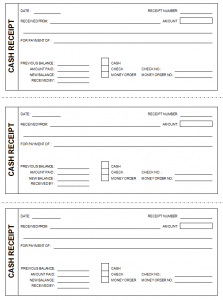
The original resource below has one image preview and a ZIP destination with a DOC-oriented name. Inspect the archive contents before assuming a particular editable document or automatic features. The preview gives a layout reference, while the actual file determines what can be changed.
An invoice requests payment in its stated context, a payment history records payments across time, and a check register follows account activity. A cash receipt can connect with those records while acknowledging a particular received payment.
Define what the receipt acknowledges
State the amount received and why it was received. A payment for a completed sale differs from a deposit, partial payment, or other specified purpose. The wording should describe the actual event rather than imply that the whole transaction is settled when only one amount was paid.
Identify the transaction reference where one exists. An invoice, booking, order, or agreement reference helps connect the payment to the correct obligation. Similar names or equal amounts can otherwise make it difficult to identify which transaction the receipt concerns.
Do not issue a completed receipt for a payment that has not occurred. A blank sample or draft can be prepared in advance, but it should remain clearly distinguishable from an acknowledgment of actual received cash. Plausible details do not make an unpaid transaction paid.
Identify the receiving party accurately
Show the person or business acknowledging receipt and an appropriate contact or reference. If someone receives cash on behalf of an organization, the record should accurately reflect the applicable authority and process. A logo alone does not establish that authority.
Include the payer’s information when needed to identify the transaction. Avoid adding unnecessary sensitive information to a routine receipt. The relevant detail depends on the purpose, recipient, and applicable requirements rather than the number of empty fields in a sample.
Use a distinguishable receipt reference according to the actual process. A unique number can connect copies and later correspondence. Reusing one live reference for different payments can make reconciliation confusing even if each amount appears correct.
Record the date, amount, and currency
Write the actual payment date and the received amount clearly. Identify the currency where ambiguity is possible. A number by itself can mean different things to people handling transactions across currencies or locations.
Where the layout uses both words and figures for the amount, check that they agree. Inconsistent expressions create uncertainty about what is acknowledged. Do not rely on the decorative prominence of one amount to resolve a conflicting entry elsewhere.
Keep tendered cash, change returned, and the amount applied to the transaction distinguishable where those fields are relevant. The sum handed over can exceed the purchase price, while the receipt’s applied amount reflects the transaction after change is returned.
Fictional example: a purchase with change
Imagine an invented purchase priced at forty-two units of currency. The customer hands over fifty and receives eight in change. The receipt acknowledges forty-two applied to that purchase, with tendered cash and change shown separately if the process records them.
If the layout instead labels fifty as the purchase payment without showing the change, it can misrepresent the event. Clear fields help readers understand that the retained payment and the cash initially presented are different amounts.
The example’s currency amounts illustrate arithmetic only. They are not pricing or tax guidance. A real receipt needs the actual transaction details, applicable charges, and the organization or person’s correct acknowledgment process.
Record partial payments without claiming full settlement
A partial-payment receipt should identify the amount received and the obligation it relates to. State the remaining balance only when it is known and supported by the relevant records. Receiving one payment does not automatically establish the total amount due.
In a fictional example, a three-hundred-unit obligation receives a one-hundred-unit cash payment. Under those simplified assumptions, two hundred remains. The receipt should not say paid in full merely because the one hundred was received without difficulty.
Keep the payment history or other relevant record updated through the actual process. The receipt documents the particular payment, while the wider record shows the sequence of payments and adjustments. Consistent references help prevent the same payment from being counted twice.
Distinguish payment from goods or service completion
A receipt can identify the payment’s purpose without proving that goods were delivered or a service was completed. Use the appropriate delivery or completion record for those events. The wording should not merge several facts that have not all occurred.
A deposit may be received before the relevant work begins. State that purpose accurately and connect it to the actual terms. A generic receipt template does not decide whether the deposit is refundable, what cancellation rights apply, or when the remaining payment becomes due.
Similarly, receiving payment does not settle every potential question about product quality or contractual performance. The receipt provides evidence of its stated event. Broader conclusions depend on the actual arrangement and applicable rules.
Keep refunds and corrections traceable
If a refund later occurs, record it through the appropriate process and connect it to the original payment. Do not silently erase the earlier receipt as though cash was never received. The records should explain both events when that history matters.
For a mistaken amount or reference, follow the relevant correction process and identify the corrected record. Keep replacement copies distinguishable from new separate payments. An unexplained second receipt can create a false impression that additional money was received.
Do not change a completed receipt to match a desired balance without checking the actual transaction. The receipt’s factual content should follow what happened, while discrepancies are reviewed through the appropriate recordkeeping process.
Choose wording suited to the actual requirements
A general cash receipt and a jurisdiction-specific tax invoice are not automatically equivalent. The applicable requirements can depend on the business, transaction, and purpose. A template’s title or logo does not establish that all required tax information is present.
Australian business.gov.au recordkeeping guidance lists income, sales, expense, and bank records among relevant business records. That source illustrates why a receipt belongs within a wider recordkeeping process. Your actual obligations depend on the applicable jurisdiction and circumstances.
This guide does not set a universal retention period, mandatory tax statement, or refund rule. Review the relevant requirements before adopting standard wording. Unsupported legal claims should not be inserted merely to make a small receipt appear authoritative.
Keep copies and account records consistent
Give the payer the appropriate acknowledgment and retain the relevant copy through the actual process. Both copies should describe the same payment rather than contain conflicting amounts or references. Identify duplicate copies as copies when confusion is possible.
Connect the received cash to the appropriate accounting or cash-handling record. A receipt total and an account entry serve different roles, but their relationship should be traceable. Do not count the retained receipt and its related accounting entry as two separate receipts of money.
Review discrepancies such as a missing reference, duplicated number, or amount that does not match the relevant record. A tidy receipt book can still contain errors. Clear identifiers and accurate entries make questions easier to resolve.
Inspect the original layout before adopting it
Open and review the actual archived resource through your normal process. Check the space for payment details, references, currency, and any required wording. The preview alone does not establish interactive fields, formulas, or an integrated accounting system.
If using a Word layout, do not assume that typed numbers are automatically checked. Review calculations separately and inspect the final readable copy. Changes in names or descriptions can alter spacing even when the sample looked neatly aligned.
Remove sample names, values, dates, signatures, and references from the reusable master. Keep completed receipts separate from blank copies. An example should use invented details and should not be mistaken for acknowledgment of a real payment.
Review before issuing the receipt
Check who received the cash, when, how much, in which currency, and for what purpose. Confirm the reference and any remaining-balance statement against the relevant record. Leave unsupported conclusions out rather than filling every line with a guess.
Ensure that the layout describes cash where cash was the actual method. If another payment method applies, use wording appropriate to that event and its status. A received cash acknowledgment should not be used to describe an unconfirmed transfer as settled money.
A practical cash receipt records a clear, limited fact and connects it to the wider transaction. It cannot guarantee a legal outcome, refund entitlement, or accounting accuracy by itself. Its value comes from accurate details, traceable copies, and honest wording about the amount actually received.
Download Free Cash Receipt Template:

Frequently Asked Questions
Is a receipt the same as an invoice?
No. An invoice requests payment in its stated context, while a receipt acknowledges a payment actually received.
Does a cash receipt always mean paid in full?
No. It may record a partial payment or deposit. State full settlement only when that conclusion is supported by the actual transaction.
What if the customer pays more cash than the purchase price?
Distinguish tendered cash, change returned, and the amount applied to the transaction. Check that the arithmetic matches what happened.
Is the download a direct Word file?
The preserved destination is a ZIP archive with a DOC-oriented name. Inspect its actual contents before assuming a specific usable file.
Does the receipt prove delivery?
Not by itself. Delivery or service completion needs the appropriate record when it is a separate event.
Can the receipt establish refund rights?
A general receipt does not decide the applicable terms or legal rights. Describe the payment accurately and use the actual requirements for refund questions.
How should a corrected copy be identified?
Follow the relevant correction process and make its relationship to the original clear. A replacement should not appear to acknowledge a second payment.
What should I remove from a blank master?
Clear actual payer details, dates, amounts, signatures, and references while retaining the appropriate field labels and current wording.
