
A rental agreement template helps organize the property, parties, dates, payment terms and responsibilities of a rental arrangement. Identify the actual relationship and review the wording for the location and use. A general sample is a starting structure rather than confirmation that every required term has been satisfied.
Track payments with a payment history template, record repair reports on a maintenance request form and organize shared contact routes in a contact list. Supporting administrative records should reference the agreement without silently changing its terms.
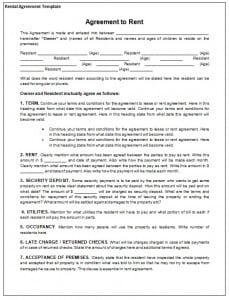
The original resource below has one image preview and a ZIP destination with a DOC-oriented name. Inspect its contents, clauses, and jurisdiction references before assuming a particular editable format or a complete residential tenancy agreement.
The two-party agreement guide discusses general document structure, a cash receipt acknowledges an actual received payment, and a maintenance request records a reported issue. A rental arrangement needs appropriate terms while payment and repair records describe later events.
Define what is being rented
Identify the actual premises or asset and the purpose of the rental. A residential home, commercial space, vehicle, and piece of equipment have different requirements. Do not assume one general property sample is suitable for all of those contexts.
For premises, use a description that identifies the relevant space and agreed access accurately. A room rental, whole-property rental, and shared arrangement need different boundaries. The document should not imply exclusive use of an area that is actually shared.
For equipment or another asset, identify the item and appropriate references. That context may require terms different from residential occupancy. Choose a suitable process rather than replacing the house address with an equipment name and leaving every other clause unchanged.
Review the applicable local requirements
Rental and tenancy rules depend on jurisdiction, arrangement, and circumstances. The previous blanket description of every rental agreement as an automatically renewing monthly arrangement was inaccurate. The actual legal category and permitted terms need review.
For England, GOV.UK's written-information guidance reflects tenancy requirements applying from May 2026. This illustrates why an older general sample should be checked against current local requirements. The guidance should not be applied as though it governs rentals in every country.
Use the relevant authority’s current information and appropriate qualified assistance for the actual arrangement. A template cannot determine whether a term is lawful, whether a particular notice is valid, or whether a required disclosure has been supplied.
Identify parties and their real roles
Record the actual landlord or other renting party and tenant or renter, using the correct names and relevant roles. A property manager, owner, and authorized agent may have different functions. Make the relationship clear where it matters.
Identify the appropriate contact for notices, payments, and reported problems according to the real arrangement. A general contact name does not automatically establish authority to amend the agreement. The document needs the actual process rather than implied powers.
Check the subject and party details before finalizing the record. An old property address or previous tenant’s name can remain in a copied layout. Clear data fields do not prevent errors when several similar documents are being prepared.
Make the payment structure understandable
State the actual rent amount, currency, frequency, due arrangements, and appropriate payment route. Distinguish rent from a deposit, other charge, or separately arranged expense. A single total can hide different payment purposes.
Identify what the rent includes and what is addressed separately, subject to applicable rules. Do not treat a blank utilities field as proof that every utility is included or excluded. The final wording should describe the actual arrangement accurately.
The agreement records payment terms, while receipts or other records show actual payment. A rent schedule is not payment history. Keep the amount due and amount received distinguishable when managing the ongoing record.
Handle deposits through the correct process
A deposit is not automatically the same as rent or an unrestricted fund for any expense. Its treatment, permitted amount, protection requirements, deductions, and return process depend on the actual jurisdiction and arrangement.
Do not copy a deposit clause simply because it appears standard in a sample. Review the applicable requirements and actual purpose. The template cannot establish that a particular deduction or retention is permitted.
Keep the actual deposit record connected to the agreement and appropriate process. Signing a page does not prove that the deposit was received, protected, or returned. Those events need their own accurate evidence where required.
Fictional example: separating rent and received payment
Imagine an invented rental record with a stated monthly rent of seven hundred units of currency. For one period, the renter has paid five hundred. Under the example’s deliberately simplified assumptions, two hundred of that rent remains unpaid.
The record identifies the relevant period and payment event. It does not add an invented late charge or describe the whole seven hundred as received. The example supplies arithmetic rather than a rule about enforcement, fees, or the appropriate response to arrears.
A separately recorded deposit is not silently applied to the unpaid rent merely to make the balance zero. Its treatment needs the actual agreement and applicable requirements. The rent history and deposit process remain distinguishable.
These figures are illustrative only. They are not a recommended rent, deposit arrangement, or legal form. A real rental needs its actual terms, records, and relevant rules, including appropriate assistance for a disputed payment.
Record responsibilities without overriding requirements
Describe relevant responsibilities accurately, including reporting issues and any agreed practical arrangements. The appropriate allocation of repair or maintenance duties depends on the subject, jurisdiction, and actual legal requirements.
A general clause should not be treated as permission to transfer every obligation to another party. A term can need review even when both people are willing to sign. The actual requirements matter more than the apparent formality of the wording.
Keep a condition or inventory record distinct where the process uses one. It can document observations at an identified time without proving the cause of every later issue. A rental agreement and a condition record answer different questions.
Clarify access and use through appropriate review
Use terms suited to the real arrangement and applicable rights. A generic access paragraph does not authorize entry at any time or establish one notice period everywhere. Review the relevant requirements rather than copying unsupported universal rules.
If areas are shared, describe the agreed practical use clearly. A household arrangement can otherwise leave people relying on different assumptions. The document should identify the actual scope without imposing conditions unsupported by the applicable framework.
For an equipment rental, permitted use and return arrangements may involve different considerations. A residential occupancy clause is not an equipment-operating instruction. The appropriate agreement needs the subject’s actual requirements and relevant competence.
Treat duration, changes, and ending terms carefully
Identify the actual start and relevant period or tenancy structure under applicable law. A sample’s date fields do not establish that a particular fixed term or automatic renewal is permitted or required. The current local framework needs review.
The earlier claim that both parties are free to change terms during a rental period was too broad. Changes need the actual agreement and lawful process. An updated file or informal message should not be assumed to replace every relevant obligation.
Ending an arrangement, giving notice, or recovering possession can have specific requirements. This template guide does not provide a universal termination procedure. Use the appropriate authority information or qualified help for an actual ending or dispute.
Inspect the archive and clauses together
Review the actual file format and every substantive section. A DOC-oriented archive name does not establish a complete Word agreement or current local compliance. The image preview can suggest layout while the content needs appropriate assessment.
Check consistency among the payment table, narrative clauses, dates, and attachments. A changed rent amount in one field can conflict with an unchanged clause elsewhere. Resolve those inconsistencies before treating the document as final.
Remove irrelevant sample provisions through appropriate review. A polished clause can still belong to another jurisdiction or arrangement. Editing names and addresses alone is not enough when the actual terms are unsuitable.
Maintain clear ongoing records
Keep the agreed version distinguishable from drafts and connect relevant amendments through the actual process. Preserve appropriate payment, condition, deposit, and repair references. One document should not be used to erase unresolved issues in another record.
If a problem is reported, record the observation and follow-up accurately. A submitted maintenance request does not prove repair completion. Likewise, an acknowledged payment question does not establish that an outstanding amount is resolved.
Store completed records through the applicable process and prepare a blank master without actual party details or signatures. Demonstration copies should use invented information. Real rental documents can contain private addresses and financial arrangements.
Use the template as an organizing aid
A practical rental document helps the parties understand a specific arrangement within the applicable framework. Accurate subject identification, clear payment purposes, appropriate responsibilities, and current requirements support that understanding.
The template does not guarantee a safe rental, a legal outcome, or every payment arriving on time. Its value comes from accurate content, appropriate review, traceable records, and honest distinctions between agreed terms and events that actually occurred.
Download Free Rental Agreement Template:

Frequently Asked Questions
Is every rental agreement automatically monthly?
No. The structure depends on the actual arrangement and applicable law. Do not rely on a universal monthly-renewal claim.
Is the original resource a direct Word file?
The preserved destination is a ZIP archive with a DOC-oriented name. Inspect its actual contents and clauses.
Can a residential form be used for equipment?
Do not assume so. Premises and equipment have different contexts and requirements, so choose a suitable agreement and review process.
Does signing prove a deposit was received or protected?
No. Those events need their actual records and applicable process.
Can either party change terms whenever they choose?
Not universally. Changes need the real arrangement and lawful process rather than an unsupported generic statement.
Does a rent schedule prove payment?
No. It records terms or amounts due, while receipts and payment history record actual events.
Does the template provide a valid eviction procedure?
No. Ending or enforcing a tenancy needs the applicable local requirements and appropriate assistance.
What should be cleared from a reusable master?
Remove actual parties, addresses, amounts, dates, signatures, and completed records while retaining the appropriate reviewed structure.

