
A company introduction email presents the organization’s relevant services and reason for contacting the recipient. Lead with the purpose, provide a concise factual description and suggest a practical response. Tailor the message to the relationship instead of sending a long generic profile as the entire email.
Use a company profile for background, compare formal wording in introduction letter templates and consult client introduction email samples for a client-focused approach. Include attachments or links only when they help the recipient evaluate the next step.
The four previews below link to external PDF resources, including introduction and company-profile documents. They can help you compare the information and tone used in an introduction, but they are not all editable email files. A detailed profile also needs to be shortened before it becomes an effective message body.
This article focuses on introducing the company as an organization. Keep individual networking introductions, formal postal letters, and a proposal for a defined project separate. The email should establish a relevant identity and route for further discussion rather than try to contain every fact in the business plan.
Begin with the recipient and the context
Identify why this person is receiving the overview. A response to an enquiry can begin with the question they asked. A new supplier introduction can refer to the relevant purchasing category. A partner search can explain the type of organization you hope to connect with.
Avoid pretending that an unsolicited recipient has requested information. “Following your enquiry about delivery services” is appropriate only when that enquiry actually occurred. An honest first-contact opening should state the reason for the approach without inventing familiarity.
Decide which part of the company’s work matters to this recipient. A business with several services does not need to describe all of them equally in every introduction. Focus on the relevant capability and provide a way to obtain a fuller overview.
For an existing contact, explain what has changed. A new department, service area, or contact route may justify a company update. Do not repeatedly send a generic introduction that ignores the relationship already in place.
Information that belongs in the overview
State the company’s name and core activity in plain language. If the legal name and trading name differ, use the appropriate identity without creating confusion. Avoid describing the organization as “leading” or “world-class” merely because a sample uses those words.
Explain the customers or situations the company serves. “We provide packaging supplies for small food producers” is more informative than “We offer comprehensive business solutions.” A clear category helps the reader decide whether the introduction is relevant.
Add one or two useful capability details, such as service coverage, product range, or the process for arranging an enquiry. Include credentials or experience only when accurate and appropriate to disclose. Do not invent years in business, client names, registrations, or awards.
Provide a reliable contact route and an appropriate next step. The recipient may need a catalog, a capability summary, or the name of the person handling a specific service. Help them reach that point without asking for a large commitment immediately.
A company profile format can support the fuller background. Keep the email summary focused and use the profile for detail about the organization, team, and relevant experience. The profile should also be accurate and current.
A sample response to a company-information enquiry
The following example uses a fictional company. It shows a concise overview in response to a request, without claiming results or credentials that have not been established.
“Subject: Company overview — Cedar Packaging Services
Dear Amira,
Thank you for asking about our packaging services. Cedar Packaging Services supplies packaging materials for small food producers and independent retailers in the Cedar district.
Our current range includes cartons, labels, and protective packing materials. We help customers identify suitable options from the products we supply and confirm quantities and availability before preparing a quotation.
For your enquiry about short-run orders, our sales coordinator can review the item type, required quantity, and preferred delivery date. The attached overview explains the product categories and the information we need to assess an order.
Would you like us to review a specific requirement, or would a current product list be more useful at this stage?
Kind regards, Nadia Reed Sales Coordinator Cedar Packaging Services”
The opening acknowledges the actual reason for the email. The body explains the activity and the next information needed. It does not imply that the company manufactures every item, guarantees availability, or already knows which packaging will suit a regulated use.
Replace the fictional details with verified information. If your company needs to assess suitability, availability, or compliance before supplying an item, state that process rather than making an unconditional claim.
A first-contact version needs different wording
For an appropriate first approach, you might write: “I am contacting you to introduce Cedar Packaging Services because your public business information lists packaged food products in our service area.” That gives a reason for the contact without claiming the recipient has a known purchasing need.
Keep the overview brief and offer relevant information rather than attaching a large pack immediately. A recipient who has not asked for material may prefer a small, clear message with an option to request details.
Use appropriate business channels and comply with the outreach rules relevant to the location and recipient. A publicly available email address does not automatically settle every question about marketing permission or privacy. Respect a request not to continue contact.
Do not describe the recipient’s internal problems, budget, or growth plans unless you have a legitimate and accurate basis. Personalization should improve relevance, not create fictional knowledge about the organization.
Turn a profile into an email summary
A company profile may contain history, leadership information, service categories, projects, and other background. Select the parts needed for this introduction rather than pasting the entire document into the message.
A practical summary answers four questions: who is the company, what does it provide, why is that relevant here, and what happens next? Details that do not help answer those questions can remain in the supporting profile.
Do not confuse a company introduction with the executive summary of a business plan. A business plan may discuss strategy, finance, and internal assumptions. An external introduction should use information appropriate for the recipient and the purpose.
The linked PDF resources below may show formal letter or profile formats. Adapt their content structure thoughtfully. A postal letter’s address block, long background section, or signature layout may not belong in an email body.
Keep related communication distinct
For a formal document sent by post or attached as a letter, use the business introduction letter templates. The letter format can include a complete address and formal closing while the covering email remains short.
If the recipient asks you to propose specific work, move to a business proposal email. That message should describe the offer, scope, assumptions, and decision requested. A company overview does not by itself constitute a defined project proposal.
When introducing a person as a new contact, focus on the role and how the recipient will work with them. When introducing the organization, focus on its activity and capabilities. You can mention the sender’s role without letting the whole message become a personal biography.
For a new client already engaging your services, practical onboarding information may be more useful than another general company summary. Explain the communication route and next operational step appropriate to that relationship rather than repeating sales language.
Make claims and attachments consistent
Check that the email, website, and attached overview describe the same services and coverage. If a service is no longer offered, remove it from the introduction. If a new service is available only in a limited area, state that limit accurately.
Verify any named qualification, certification, membership, or award before including it. Explain a credential only at the scope it actually supports. Do not use a logo or another company’s name to suggest an endorsement that does not exist.
Check permission before identifying clients or projects. A general description of relevant experience may be enough when names or details are confidential. Never invent testimonials to make the profile appear established.
Use a recognizable attachment name and an appropriate file size. Confirm that the document opens and that any link grants the intended access without exposing unrelated internal material. If the recipient has not requested a detailed pack, offer to send it instead.
A short review before sending
Read the first few lines without the rest of the message. The company’s identity and the reason for writing should be clear. If those lines contain only greetings and broad enthusiasm, replace some of that wording with useful information.
Check the recipient’s name, organization, and relevant service category. Template reuse can leave details from a previous message. Ensure that the sender’s contact information and role are current.
Confirm that the requested next step is realistic. If you offer a catalog, capability summary, or call, prepare the information or route needed to fulfill that offer. Do not promise immediate availability before checking it.
Remove repeated statements about quality and growth. One accurate description and one relevant proof point can communicate more than several paragraphs of generic praise. Use restrained emphasis so the reader notices the important capability and request.
Maintain a useful company introduction
Save a current approved overview that staff can adapt to different enquiries. Record which facts should be checked before use, such as coverage, product availability, and contact details. A reusable starting point should remain a working reference rather than a fixed statement that never changes.
Review the overview when the company’s services or structure change. Keep external documents aligned with the information staff provide. A credible company introduction depends on accurate details and a suitable next step, not on a promise that every message will create a new business relationship.
Below Are Company Introduction Email Samples


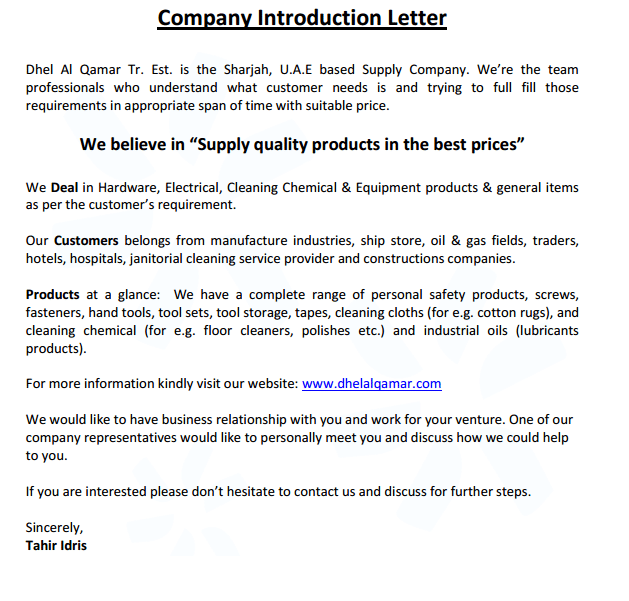


Company introduction email questions
Should I include the whole company history?
Include only background that helps the recipient understand the relevant capability. A fuller profile can hold the remaining information when requested.
Are these four resources editable email templates?
They link to external PDF introduction or profile resources. Check the actual documents and adapt their content to an email rather than assuming an editable message file is included.
Can I use the same overview for every recipient?
Keep core facts consistent, but adapt the reason for writing and the relevant service detail. Do not invent personalization or ignore an existing relationship.
What if the recipient asks for a price?
Confirm the requirement and provide the appropriate quotation or proposal. A company overview explains the organization; it does not supply a complete priced offer.
Should I attach a profile on first contact?
Use judgment based on the context and the recipient’s request. A brief offer to send relevant information may be more appropriate than several unsolicited attachments.
How often should the reusable overview be reviewed?
Review it when services, coverage, credentials, or contact details change, and check variable facts before each use. Keep the email and supporting documents consistent.
