A business offer letter sets out a defined offer for the recipient to consider. Match the wording to the relationship: an employment offer, supply offer and partnership proposal need different details. State the approved scope, conditions and requested response without presenting a proposal as an accepted agreement.
Connect the hiring process to an employee referral form when relevant, organize follow-up with interview email samples and assign onboarding steps in a task list. Keep recruitment history, the offer and later onboarding actions as distinct records.
The five resources linked below primarily point to job or employee offer-letter material. This guide therefore focuses on preparing a clear employment offer and explains when a different commercial document is needed. Check each external destination for its format, jurisdiction, pricing, and terms; the gallery does not establish that every sample is a free editable download.
For employers, an offer letter should accurately describe the approved role and the terms being offered. For applicants, it should make the main arrangement and any conditions understandable. A generic sample cannot establish legal compliance, determine whether an offer is binding, or replace the organization’s required employment documentation.
Match the sample to the actual offer
If you are offering employment, select an employment-focused sample and adapt it under your hiring process. The role, working arrangement, compensation, and conditions must reflect what the business has approved.
If you are offering goods or services to a customer, use a commercial scope and pricing document instead. A quotation template can help present proposed prices, quantities, and delivery or service details. Employment language about a manager, salary, or start date does not belong in a supplier quotation.
For a proposed project or collaboration, a business proposal email template may be more appropriate for the first discussion. A proposal can describe the idea and next decision without pretending that a detailed employment arrangement is being offered.
Do not convert a job offer into a contractor agreement merely by changing the word “employee.” The relationship and applicable requirements need proper consideration. Use the right process for the arrangement rather than relying on a document label.
Confirm authority and approved terms
Before drafting, confirm who is authorized to make the offer and which terms have been approved. A recruiter or manager should not promise a benefit, remote-work arrangement, or compensation level that the organization has not agreed to provide.
Check the applicant’s name, role title, department, reporting line, and proposed start date. Make sure those details agree with the hiring record. An offer for the wrong title or location can create confusion even if the pay figure is correct.
Identify which supporting documents need to accompany or follow the letter. These may include employment terms, policy information, or other materials under the organization’s process. Do not assume that a short offer letter contains everything that must be provided.
If the organization uses a reviewed standard form, work within that form and approval route. A web sample can help explain structure, but it should not silently replace approved wording on a sensitive matter.
Information the recipient needs to understand
State the employer’s identity and the role being offered. Describe the workplace or working arrangement accurately, including any location-dependent detail that matters. If the role involves travel or multiple locations, use the approved description.
Explain the proposed working hours or schedule basis at the appropriate level. “Full time” may not tell the applicant the actual expected hours. If hours vary, describe the arrangement clearly rather than suggesting a fixed schedule that is not offered.
State compensation with an identifiable currency and basis: for example, an annual salary or an hourly rate. Do not mix annual and monthly figures without checking the conversion and payroll arrangement. Distinguish fixed pay from a possible bonus or other variable amount.
Refer to benefits accurately and identify relevant supporting information. Avoid suggesting that an applicant receives every benefit immediately when eligibility or enrollment conditions apply. Do not invent a benefit simply because it appears in a sample.
Provide a contact for questions and explain the response process. The recipient should know whether to return a signed document, confirm through a hiring system, or contact the authorized person for clarification.
State conditions clearly
A conditional offer should identify its genuine conditions in clear wording appropriate to the role and jurisdiction. Do not hide an important requirement in a general phrase such as “subject to everything being satisfactory.”
Use conditions that have been properly approved and are handled through the organization’s lawful process. Requirements concerning references, eligibility to work, or checks can involve specific rules. A template does not authorize every check an employer might want to make.
Acas guidance for the United Kingdom distinguishes conditional and unconditional job offers and explains relevant steps in offering employment. That is jurisdiction-specific guidance, not a rule for every country. Use the appropriate official guidance and review for the place where the role is based.
Do not copy an “at-will,” probation, withdrawal, or termination clause into a letter without confirming that it is appropriate and properly reviewed. The effect of an offer and its acceptance depends on the circumstances and applicable law. Avoid the original article’s broad assumption that every accepted offer automatically creates the same kind of agreement.
Illustrative offer-summary wording
The following fictional example illustrates clarity, not a complete legally reviewed offer:
“Dear Jordan,
We are pleased to offer you the position of Customer Support Coordinator with Cedar Lane Services, reporting to the Operations Manager. The proposed start date is 4 January 2027, subject to the conditions and arrangements described in the accompanying offer documents.
The approved salary for the role is 36,000 currency units per year. The role’s working hours, location, benefits, and relevant conditions are set out in the attached terms for your review.
Please review the documents and contact our hiring coordinator if you would like clarification. The response instructions and date are included in the offer pack.
We look forward to hearing from you.”
A real offer needs the actual employer, applicant, currency, approved terms, conditions, and response process. The example deliberately does not supply universal clauses about legal status, notice, or benefits. Do not send it as though it were a complete employment agreement.
The main lesson is consistency: the covering letter and accompanying documents should describe the same arrangement. A concise summary can direct the applicant to detailed terms, but it must not contradict or conceal a material qualification.
Pay and variable rewards need precise wording
If a role includes a bonus, distinguish a guaranteed amount from a conditional or discretionary arrangement. State the approved basis and refer to the relevant plan. “You will earn a bonus” can be misleading if the actual policy only allows consideration of one.
A bonus structure template can help organize the information for review, but it does not establish an employee’s entitlement or authorize a new scheme. The offer should refer to the actual approved arrangement and its applicable terms.
Check whether compensation figures are gross or otherwise defined under the organization’s documents. Avoid promising a take-home amount that depends on personal circumstances, deductions, or changing requirements. Payroll and tax questions need the appropriate process.
Do not include bank account details or sensitive identity information in an ordinary offer letter unless there is a justified and secure process. Initial acceptance and later payroll setup are different steps.
Review the offer from the applicant’s viewpoint
An applicant should be able to identify the role, employer, compensation basis, working arrangement, proposed start date, and conditions. If an important detail is missing, they should have a clear way to ask before responding.
A salary figure alone does not describe the whole offer. Hours, location, travel expectations, benefits, and conditions may affect whether the arrangement suits the applicant. The letter should not use enthusiastic language to obscure those details.
Do not assume that an unanswered message has been accepted. Record the actual response and follow the appropriate process. If a term changes during discussion, provide an identifiable revised version rather than relying on an informal correction in a separate email.
If the offer is withdrawn or a condition becomes disputed, seek the appropriate guidance before acting. A sample’s wording does not establish that withdrawal is always permitted or without consequences.
Prepare and send the final document
Use the approved business identity and an authorized signatory. Check the recipient’s name, all dates, role details, figures, and attachment references. Make sure no previous applicant’s information remains in headers, footers, or file properties you intend to share.
Open the final exported document and confirm that the terms and response instructions are readable. Use a recognizable file name and the organization’s normal delivery channel. Avoid sending sensitive hiring material to an address that has not been confirmed.
Keep the approved version and a record of delivery and response under the organization’s retention process. Separate a draft from the final offer so later readers can identify what was actually sent.
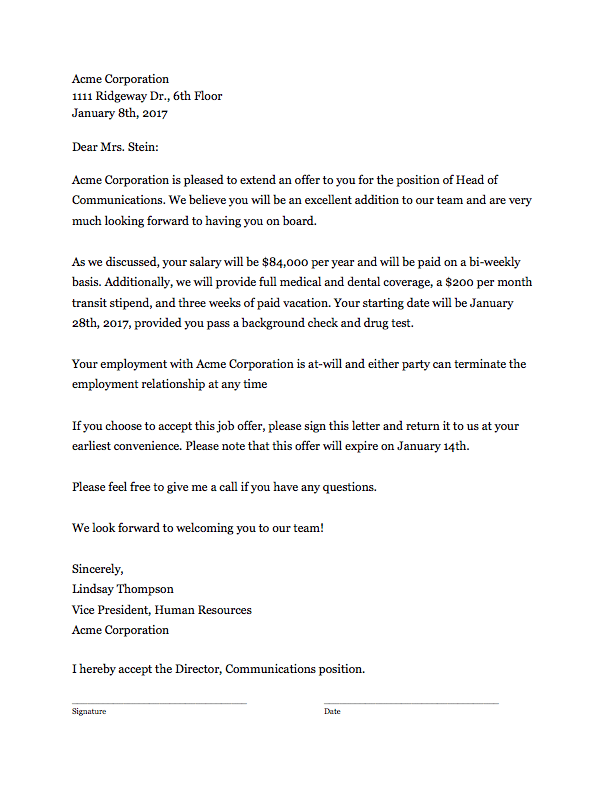
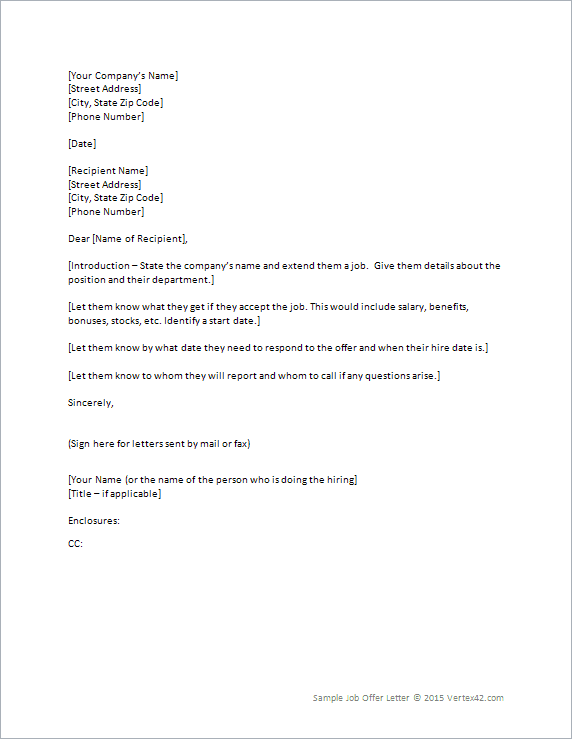
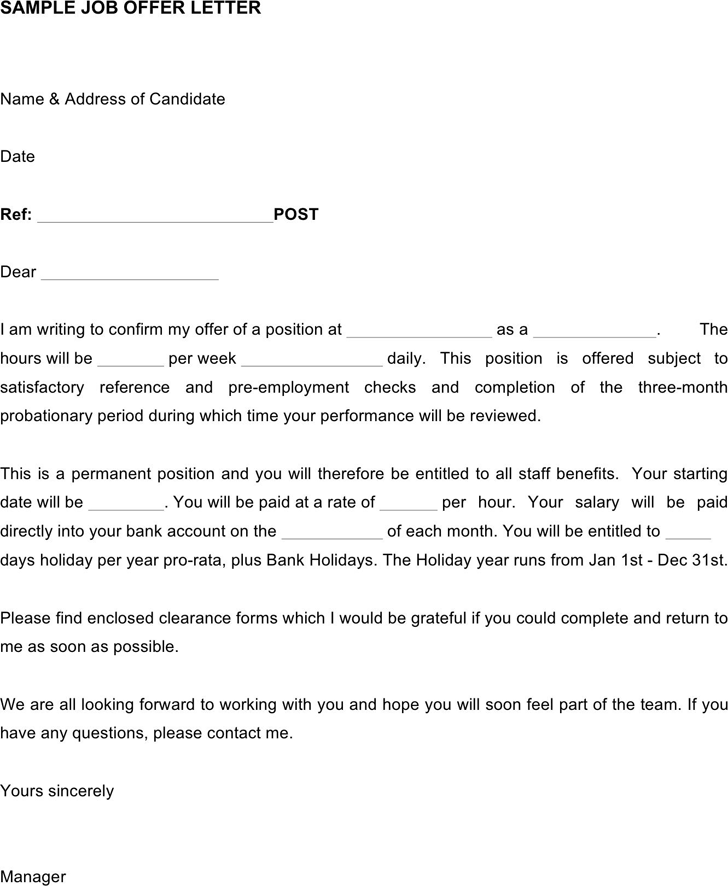
The resources below can provide useful formatting examples. Their value is a starting structure; the accuracy and appropriateness of the offer depend on the real terms, authorized review, and the requirements that apply to the employment arrangement.
Download Business Offer Letter Samples


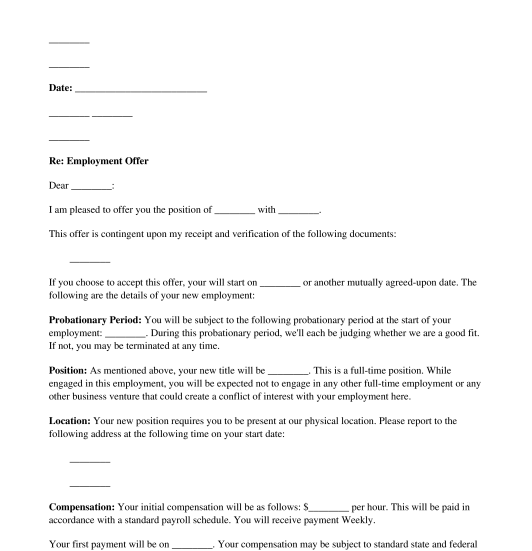
Offer letter questions
Are these samples mainly for customers or job applicants?
The linked resources primarily concern job or employee offers. For goods or services, use a suitable quotation or commercial proposal instead of adapting employment terms.
Can an offer letter replace every employment document?
Do not assume so. Required documentation and the effect of the letter depend on the jurisdiction and arrangement. Follow the organization’s reviewed hiring process.
What does a conditional offer mean?
It identifies conditions that must be addressed under the stated process. Use accurate, approved wording and the rules relevant to the role rather than copying conditions indiscriminately.
Should the letter promise take-home pay?
Avoid an unsupported net-pay promise. State the approved compensation basis clearly and handle deduction or tax questions through the appropriate payroll process.
Can I copy a withdrawal or probation clause from a sample?
Only after confirming that it is appropriate and reviewed for the actual arrangement. Such clauses can have jurisdiction-dependent consequences.
What if the applicant requests a change?
Use the authorized review process and issue a clearly identified revised version when appropriate. Keep the final documents consistent and record the actual response.