A party invitation template helps communicate the kind of gathering being hosted and the details guests need to attend. Start with the actual occasion, host, date, time, location, and reply instructions, then choose wording and a design that fit those facts. An invitation should not imply a meal, ceremony, or activity that has not been arranged.
The five previews below cover a general party, Christmas gathering, graduation, bridal shower, and wedding-style invitation. Each resource destination is a ZIP archive with a DOC-oriented name; the full-size preview images are separately linked. Review the actual archive contents before selecting an editor or assuming a particular design feature.
Use this collection to adapt wording across different celebrations. For a birthday-specific card, see the birthday invitation guide. The printable invitation overview covers layout and output checks, while a guest list keeps invitations and replies organized separately from the card itself.
Choose the occasion before rewriting the sample
A general gathering, holiday party, graduation celebration, bridal shower, and wedding have different information needs. Replacing the event name alone may leave inappropriate references to a ceremony, honoree, gift arrangement, or reception. Read the entire wording and remove details that do not belong to the actual event.
Name the host or hosting group and the occasion clearly. If the invitation includes an honoree, use the actual name and role in the celebration. A host and an honoree are not necessarily the same person. The guest should be able to tell who is inviting them and what the gathering is for.
Keep the tone consistent with the real event. A casual invitation can use a short welcoming line, while a more formal gathering may use a different structure. Formal wording should not conceal practical details or suggest official arrangements that the host has not made.
General party example
The following examples use invented names and circumstances, with no real dates, addresses, or reply contacts. For a simple gathering, the wording might say: “Please join the Meadow Circle hosts for an evening get-together. The confirmed date, time, and venue are listed below. Please reply through the stated contact route by the reply date so we can plan the seating.”
This structure explains the invitation without promising an activity or meal. For a real party, describe the actual format where it affects guests’ plans. If the event is a dinner, use accurate dinner wording; if it is an informal visit, do not retain a sample line suggesting a seated meal.
The details area needs the full confirmed information. A sentence saying the venue is listed below is not enough if the final card omits the address or prints it too small to read. Review the adopted design with the actual wording.
Holiday gathering example
For an invented seasonal gathering, a suitable opening might be: “You are invited to a seasonal gathering hosted by the Meadow Circle team. Please see the event details and reply instructions below. We look forward to sharing the evening with the invited guests.”
The Christmas preview can suggest a visual theme, but the real invitation should reflect the actual occasion and audience. Do not carry holiday-specific wording into another celebration without reviewing it. A decorative theme is optional; the date, time, and response route remain essential.
If the gathering includes an actual exchange, meal, or other organized activity, describe the confirmed arrangements clearly. Avoid retaining a gift-exchange instruction simply because it appears in a sample. Guests should know what is expected from the invitation and the host’s actual communication, not infer it from decoration.
Graduation celebration example
A graduation-related invitation needs to distinguish the official ceremony from a privately hosted celebration. An invented example could say: “Please join us to celebrate Rowan’s graduation at a gathering hosted by the family. The party details are listed below. This invitation is for the family celebration; ceremony arrangements are communicated separately.”
For a real event, use the actual relationship between the gathering and ceremony. A template labeled graduation should not imply that the host can grant admission to an institution’s ceremony. State the event you are inviting the recipient to and avoid combining unrelated locations or schedules without labels.
If the invitation is for a post-ceremony gathering, confirm the timing and explain any relevant arrival information. Do not assume the ceremony’s ending time or reproduce an old sample’s schedule. The host needs the actual arrangements before printing the party invitation.
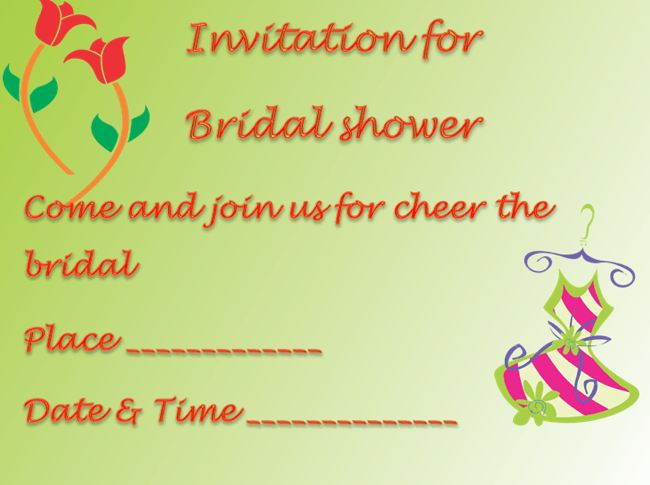
Bridal shower example
A shower invitation can identify the honoree and hosts, then state the date, time, venue, and reply route. An invented opening might be: “Please join the hosts for a gathering in celebration of Rowan. The event information and reply date are listed below. We would appreciate your response through the host’s stated contact route.”
Use the actual occasion wording and the honoree’s preferred presentation. Do not assume the invitation needs a particular gift instruction, activity, or guest expectation. Include only the confirmed details that the host intends to communicate.
A shower invitation and a wedding invitation serve different events even when they concern the same people. Keep their dates, venues, hosts, and reply routes separate. Copying a wedding layout without revising those fields can send guests to the wrong gathering.
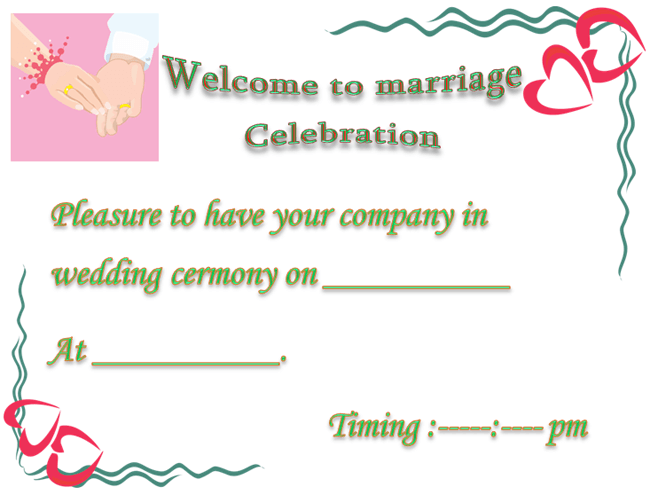
Wedding-style invitation example
For an invented private wedding celebration, the opening might say: “The hosts invite you to join the celebration of Rowan and Casey. Ceremony and reception details are shown in their separate sections below. Please send your response through the stated route by the reply date.”
A real wedding invitation should identify which parts of the event the recipient is invited to. If ceremony and reception have different locations or times, label them clearly. Do not imply that every guest has the same invitation scope if the actual arrangements differ.
The sample does not provide real venue details or a universal wedding formula. Use the confirmed host and couple names, event information, and intended wording. The resource’s decorative layout should adapt to the message rather than force the event into unrelated sample text.
Keep practical details consistent
Use a date format the intended guests can interpret and check any weekday against the actual date. State the relevant start and end information, and distinguish arrival from an activity start where needed. A time written on the card should agree with the host’s follow-up message.
Provide a usable venue location and confirmed access or meeting-point details where they affect attendance. Do not add unverified directions or assume the venue’s policies from an older invitation. If the location is still tentative, resolve it before presenting the invitation as final.
State who receives replies, how guests should respond, and the reply deadline. Where a group invitation needs an attendee count, explain that request. One invitation, one reply, and one person are not necessarily equivalent. The guest list can keep those measures distinguishable.
Review the file and distribution
Inspect the actual adopted resource and its editing options. A ZIP archive is a container, not proof of a particular Word feature or print size. Remove sample names, dates, addresses, and contact details from your new master before entering the actual event information.
Review the printed or exported copy for readable names, timing, venue, and reply instructions. Check cropping and line breaks with the real wording. A design that fits a short sample phrase may not fit a long venue or two hosts’ names without adjustment.
Choose the distribution route appropriate to the invitation. A named card and a public event announcement can have different information and audience. Avoid sharing private addresses or personal arrangements more widely than the event requires, and give guests an appropriate direct route for questions.
Handle corrections without leaving guests uncertain
If a material detail changes after distribution, send an explicit correction naming the event and the updated fact. Update the maintained invitation source and the guest-planning record. Do not assume every guest will see a quietly replaced image or remember a verbal change mentioned to only some people.
Keep the clean master separate from completed invitations. A holiday party’s actual details should not remain in the next graduation invitation. Reuse the layout and useful labels while checking the complete wording for the new occasion.
A template can help organize the design and information, but it cannot guarantee attendance or a successful celebration. Its practical role is to communicate confirmed arrangements, make replies straightforward, and help the host keep what guests received consistent with the actual event.
Download Free Party Invitation Templates:

Frequently Asked Questions
Are these resources direct Word documents?
The existing destinations are ZIP archives with DOC-oriented names. Review the actual contents before choosing an editor or assuming specific layout features.
Can I change only the occasion name?
Review all the wording. Another event’s ceremony, gift, meal, venue, or reply instructions may be inappropriate even after the title changes.
Is a graduation party invitation admission to an official ceremony?
Not automatically. Describe the actual event and keep ceremony arrangements separate where they are controlled by another organization.
Should wedding ceremony and reception information be combined?
Label their times and locations clearly when they differ, and identify which parts of the event the recipient is invited to.
Can I use the fictional wording unchanged?
Use its structure only. Replace invented names and all missing event details with accurate information and wording suited to the actual occasion.
What should reply instructions include?
State the recipient of replies, the route, the deadline, and any relevant attendee count under the invitation’s scope.
What if the date or location changes?
Communicate an explicit correction and update the current source and planning record. Do not rely on a quiet replacement of the invitation image.
What should I remove before reusing the master?
Remove actual names, dates, venue and reply details, and any occasion-specific instructions that do not apply to the next event.