A room rental agreement form should make the proposed living arrangement clear: which room is private, which facilities are shared, how rent is paid and who handles everyday responsibilities. Compare the examples below for structure and available formats, then review the terms for the actual property and location.
Track agreed payments with a payment history template, acknowledge received cash with a cash receipt and keep shared contact details in a contact list. These supporting records should reference the same parties and arrangement; they record administration rather than change the agreement’s terms.
The five previews below have four external resource links: three PDF destinations and one DOC destination with roommate-agreement wording. One resource graphic is unlinked. They are examples from different sources, rather than five confirmed editable Word forms. Review the selected document’s purpose and jurisdiction before treating its wording as suitable for your arrangement.
Use the guide to prepare accurate information and identify questions needing local review. Room rental, lodging, subletting and roommate arrangements are not automatically the same. A template’s title does not determine the occupant’s legal status, and agreed wording must be considered alongside the rights and requirements that apply where the property is located.
What Is a Room Rental Agreement?
A room rental agreement is a written contract between the person providing a room and the person renting it. Unlike a traditional lease for an entire house or apartment, a room rental contract generally concerns one bedroom or living space while other areas of the property may be shared.
For example, a tenant may rent one bedroom in a house while sharing the kitchen, bathroom, living room, laundry area, parking space, or other facilities with the homeowner or other tenants. A good agreement should clearly explain which areas are private and which are shared.
The agreement can also establish expectations regarding guests, noise, cleaning, smoking, pets, utilities, maintenance, and use of common areas. Clearly documenting these arrangements can make shared living easier for everyone involved.
What Should a Room Rental Agreement Include?
A useful room rental agreement form should contain enough information to clearly identify the rental arrangement. Depending on the property and local requirements, common sections can include:
- Full names of the landlord, homeowner, or primary tenant and renter
- Address of the rental property
- Description of the room being rented
- Rental start date and end date
- Monthly or weekly rent amount
- Security deposit amount
- Rent payment due date
- Accepted payment method
- Utility and internet responsibilities
- Shared areas and facilities
- House rules and restrictions
- Guest and visitor policies
- Cleaning and maintenance responsibilities
- Parking arrangements, if applicable
- Notice requirements for ending the agreement
- Signatures and dates of the parties
Not every rental situation requires the same terms. Therefore, you should edit the template and include provisions that accurately reflect your particular arrangement and applicable local law.
Room Rental Agreement Examples and Linked Formats
The collection below includes five useful examples for different rental situations. The linked formats include PDFs and a DOC file, so editing options vary. Review the selected source document and prepare a suitable editable version, where available, for the actual arrangement and local requirements.
Room Rental Agreement
The standard room rental agreement template provides a general starting point for renting a room. It can be useful when you need a straightforward document covering the basic relationship between the renter and the person providing the room.
You can customize the agreement with the names of the parties, rental amount, deposit, rental period, property information, and agreed rules. The relevant terms still need to be checked against the actual relationship and local requirements.
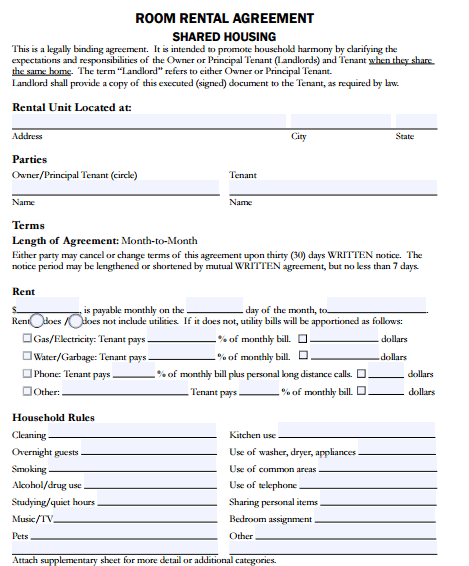
Private Room Rental Agreement
A private room rental agreement is useful when the renter has exclusive use of a particular bedroom while other parts of the property may remain shared. Clearly identifying the private room and common areas can help both parties understand what is included in the rental.
This type of agreement can be particularly useful for homeowners renting an unused bedroom, students sharing accommodation, or individuals offering a furnished or unfurnished room.
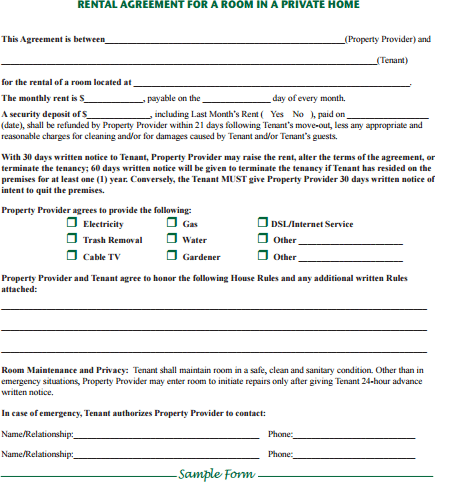
Month-to-Month Room Rental Agreement
A month-to-month room rental agreement is designed for rental arrangements that do not have a fixed long-term lease period. The renter pays rent on a recurring basis, while the agreement continues according to its terms until properly terminated.
This can be convenient for flexible living arrangements, temporary housing, or situations where the landlord and tenant do not want to commit to a lengthy fixed-term lease. Notice periods and termination requirements should be clearly stated and should comply with applicable local regulations.
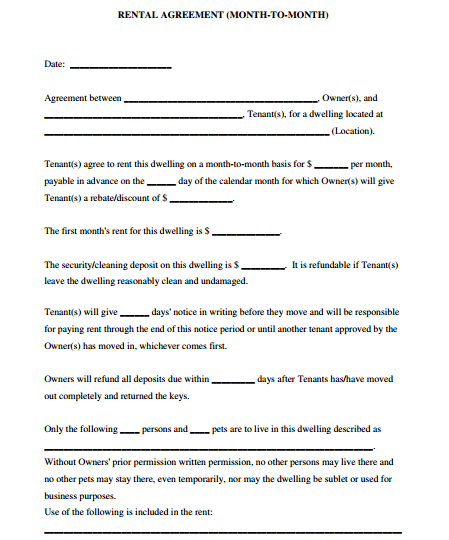
Only Room Rental Agreement Form
This simple room rental agreement form focuses specifically on renting a room rather than an entire property. It can be adapted to describe the rented space and establish the basic conditions under which the tenant may occupy it.
Keeping the agreement focused on the room and associated shared facilities can make it easier for both parties to understand exactly what is being rented.
Room Rental Agreement Sample
A room rental agreement sample can be especially useful if you have never prepared a room lease before. Reviewing a sample helps you understand the type of information that can be included in a rental contract before creating your final version.
You can use the sample as a reference and modify the editable document according to your circumstances.
Why Use a Written Room Rental Agreement?
A verbal agreement may seem sufficient when renting to a friend, relative, student, or acquaintance, but written terms are generally much easier to refer back to. A properly completed rental agreement can help clarify who is responsible for rent, utilities, repairs, cleaning, and other obligations.
It can also reduce disagreements about matters such as security deposits, guests, shared facilities, property damage, and the date on which the rental arrangement ends.
Both parties should read the entire agreement carefully before signing it. Each person should retain a copy of the completed document for their records.
How to Customize the Template
Inspect the selected resource’s file format first. Use suitable software for an editable file, where available, and replace its sample information with the actual rental details. A PDF destination should not automatically be described as an editable Word template.
Before finalizing the document, check the rent amount, payment schedule, deposit, rental dates, responsibilities, house rules, and termination provisions. If you are dealing with a legally significant rental arrangement, consider having the agreement reviewed by a qualified local professional to make sure it complies with applicable landlord-tenant laws.
Important: A template is a general starting point and should not be treated as legal advice. Rental laws and required provisions vary by location.
Check the relationship before using the sample
Confirm who owns or leases the property, who is offering the room and what authority or permission is required for that arrangement. A primary tenant’s agreement with a roommate should not imply authority to offer rights that the primary tenancy does not allow. The correct review depends on the property and jurisdiction.
For example, GOV.UK guidance on renting a room in someone’s home explains that a lodger may have a tenancy or licence agreement. That is jurisdiction-specific information rather than a rule for every country, but it demonstrates why the living arrangement matters. In the United States, CFPB renter guidance likewise points renters to local, state and federal rights.
For an entire-property arrangement, the separate rental agreement guide addresses a broader scope. Keep this document focused on the identified room and included facilities. Do not copy a whole-property description when the occupant is being offered only one room and defined shared access.
Describe shared costs and responsibilities precisely
As a fictional preparation example, Room B might be described as the upstairs rear bedroom, with shared use of the kitchen and the specified bathroom. If parking or storage is included, identify it. These details describe the proposed space; they do not establish the legal rights associated with that description.
If utilities are shared, state which services are included in rent and which are billed separately under the reviewed terms. An illustrative equal split of a 90-unit bill among three responsible occupants is 30 each. That arithmetic does not determine whether the proposed split is legally appropriate or how a partial billing period should be treated.
A house cleaning checklist can document agreed practical tasks for shared spaces. Keep it consistent with the reviewed agreement rather than introducing new charges or obligations through a separate checklist. A task schedule and a contractual responsibility are different records.
Record condition and repair reporting
Prepare a clear description of relevant room contents and existing condition where appropriate. Identify the date, room and any supporting record so the parties can refer to the same information. Do not assume an inventory gives permission for deposit deductions or overrides local requirements.
A maintenance request form can help describe a repair issue and when it was reported. The agreement should explain the appropriate contact route without inventing a universal deadline or making the occupant responsible for every repair. Follow the actual obligations and procedures that apply.
Before signing, resolve inconsistent amounts, dates and references across the main document and attachments. Give the parties the same completed version and identify any approved changes clearly. Do not treat an old online sample as confirmation that current deposit, notice, access or termination rules have been satisfied.
Download Room Rental Agreement Form Templates:
Room Rental Agreement

Private Room Rental Agreement
Month To Month Room Rental Agreement
Only Room Rental Agreement Form
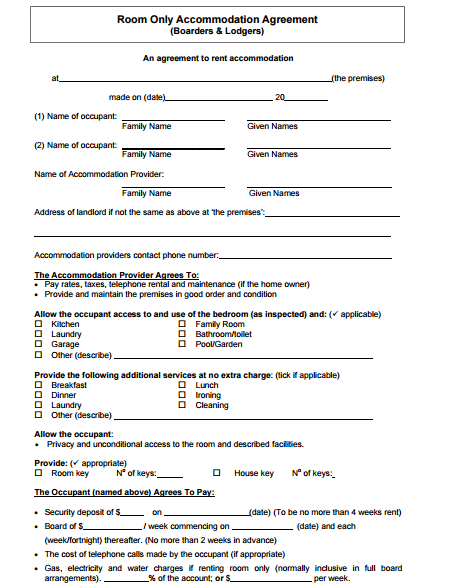
Room Rental Agreement Sample
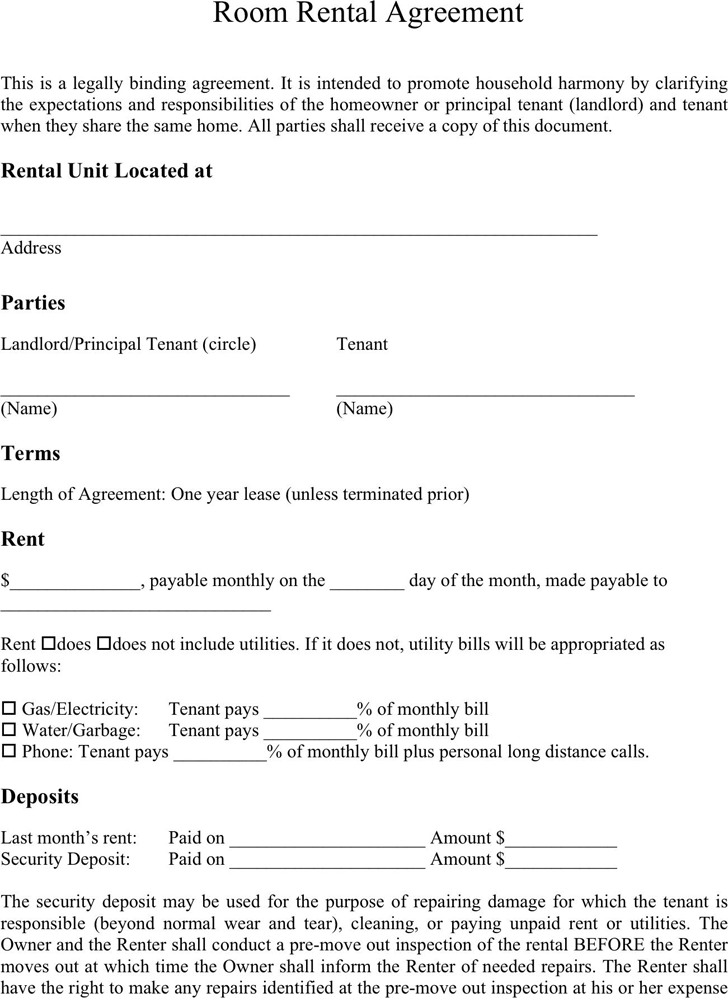
Room rental agreement FAQs
1. What is a room rental agreement form?
A room rental agreement form is a written contract used when one person rents a room from a homeowner, landlord, or primary tenant. It records important terms such as rent, deposit, rental period, responsibilities, and house rules.
2. Can I edit these room rental agreement templates?
Editing options depend on the selected resource. Three linked destinations are PDFs and one is a DOC file; one preview is unlinked. Review the actual format and obtain appropriate local wording before preparing a completed agreement.
3. What is the difference between a room rental agreement and a lease?
A room rental agreement focuses on an identified room and included shared facilities. A lease can also concern a room, so the title alone does not determine the legal relationship. The actual arrangement and jurisdiction govern the appropriate document and rights.
4. Should a room rental agreement include a security deposit?
If a security deposit is required, the agreement should clearly state its amount and the applicable terms for handling and returning it. Local laws may regulate deposits, so the agreement should comply with those requirements.
5. Can I use a month-to-month room rental agreement?
Yes, a month-to-month agreement can be used when the parties want a recurring rental arrangement rather than a fixed long-term term. The agreement should clearly explain the applicable notice and termination requirements.
6. Should utilities be included in a room rental agreement?
If utilities are included or shared, the agreement should explain who pays for electricity, water, gas, internet, or other services and how shared costs are calculated.
7. Do both the landlord and tenant need a copy?
It is good practice for each party to keep a completed and signed copy of the agreement. This allows both parties to refer to the same written terms if questions arise later.
8. Can I use a room rental agreement for a roommate?
A room rental agreement may be adapted for some roommate or shared-housing situations, but the appropriate document depends on the relationship between the parties and local rental laws. Make sure the agreement accurately reflects who owns or leases the property and who is authorized to rent the room.