
A house cleaning list template organizes household work by area, task and chosen interval. Assign responsibilities that fit the home and leave room to record missed tasks or exceptions. Review the routine as needs change rather than copying an unrealistic schedule indefinitely.
Record next actions in a to-do list, plan supply purchases with a shopping list and note repair issues using a maintenance request form. Cleaning tasks and repair requests should remain distinct so an unresolved fault is not hidden by a completed cleaning row.
The five previews below include a general example, monthly list, broad master list, spring list, and weekly routine. Two original download graphics link to external articles; three are unlinked images. The gallery does not establish that five editable files are available, so inspect the resource you select.
This guide focuses on household routines over time. The cleaning list overview explains the structure of a defined session, the shopping list guide can organize required supplies, and a daily schedule can reserve realistic time around other commitments.
Make the routine fit your household
Start with the areas you actually use and the people who share them. A small apartment and a larger shared house need different scopes. Copying every room from a sample can make the list cumbersome while overlooking an area that matters in your own home.
Discuss responsibilities before assigning names. Consider availability, ability, and the actual task rather than assuming that every person can perform every job. A shared routine works better when users understand their responsibilities and know how to report a task they cannot complete.
Separate routine cleaning from repairs or specialist work. A leaking fixture or damaged electrical fitting needs the appropriate response rather than another cleaning tick. Record the observation and follow the relevant reporting or repair process instead of treating the checklist as instructions for unfamiliar work.
Separate the master from this week’s record
The master list defines recurring tasks and the intervals your household has chosen. A dated working copy records what happened during a particular period. Keeping those functions separate prevents last week’s completion marks from appearing on a new blank sheet.
For a paper routine, a new period can be printed or clearly dated. For a digital file, decide how completed records are retained before clearing marks. The exact method can be simple, provided that users can distinguish the current week from the previous one.
Do not turn a reusable master into a long diary of every exception. Preserve the task structure in the master and record current notes on the dated copy. Update the master when the task itself changes, rather than copying a temporary problem into every future period.
Organize tasks by room or activity
Room categories help when one person handles a whole area. Activity categories can help when a household groups similar work across rooms. Choose the structure that matches how people actually work; a hybrid layout may suit a few shared tasks and several room-specific duties.
Write task labels that identify the area and expected activity. “Living room” alone names a place without describing the work. More precise wording helps users understand the assignment, while the appropriate product or surface instructions remain the source for the actual method.
Avoid combining many unrelated actions in one row. A single tick beside a long paragraph can conceal which part remains incomplete. Separate tasks when their ownership, timing, or completion status differs, especially if another person will review the list.
Choose intervals deliberately
Daily, weekly, monthly, and seasonal headings are planning categories, not universal requirements for every home. Set intervals using the actual household’s needs and the relevant product, equipment, or surface guidance. A sample schedule should be adjusted rather than accepted as an authoritative standard.
Distinguish a regular task from one triggered by a particular condition. Some work follows a recurring schedule; other work becomes relevant after an event or when attention is needed. Recording the trigger can be clearer than assigning an arbitrary calendar date.
Review intervals when circumstances change. A room used differently or a new household arrangement can alter the routine. If a schedule repeatedly proves unrealistic, examine the scope and assignments rather than carrying the same growing list of unfinished work into each new week.
Keep cleaning methods connected to their instructions
A list organizes responsibilities and timing; it does not establish the correct treatment for every surface. Use the actual manufacturer and product instructions for the material and task. Do not infer a chemical recipe or contact time from an empty box in a template.
CDC home-cleaning guidance advises using suitable products, following their labels, and avoiding mixing products or chemicals. Keep those instructions accessible to the person doing the work. A generic household list should not replace specialist guidance for an unusual hazard or situation.
A short reference can connect a task to the relevant instructions without squeezing incomplete directions into a narrow row. If users are unsure which instruction applies, leave the question visible and resolve it before treating the task as ready to perform.
Fictional example: a shared weekly routine
Imagine an invented household with two adults sharing a small home. They agree on a room-based weekly list, identify a person responsible for each task group, and reserve separate time blocks around their actual commitments. Their choices illustrate the layout, not a recommended routine for all households.
One person completes the agreed living-area tasks on the planned day. The other cannot access a storage area because a separate household project is underway. That entry is marked deferred with a note and an agreed review point rather than being ticked to make the sheet look finished.
During the review, they notice that one recurring task has been duplicated in two categories. They revise the master so that it has one clear owner. The completed copy still records what happened that week, keeping the correction to the future routine separate from the historical record.
This example shows why an accurate list can contain open items. A fully checked page is useful only when the marks describe actual work. A visible exception can support the next decision more effectively than a completion mark that hides an unresolved task.
Estimate time without overloading the day
A rough duration can help people reserve space for a task, but distinguish the estimate from actual time. If a room’s condition or scope changes, the work may take longer. Treat the estimate as a planning aid rather than a promise that every session will finish identically.
Leave room for normal interruptions and other responsibilities. Assigning every task to one already busy day can make the schedule difficult to follow. Spread work in a way that the household can sustain, and agree which tasks need attention first when time becomes limited.
If a task is repeatedly postponed, identify the cause. The issue may involve missing supplies, unclear instructions, access, or an unsuitable assignment. Moving it to another day without resolving that dependency can reproduce the same unfinished entry indefinitely.
Plan seasonal work separately
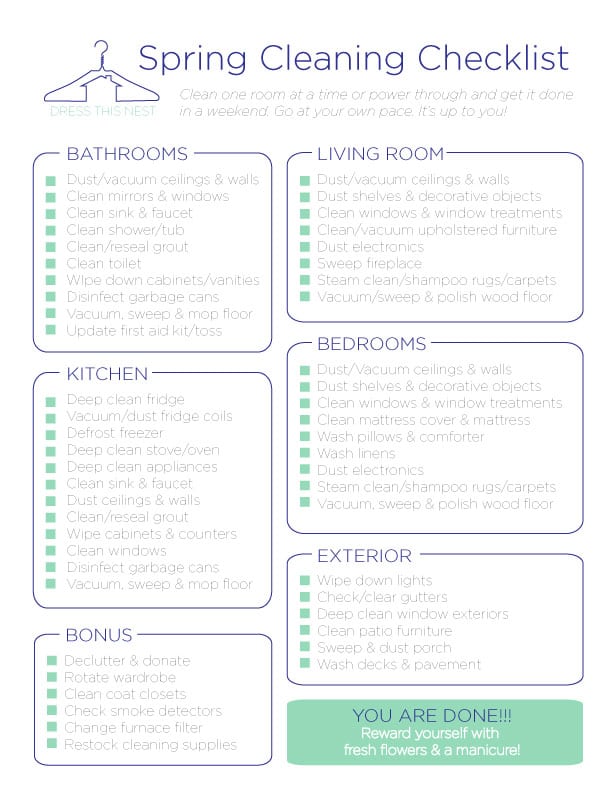
A seasonal or occasional list can hold tasks that would crowd the regular weekly page. Define its scope and review it against the actual home. A spring-themed caption suggests an organizing context, but does not establish that every listed activity is necessary each spring.
Check any equipment or access requirements before assigning occasional work. Tasks outside ordinary household capability may need an appropriate service or separate arrangement. Do not use the presence of a task in a sample to justify performing unfamiliar or unsuitable work.
After an occasional session, decide whether any observation belongs in the regular routine or a separate follow-up record. An unresolved repair should remain traceable through its own process. Completing the seasonal list should not automatically imply that every associated problem has been resolved.
Make completion and exceptions understandable
Agree what a check mark means. It can record the person’s report that the stated activity is complete, while a separate review indicates any agreed check by another person. Avoid using one mark to imply several decisions that did not actually occur.
Define simple exception labels if needed, such as deferred, not applicable, awaiting instruction, or reported for follow-up. A blank row can be ambiguous when several people use the page. Clear labels help distinguish an overlooked task from one deliberately awaiting a later step.
Keep notes factual and brief. Record the relevant obstacle or next action rather than adding judgments about another household member. A shared list is a coordination tool, and its wording should help people understand the work and resolve practical problems.
Review the preview and usable space
Choose a layout with enough room for your task wording, owners, dates, and exception notes. A decorative page may look appealing while leaving too little space for a useful entry. Print or inspect a realistic filled example before adopting the format for repeated use.
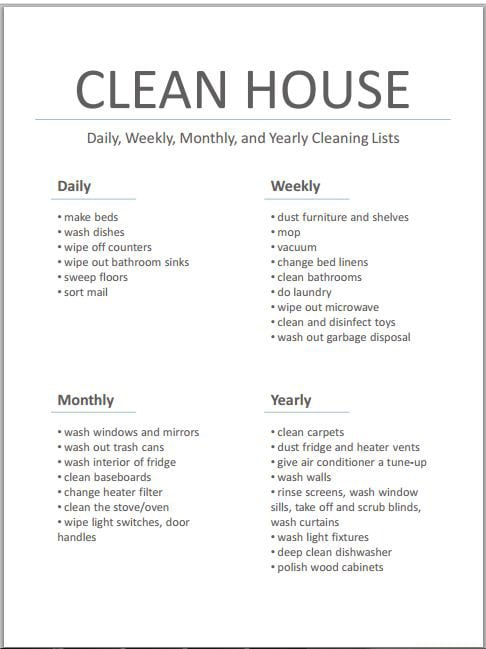
The original monthly, spring, and weekly previews offer different organizing ideas. Their captions do not confirm the current availability or file format of a downloadable version. Follow the relevant resource and review what it actually supplies; an unlinked graphic is not a functional download button.
If you adapt a list, remove rooms and categories that do not apply and add missing areas deliberately. Keep the page readable rather than inserting every possible task. A compact routine with clear scope can be easier to maintain than an exhaustive sheet nobody can use comfortably.
Review and reset the routine
At the end of the period, review completed and unresolved entries together. Identify the next action for deferred work and decide whether the master needs a change. Do not clear unresolved tasks merely because a new week is beginning.
Prepare the next copy with the correct dates and clear completion fields. Keep relevant standing instructions and assignments, while checking whether availability or household needs have changed. Reusing a template should save layout work without freezing the routine indefinitely.
A useful household list supports communication and realistic follow-through. It cannot guarantee constant cleanliness or establish a standard for every home. Its practical value comes from a suitable scope, workable timing, clear responsibilities, and an honest account of what still needs attention.
House Cleaning List Example 
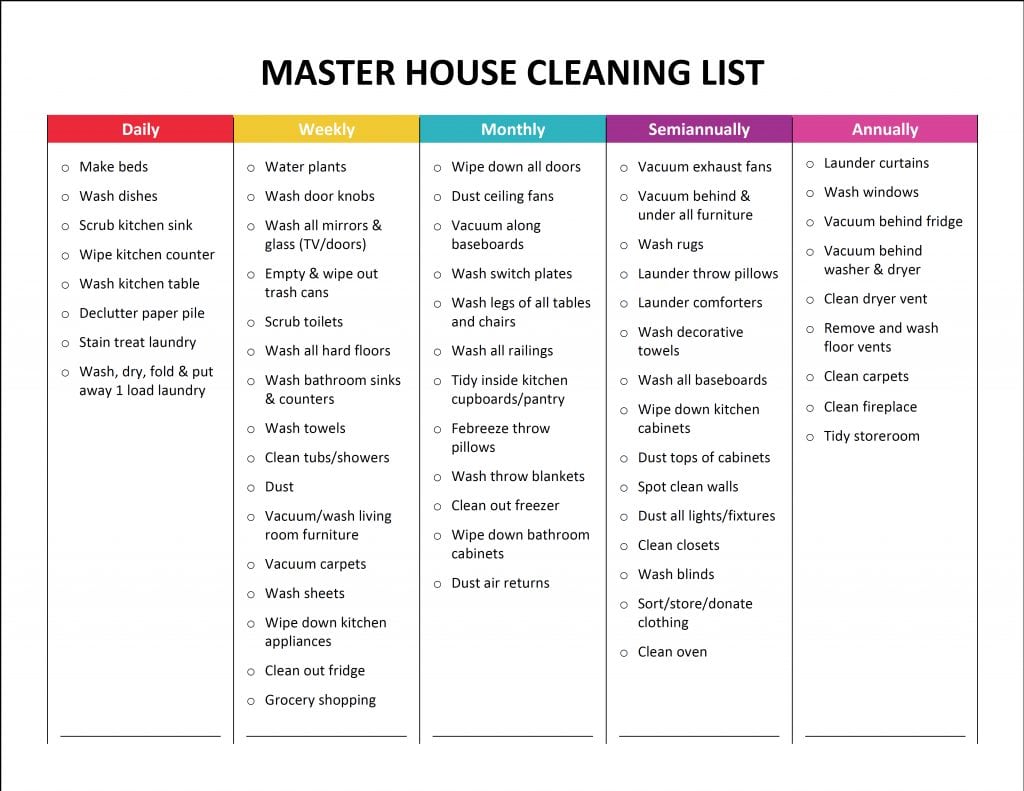

Monthly House Cleaning List
Ultimate House Cleaning List
House Cleaning List For Spring Season
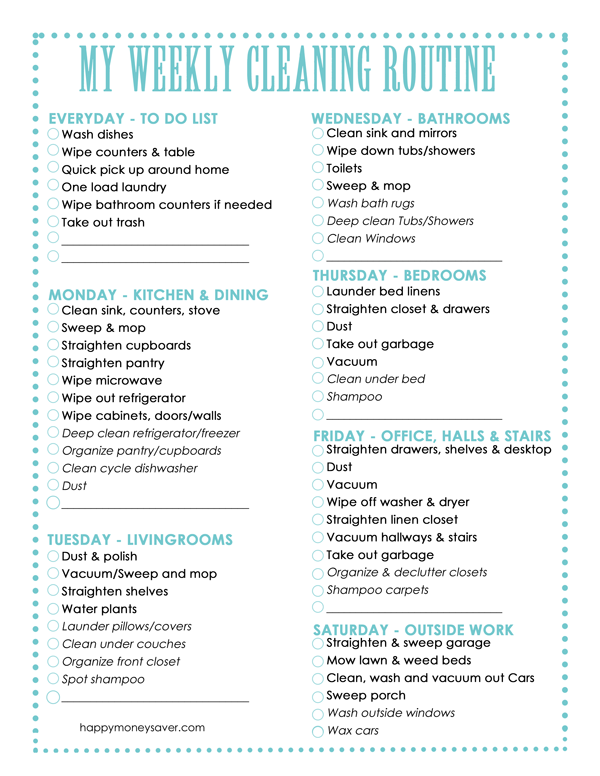
Weekly House Cleaning Routine
Frequently Asked Questions
Is a weekly cleaning schedule right for every household?
No. Weekly is one planning interval. Adapt the routine to your household, actual needs, and relevant instructions rather than treating a sample as a universal schedule.
How does this differ from a general cleaning checklist?
This guide organizes recurring household responsibilities across periods. A general cleaning checklist can record a particular area or session and its completion status.
Are there five working downloads below?
The original gallery has five previews. Two graphics link to external articles and three graphics are unlinked; the collection does not establish five available editable downloads.
Should I keep daily and seasonal tasks together?
Separate them when the combined page becomes difficult to use. A regular routine and an occasional-work list can each have a clearer scope.
What if a task cannot be completed on the planned day?
Record the reason and agree the next action. A deferred status is more accurate than a completion mark when the work remains unfinished.
Can children or other household members use the list?
Assign tasks according to the person’s actual ability and appropriate guidance. A template does not establish that every task is suitable for every user.
Does the list explain which products to mix?
No. Follow the relevant product instructions and do not mix products or chemicals. The list organizes work rather than supplying a chemical procedure.
How should I reuse a completed list?
Keep the completed period distinguishable from the next copy. Clear actual completion marks, update dates, and review open tasks and any changes to the master.


