An auction bid sheet template organizes offers for a named item under the event’s stated bidding rules. Specify bidder identification, bid increments and the closing process before printing. Keep item value, winning bid and payment status separate so volunteers can review the result without guessing.
Use a charitable donation form to record donated items, a sales receipt to acknowledge an auction purchase and a payment history record to track outstanding collections. Record auction proceeds separately from gifts rather than assuming each winning bid is a deductible donation.
This collection has five auction-form previews. Two resource graphics are unlinked, while the other destinations include two external pages and a PDF whose filename identifies silent-auction guidelines. That PDF should not automatically be described as an editable bid sheet. Review each resource’s actual content and format; the previews are examples, not five confirmed editable downloads.
Use this overview to choose fields and compare bidding arrangements. For detailed preparation and closure of a paper silent auction, see the silent auction bid sheet collection. Keep general attendee planning in a guest list and the event’s running order in an daily schedule so those documents do not become substitutes for the item-specific bid record.
What Is an Auction Bid Sheet?
An auction bid sheet is a form used to record offers made by participants for a particular auction item. In a traditional auction, bidders may make offers verbally, while a silent auction generally allows participants to write their bids directly on a bid sheet. The highest eligible bid at the closing time typically determines the winner according to the auction’s rules.
A silent auction bid sheet is therefore an important part of the event because it provides a visible record of competing bids. It can also communicate important information about the item, starting price, minimum bid increments, and closing instructions.
Free Silent Auction Bid Sheet Template
A free silent auction bid sheet template can be particularly useful for charities, schools, churches, community organizations, and nonprofit fundraising events. Each auction item can have its own sheet, allowing participants to review the item information and enter their bids.
A good silent auction form should be easy to read and simple to complete. Clear spaces for bidder names and bid amounts make it easier for organizers to determine the winning bidder when bidding closes.
What Should an Auction Bid Sheet Include?
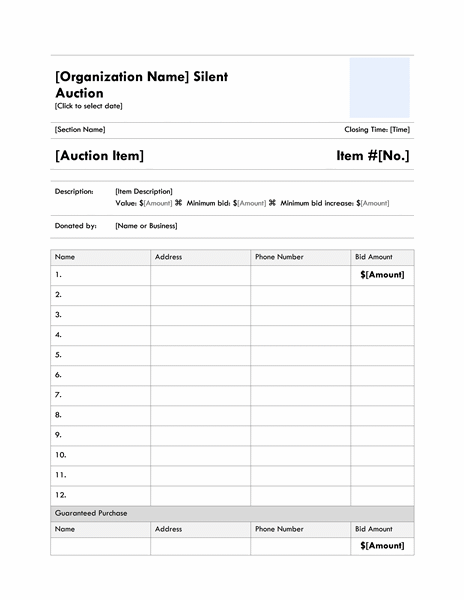
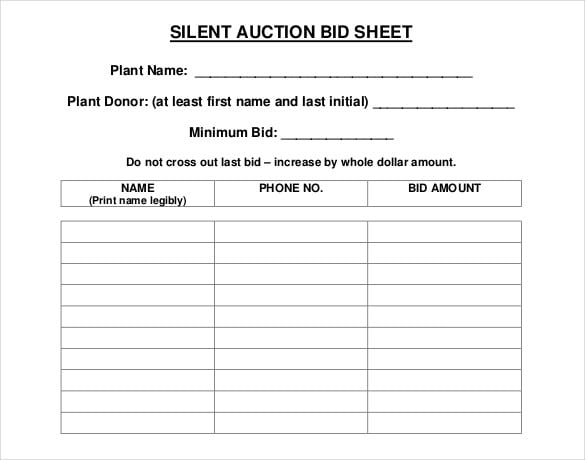
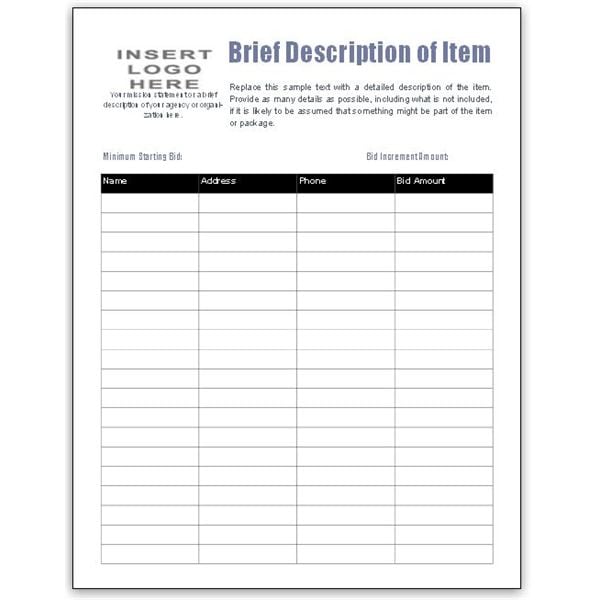
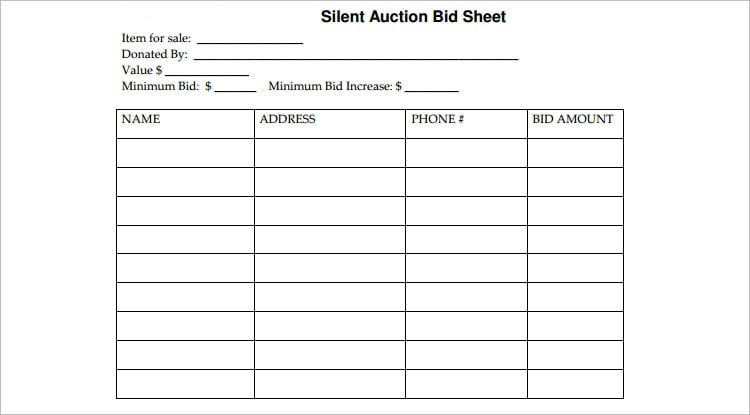
A professional auction bid form can include the item name or number, item description, starting bid, minimum bid increment, bidder name, contact information, bid amount, and auction closing information. You can also include special instructions or terms associated with the item.
The exact format depends on the type of auction. A charity auction may include donor information and an estimated item value, while a business or estate auction may require additional identification or item details.
How to Use an Auction Bid Sheet
Before the auction begins, assign a unique number or identifier to each item and prepare a separate bid sheet for each item. Enter the item description and starting bid so participants know what they are bidding on.
During the auction, participants enter their names and bid amounts according to the event rules. At the designated closing time, bidding stops and the organizer reviews each sheet to identify the highest valid bid.
For a silent auction, it is important to communicate the closing time clearly and prevent additional bids after the auction has officially ended.
Auction Bid Sheet for Fundraising Events
A charity auction bid sheet can help nonprofit organizations organize fundraising events professionally. Auction items may include donated products, gift certificates, experiences, services, artwork, or other valuable items.
Using individual bid sheets makes it easier to manage numerous auction items and provides a simple record of bidding activity. Organizers can also use the completed sheets to identify winners and communicate payment or collection instructions.
The templates on this page can be adapted to suit the format and rules of your event.
Printable Auction Bid Sheet
A printable auction bid sheet template is ideal for events where participants physically write their bids. You can print multiple copies before the event and place one beside each auction item.
An editable template can also be customized with your organization’s name, event title, logo, auction date, bidding instructions, and other relevant information. This creates a consistent appearance across all items while making the bidding process easier for participants.
Choose the layout for the bidding method
A visible paper sheet can show a sequence of bids beside an item. A private or sealed-bid arrangement collects offers differently and needs its own instructions about submission and review. A live auction may rely on a different recording process. Do not use “silent” to imply that every auction format is interchangeable or that participants can take an item immediately after writing an offer.
For a visible bid sequence, give each participant a clear row and show the applicable starting amount and increment. For individually submitted offers, the document needs enough identification to connect the submission to the item and bidder while following the event’s stated rules. The organizer should decide the process before printing a form.
Keep rule details consistent across the participant instructions, item display, and bid record. If the event uses bidder numbers, make the number field prominent rather than asking for a public list of telephone numbers beside every item. Maintain the appropriate contact information separately through the event’s registration process.
Give the item a reliable identity
Assign one item identifier and use it on the display, bid sheet, result record, and collection record. A short item name helps a reader, but an identifier reduces confusion when two baskets or similar experiences have nearly the same title. Check that the sheet remains beside the correct item during the event.
Describe what is actually included. For a service or experience, state the relevant restrictions from the actual offer: required booking, availability conditions, included participants, or expiry where applicable. Do not add a promise that the donor or provider has not made. A sheet can summarize the terms and point to the fuller description when the details need more space.
An estimated value, opening bid, bid increment, and final winning bid are different figures. Label them separately. An opening bid is an event rule, not proof of market value; a winning bid is an offer selected under the rules, not proof that payment was received. Avoid a single “value” field that leaves staff guessing which amount belongs there.
Fictional comparison of two item sheets
Consider an invented event with a garden basket identified as A-014 and a workshop place identified as A-015. The basket description lists the included items. The workshop description identifies the actual booking conditions and what the place covers. Both sheets show the same event closing procedure, but their item-specific restrictions differ.
The basket might have an illustrative opening bid of 30 and an increment of 5. A later offer of 33 would need review under that stated increment rule rather than automatic acceptance just because it is higher. The example does not prescribe universal auction rules; the organizer’s published process determines how exceptions and invalid entries are handled.
For the workshop place, a high offer from a bidder who misunderstood the booking restriction creates a different question. Clear description before bidding is better than trying to explain the restriction only at collection. Staff should know who can clarify item terms during the event, and any material correction should be communicated through the established process.
These examples show why the item description and bidding rules need separate areas. Reusing a single blank master can provide consistency, but copying the previous item’s completed sheet can accidentally carry forward the wrong restrictions, opening price, or identifier.
Make bidder entries readable and reviewable
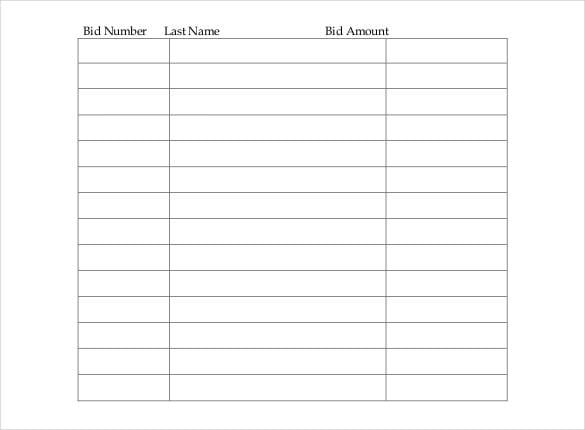
Use enough writing space for the actual fields and label the amount with a currency. If the event uses bidder numbers, describe where participants obtain and find theirs. A number on a bid row is useful only if the authorized event staff can connect it to the registration record.
Provide clear closing information and the route for asking questions. Do not rely on a small footer that conflicts with an announcement or another sheet. Decide how a full sheet is continued before the event, so an overflow page remains attached to the correct item and does not restart a competing sequence of bids.
Avoid erasing an entry merely to make the page look tidy. Follow the event’s correction and review process and preserve enough information for staff to understand what changed. Illegible amounts, missing identifiers, and duplicate offers should be routed to the designated reviewer rather than resolved by an arbitrary guess.
Keep the winning bid separate from payment and release
After bidding closes, staff review the record according to the stated rules and identify the accepted result. They then use the appropriate payment and collection process. Record those later events separately: winner identified, payment confirmed, and item released are different statuses.
A bid sheet should not contain card credentials or serve as a makeshift checkout. Use the event’s approved payment route and retain the permitted payment reference where needed. For collection, use the item and bidder identifiers to reduce the risk of handing a similar item to the wrong person.
For a charitable event, do not label the full winning bid automatically tax-deductible. US IRS guidance treats charity-auction purchases in relation to the item’s fair market value and other requirements. Applicable treatment depends on the jurisdiction and circumstances; the bid sheet itself is not a tax receipt or a determination of an individual’s deduction.
Review the master before the event
Check the event name, date, item identifier, description, currency, opening bid, increment, closing instructions, and contact route. Confirm that any restrictions came from the actual item offer. Keep a blank master separate from completed item sheets, and issue the correct version to the people setting up the display.
Use a small sample item to review whether volunteers and participants can find the instructions and write comfortably. This is an editorial usability check for your adopted layout, not evidence that a historical resource is current or approved. A simple sheet that clearly supports the chosen process is more useful than an ornate form with ambiguous rules.
Auction Bid Sheets Templates Are Added Here

Frequently Asked Questions
Are all five resources editable bid sheets?
No. Two graphics have no resource link, two lead to external pages, and one PDF destination is named as auction guidelines. Review each resource’s actual purpose and format.
Can the same layout support every auction method?
Adapt it to the actual collection and review process. Visible sequential bids, private submissions, and live-auction recording need different instructions and fields.
Is the opening bid the item’s market value?
No. An opening bid is a bidding rule. Keep any estimated value and the eventual accepted bid in separately labeled fields.
Should telephone numbers be visible on every item sheet?
Use the event’s actual identification process. Bidder numbers can connect entries to a separately maintained registration record without publicly repeating contact details.
What if a bid does not follow the stated increment?
Use the event’s published rule and designated review process. Do not invent an exception or assume every higher number is valid.
Can a bidder collect an item as soon as they write an offer?
Follow the event’s result, payment, and collection process. Recording an offer is not the same as being confirmed as the winner or having paid.
Is the entire winning bid automatically tax-deductible?
No. Charity-auction treatment depends on applicable rules and circumstances, including value received. The bid sheet does not establish a deduction or replace required documentation.
What should an overflow sheet show?
Keep the item identifier and the continuation relationship clear, using the event’s established process. Do not leave staff with two independent-looking sheets for the same item.