
A requisition form template helps a department explain what it needs, why, how much and by when. Include specifications and an approval route so the reviewer can assess the request without repeated clarification. Submission records a need; approval and purchasing remain separate steps.
Assign follow-up on a task list, review estimates using a cost analysis spreadsheet and support reimbursable costs with an expense report where appropriate. Give the request a reference that follows it through review rather than treating a quoted price as permission to spend.
The twelve previews below include seven local resource links: six ZIP archives and one DOCX file. Five previews have no separate download attached. The collection includes general and purchase-request labels as well as a club example. Inspect an archive’s contents and compare the fields before assuming that every preview offers the same editable format.
This guide focuses on internal resource and purchase requisitions. The request can concern stock already held or something that may need purchasing, depending on the organization’s procedure. A supplier-facing purchase order is a later, separate document where that process uses one. Keep the requisition’s approval status clear throughout the workflow.
What Is a Requisition Form?
A requisition form is an internal request submitted by an employee or department to obtain something required for business operations. It may be used to request office supplies, equipment, inventory, materials, repairs, services, or other resources.
A well-designed requisition form template provides a consistent way to document requests and gives managers or purchasing staff the information they need to review and approve them.
Purchase Requisition Form
A purchase requisition form is commonly used before a purchase order is created. An employee identifies the products or services required, provides the relevant details, and submits the request for approval.
Once approved, the purchasing department can use the information to obtain quotations, select a supplier, and create a purchase order where appropriate. This process helps organizations maintain better control over purchasing and spending.
What Should a Requisition Form Include?
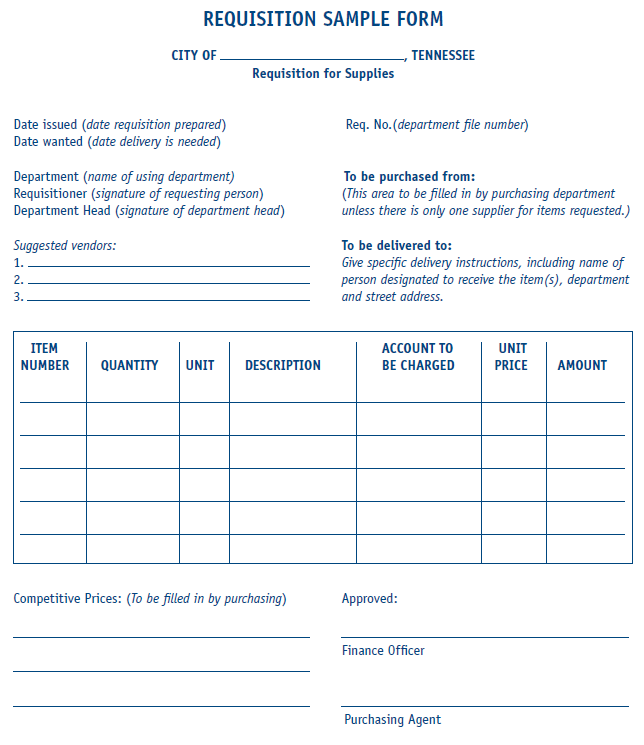
A useful requisition form may include the requester’s name, department, date, required date, item or service description, quantity, estimated cost, reason for the request, supplier information, and approval details.
The exact fields should reflect the organization’s purchasing process. A small business may need only a simple request form, while a larger company may require multiple approval levels and budget information.
Free Requisition Form Templates
These free requisition form templates provide a convenient starting point for businesses, schools, offices, nonprofit organizations, and other institutions that need a structured purchasing or resource-request process.
An editable requisition form template can be customized with your organization name, department information, approval fields, purchasing instructions, and other requirements. A printable version can also be useful when requests are processed manually.
Requisition Form vs. Purchase Order
A requisition form and purchase order are not the same document. A requisition form is generally an internal request to obtain approval for a purchase or resource, while a purchase order is typically an official document sent to a supplier to request goods or services under specified terms.
Using a requisition process before issuing purchase orders can help organizations review expenses and ensure purchases are authorized.
Benefits of Using a Requisition Form
A standardized purchase requisition template can make internal purchasing more organized and easier to track. It can help businesses document who requested an item, what is needed, why it is needed, and who approved the request.
This can improve communication between employees, department managers, finance teams, inventory staff, and purchasing departments. It can also provide a useful record for reviewing business expenses and purchasing decisions.
How to Create a Requisition Form
Start by identifying the information your organization needs before approving a purchase. Add fields for the requester, department, date, requested items or services, quantities, estimated costs, purpose, and approval.
Keep the form simple enough that employees can complete it quickly. If multiple approvals are required, provide clearly labeled spaces for each responsible person.
A professional requisition form template should make the request easy to understand and provide enough information for the purchasing team to evaluate it without repeatedly contacting the requester for missing details.
Check whether the item is already available
Before preparing a purchase request, check the relevant stock record or ask the responsible team where the procedure requires it. An item available in another approved location may not need a new order. Record the result of the check so the reviewer can understand the request.
An inventory worksheet can organize item identifiers and quantities held. Its usefulness depends on whether the record is current and matches the location being checked. Do not assume an old spreadsheet balance means the requested quantity is physically available today.
Distinguish an internal issue request from a new purchase. A department asking for supplies from a storeroom may need a quantity, destination and authorization rather than a proposed supplier. A purchase requisition may need pricing and budget information. Choose the fields that match the actual route.
Describe the requirement before suggesting a supplier
Write a specific item or service description and the quantity or scope needed. Include a required specification only when it matters to the intended use. Printer supplies should identify the compatible item; professional services should describe the work rather than simply requesting consulting.
If a requester suggests a supplier, label the suggestion as such unless the organization’s process has already selected it. The requisition should not imply that a supplier has been appointed when the reviewer still needs to consider options. Explain any relevant reason for the suggestion, such as a necessary compatibility requirement.
A quotation can provide a price reference for the proposed purchase. Identify the quotation date, relevant items and any stated validity period or conditions. A remembered price or an old catalog entry should not be presented as a current confirmed offer.
A fictional supply request and estimate
Imagine a department requests four storage trays for a filing area. The fictional estimate is 12 currency units per tray, producing an item subtotal of 48. An estimated delivery charge of 6 brings the illustrated total to 54, before any other applicable amount not included in the example.
The form should identify the quantity, unit price, subtotal and delivery estimate separately. The figures are invented for the explanation; they are not current supplier prices. If the actual quote includes tax, discounts or other charges, show how those relate to the proposed total rather than copying the simplified example unchanged.
State the source and status of the estimate. A reviewer can then tell whether it came from a supplier quotation or a planning assumption. If the final price changes, route the change through the organization’s process rather than treating the original estimate as approval for any amount.
Explain the business purpose and required date
Give a short reason that links the request to the work. Four trays to separate the incoming document categories in the shared filing area is more informative than needed urgently. The reviewer can understand the intended use and ask a focused question if something remains unclear.
Distinguish the date the department would like the resource from a confirmed delivery date. A request for an item before an event is a planning need. Purchasing staff still need to check supply and delivery arrangements before describing that date as committed.
If a late delivery would affect the work, explain the effect and any acceptable alternative. Avoid using urgency as a substitute for information. The request can be time-sensitive and still require a clear description, quantity and appropriate approval.
Identify the right approval and current status
Label the request reference, preparer, department and review stage. Submitted, information requested, approved and rejected are different statuses. A signature or checkbox should correspond to the action actually taken by the authorized person.
Where several approvals apply, identify each role and purpose under the actual procedure. One reviewer might confirm operational need while another checks budget authority. A generic manager signature box should not be assumed to replace all the organization’s required decisions.
Make requested corrections specific. Quantity unclear or quotation reference missing gives the preparer an actionable response. A returned form marked only incomplete may lead to another submission that still does not answer the reviewer’s question.
Connect an approved request with the order
When the process results in purchasing, link the approved requisition to the purchase order or other supported ordering record. The purchasing document should reflect the authorized requirement and relevant agreed terms. Keep the references consistent so a reviewer can follow the request to the order.
Avoid treating requisition approval as evidence that the supplier has received an order or delivered the goods. Those are later events. If the organization orders without a purchase order in some circumstances, document the supported route rather than inventing a form solely to make the sequence look complete.
If only part of the request is approved, identify that part clearly. Approval of two units should not become an order for four because the original quantity remains visible elsewhere. Retain the request history and make the operative decision understandable.
Review changes and close the request appropriately
Record significant changes to quantity, specification, estimate or purpose with the relevant reference. Determine whether further approval is required under the organization’s rules. Do not silently revise an approved form and assume the earlier decision covers the new version.
Track whether the request has been fulfilled, cancelled or remains open. An order placed can still be awaiting delivery, while a stock issue may have a separate handover record. Use closure wording that reflects the actual workflow and leaves any outstanding portion visible.
Review the blank form periodically for fields that repeatedly cause confusion. Keep enough information for the decision without requiring every requester to complete irrelevant sections. A useful requisition supports a clear internal request and review process rather than collecting data that no one uses.
Get Requisition Form Templates Below
Sample Requisition Form




Requisition Template

Purchase Requisition Form Sample

Requisition Form Example

Requisition Form Sample Template
Club Requisition Form

Requisition form template FAQs
Are there twelve downloadable files?
There are twelve previews, but seven resource links: six ZIP archives and one DOCX file. Five previews have no separate download attached. Inspect a linked archive to confirm its actual file format and contents.
Can a requisition request existing stock?
Yes, where the organization’s procedure uses it for an internal stock issue. The fields may differ from a purchase requisition that needs a quotation or budget review. Identify which route applies before completing supplier and pricing fields.
Is a submitted form approval to buy?
No. Submission starts the internal review. Record the actual decision and authorized quantity or scope under the organization’s process. A completed requester section is not evidence that the required approver has accepted the purchase.
How should estimated costs be shown?
Label them as estimates and identify their source. Show quantities, unit prices and relevant additional charges clearly. If the actual price changes, use the required review process rather than assuming the original estimate authorizes any final amount.
Is an approved requisition the same as a purchase order?
No. The requisition records the internal request and decision. A purchase order, where used, communicates the order to the supplier. Keep their references connected and distinguish approval, ordering and fulfillment statuses.

