An attendance sheet template records whether named participants were present at defined sessions or on scheduled dates. It is useful for a class, club, training program, recurring meeting, or other group that needs a consistent attendance record. The sheet should make the dates, roster, and meaning of each mark clear.
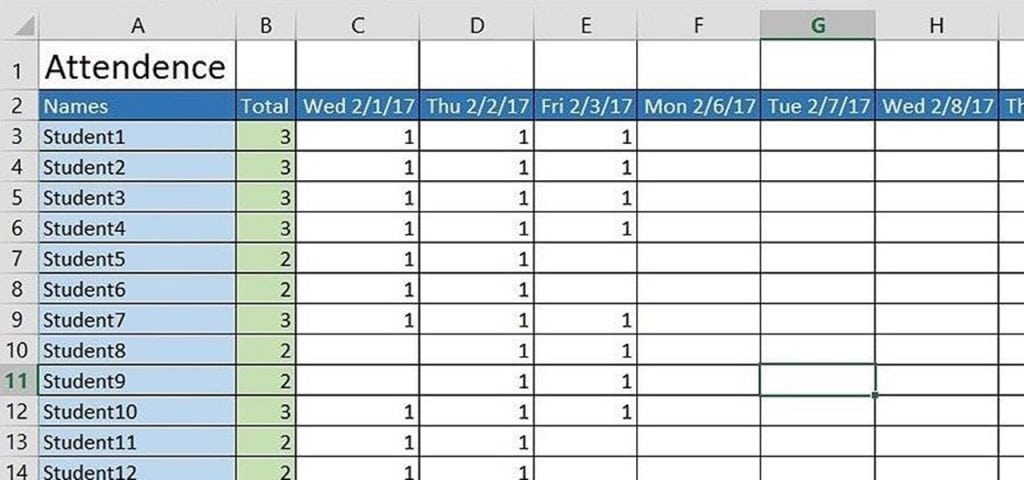
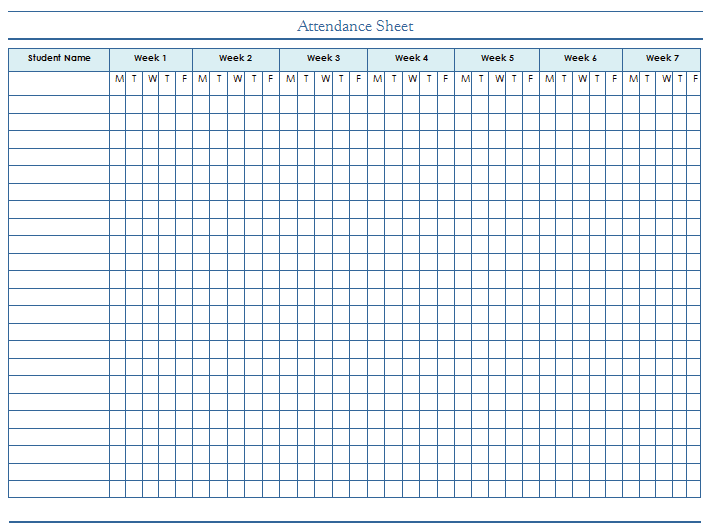
The five previews below link to a mixture of attendance resources and an Excel tutorial; one download graphic is unlinked. Although the existing title mentions PDF, the gallery does not establish that all five resources are PDF files. Check the actual destination for the available format and instructions.
This guide focuses on a roster tracked across sessions or a period. An arrival sheet for a single event is a related but different record. Attendance can support administration and review, but it does not automatically establish participation, course completion, hours worked, or an entitlement to deduct wages.
Define what attendance means
Decide what event or session the record covers and when presence is assessed. A person present at the opening of a meeting may leave before the end. If full-session attendance matters, your process needs to record that distinction.
Use the organization’s actual attendance policy and explain the relevant codes. A school, voluntary club, and workplace may use different rules. Do not copy a sample’s absence or lateness categories without checking whether they fit.
Distinguish scheduled sessions from dates when no session took place. A blank holiday column should not be treated as an absence. If the roster includes people who joined partway through the period, identify which sessions they were expected to attend.
If attendance affects a formal decision, such as a training requirement, use the approved criteria and verification process. A mark on a generic form is not a substitute for those requirements.
Set up the roster and dates
Identify the group, course, meeting series, or work area and the period covered. Include the recorder or responsible role when appropriate. A sheet with names but no group or date context can be difficult to interpret later.
Use a stable participant identifier when names alone could be confused. Keep the identifier appropriate to the setting and avoid displaying unnecessary private information. Two participants with the same name should not be merged into one row.
Place scheduled dates or session references across the columns for a repeated-session roster. Confirm the actual calendar before printing. A monthly form with all dates does not prove that every day was a scheduled attendance day.
Leave room for additions through the group’s process. If someone joins later, do not automatically count the earlier sessions as absences. Record the relevant start point so totals can be calculated on the correct basis.
Use a separate sheet or clearly identified section when the roster changes substantially. Avoid overwriting names and making old marks appear to belong to a new participant.
Use a clear code legend
A small code set can make the sheet compact. For example, the organization might use P for present, A for absent, L for late, and N for a session not applicable to that participant. These are illustrative codes, not a universal standard.
Explain how partial attendance is recorded if it matters. A late mark may indicate attendance under one policy and incomplete participation under another. The summary method should follow the actual definition.
Do not let a blank have several meanings. It might indicate a missing entry, a session not held, or a participant not scheduled. Use a clear distinction or review the blank before producing a total.
| Code | Meaning to define in your policy |
|---|---|
| P | Present under the stated method |
| A | Absent from a scheduled session |
| L | Late; summary treatment must be specified |
| N | Not applicable to this participant |
The legend should appear where the recorder and reviewer can find it. A separate set of unwritten assumptions can make otherwise neat marks unreliable.
A worked recurring-session example
Imagine a club holds four scheduled sessions in a month. A member who was expected at all four attends three and misses one. Under a simple present-session measure, that is three out of four, or 75%.
A member who joins before the third session may be expected at only the last two. If they attend both, their comparable measure is two out of two, or 100%, not two out of four.
A canceled session should not be counted as an absence. If one of the four sessions was canceled, the denominator for a member expected at every held session becomes three under this illustrative method.
Late or partial attendance needs the club’s agreed treatment. Do not silently count it as fully present or fully absent if the policy requires another category. State the method when reporting the summary.
These examples demonstrate consistent denominators. They do not establish a school’s attendance rule, an employment calculation, or a formal eligibility criterion.
Record presence through a reliable process
Choose who records the marks and when. A leader may take a roll, a participant may sign in, or another approved system may provide the record. Use the method appropriate to the group.
A sign-in sheet template can help record arrival for a single session. If that record feeds a repeated-session attendance roster, check the names and date before transferring marks.
Do not assume that every signature proves full participation. A person can arrive, sign, and leave. If duration matters, use the appropriate record and process rather than treating the signature as more evidence than it provides.
Record information close to the session where practical. If a mark is entered later from another record, keep the source available when it matters. Avoid relying on uncertain memory for a decision-sensitive attendance summary.
Attendance, scheduling, and timekeeping
A daily schedule template shows what is planned. Attendance records what happened under the defined method. Do not mark someone present solely because they were scheduled.
For a general sequence of events or work actions, a log sheet template may be more suitable. The attendance roster should remain focused on presence rather than become a record of every task completed.
Workplace attendance and hours worked are different information. A present mark alone may not show start and finish times, breaks, or the compensable work recorded under the applicable process.
United States Department of Labor guidance describes required records, including hours worked, for covered nonexempt workers under the FLSA. Use the appropriate timekeeping and payroll process. Do not apply automatic salary deductions based only on a generic attendance sheet.
For other locations and arrangements, check the applicable requirements and organizational policy. The form does not determine pay, leave entitlement, or disciplinary action.
Summaries and review
Before totaling a period, check that the roster, scheduled sessions, and codes are complete. Resolve unclear marks through the normal process instead of guessing what they mean.
Count the appropriate categories separately. Present, absent, late, and not applicable may need different summaries. A total should identify the measure rather than simply label a column “attendance score.”
Review unexpected differences with the underlying record. A duplicate name, missing date, or canceled session can distort the summary. A low percentage may indicate an entry problem rather than the actual attendance pattern.
If the organization uses the record to contact participants, handle that follow-up appropriately. The sheet can identify a question to review, but it should not be treated as a complete explanation of why someone was absent.
Protect participant information
Collect only information needed for the attendance purpose and applicable requirements. A roster generally does not need private medical explanations in a column visible to the whole group.
Keep detailed reasons for absence in the appropriate restricted process when required. A simple code can refer to an authorized category without displaying sensitive information.
Use suitable access and storage for completed sheets. A form pinned publicly or left at a shared desk can expose names and patterns of attendance. Choose the handling method appropriate to the group.
For children, employees, patients, or other sensitive settings, use the approved record and privacy process. A downloadable layout does not establish compliance by itself.
Choose and customize the resource
Compare the previews for roster space, date columns, and code legends. A weekly layout can be easier to read for a small set of sessions, while a monthly roster may suit recurring attendance.
The tutorial destination concerns creating an attendance sheet in Excel. That is instructional content rather than proof that an attached PDF is available. The employee tracker and other external resources may also differ in format and features.
Replace sample group names, dates, participant names, and codes. Check the printed size so marks remain easy to place in the correct row and column. Dense grids can increase entry errors.
If you use a spreadsheet, inspect any totals after changing the roster or adding dates. Do not assume that formulas automatically include new rows. For paper, calculate and review summaries through a consistent method.
Keep corrections understandable
Follow the appropriate correction process for the setting. Preserve the relevant history when a mark changes, especially if the record supports a formal decision. Do not silently rewrite an old entry to match a desired result.
Retain the sheet under the group’s applicable process and identify the period clearly. A reliable attendance record is one that can be understood and checked later, not merely one that has a signature at the bottom.
Below Are Attendance Sheet Templates PDF




Attendance sheet questions
Does present always mean full-session participation?
No. Define what the mark represents and record duration or partial attendance when the applicable process requires it.
Should canceled sessions count as absences?
Not under the illustrative method here. Use the group’s actual policy and distinguish sessions not held from participant absence.
How should I count a participant who joined mid-period?
Identify the sessions they were expected to attend and use the appropriate denominator. Do not automatically count earlier sessions as absences.
Can this sheet determine payroll deductions?
Not by itself. Attendance, hours worked, leave, and pay requirements need the appropriate timekeeping and payroll process.
Are all five resources PDFs?
That is not established. The collection includes different external resources and an Excel tutorial, plus one unlinked graphic. Check each destination’s actual format.