
A phone message template helps the person answering a call preserve the caller’s name, callback route, reason for calling and requested action. Confirm unclear details and distinguish the caller’s words from assumptions. Choose a layout that fits a single message or a series of calls without crowding the essential information.
Maintain standing routes in a contact list, plan agreed callbacks in a daily schedule and carry unresolved messages into a shift report when teams change. Reference the original message in follow-up records so its timing and wording can still be checked.
The previews below show sample layouts; use the download button under each preview that offers a file. One linked destination is an article URL rather than a direct document download. Compare the visible layouts and inspect the resource you select before assuming it supplies an editable file. The gallery’s original previews and links follow the written guide.
This article focuses on taking and handing over an individual telephone message, including calls when a colleague is present but cannot answer immediately. A general call log tracks several calls; an absence slip emphasizes someone being away. Choose fields that help your office handle the actual call instead of adding every possible contact detail to a small message form.
Free Phone Message Template (Word Template)
Download this ready-to-use, fully editable phone message template in Microsoft Word (.docx) format. Fill in the fields, adjust the layout to your needs, then print or save it.

What Is a Phone Message Template?
A phone message template is a reusable form for recording information received during a telephone call. Instead of writing a message on a loose piece of paper, employees can use a structured phone message form template to record the information needed by the person who needs to respond.
A typical phone message may include the caller’s name, company, telephone number, date, time, person receiving the message, and details of the request. Depending on the business, the form may also include an email address, urgency level, callback request, or additional notes.
Phone Message Forms for Business
A business phone message template is particularly useful for receptionists, administrative assistants, office managers, customer service representatives, and employees who answer calls on behalf of other people. When a manager is unavailable, a receptionist can quickly complete a message form and leave it for the appropriate employee.
Using a standard telephone message form can improve communication and reduce the possibility of missing important details. It also creates a consistent process for handling customer inquiries and internal calls.
Printable Phone Message Template
A printable phone message template is ideal for offices that prefer a simple paper-based communication system. You can print multiple copies and keep them beside a telephone, reception desk, or employee workstation.
The forms can be completed by hand and delivered directly to the person for whom the message was intended. This approach is particularly useful for small businesses that want a straightforward and inexpensive way to manage incoming calls.
Phone Message Log and Call Records
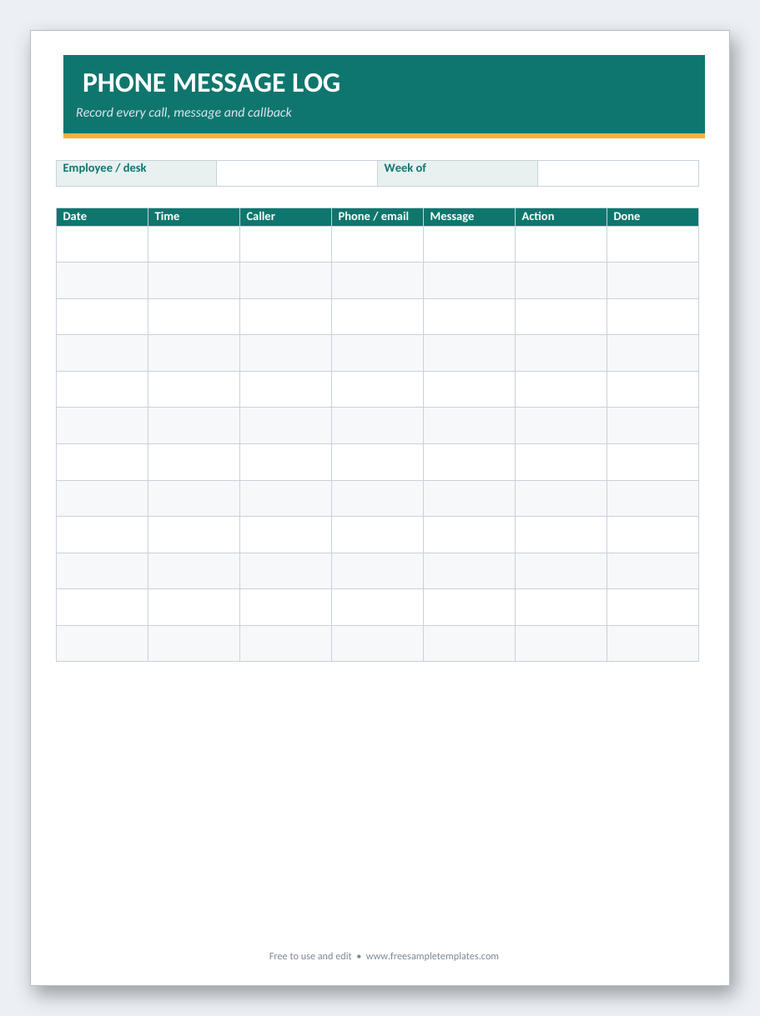
A phone message form can also be adapted into a phone message log or telephone call record. A log can help businesses maintain a record of important communications over a particular period.
For customer-service teams and sales departments, organized call records can make follow-up easier. They can also help employees remember which customers, suppliers, contractors, or business contacts require a response.
Editable Phone Message Template
An editable phone message template can be customized with your company name, logo, department information, employee names, and additional fields relevant to your business. You can create different versions for reception, sales, customer service, or administrative departments.
The templates on this page provide a convenient starting point for creating a professional phone message sheet without designing the document from scratch. If a selected resource supplies an editable file, adapt the format and print suitable blank copies according to its usage terms.
Decide what the recipient needs to act
The message should answer who called, who needs to respond, what the caller wants and how the response can be made. Record the call date and time and the person who took the message. If the form has an urgency checkbox, give the recipient the factual reason for the claimed urgency instead of supplying a label alone.
Include a reference only when it helps identify the matter, such as an order number the caller has supplied. Do not assume the reference is accurate until it has been checked in the appropriate system. A message can state Caller supplied order reference A-052 so the recipient understands where that information originated.
A contact information form can hold a fuller contact record where your office needs one. The telephone message should still contain the callback information required for this particular response. A directory entry may be outdated or refer to a general switchboard rather than the number the caller asked you to use.
Confirm names and callback instructions
Ask for clarification when you cannot confidently spell a name or hear a number. Read back the details that are essential for the response and record any extension or suitable callback window the caller provides. A clearly written message with the wrong number can be less useful than a brief message whose contact details were confirmed.
Specify who the caller wants to reach. Several people may share a first name, and a department name may not identify the person responsible for the issue. If the caller does not know the recipient, describe the matter so it can be routed through the office’s appropriate process rather than choosing someone at random.
Record whether the caller requested a phone response or agreed to another method. Do not infer permission to send information by email merely because an address appears in an existing contact record. Capture the requested next step and let the responsible recipient handle any necessary identity or authorization checks.
A fictional supplier callback message
Date: 14 May, 10:20 a.m. For: Jordan in purchasing. Caller: Casey from Example Packaging. Callback: confirmed number and extension recorded on the internal form. Message: Caller asks Jordan to confirm whether the revised carton quantity on order A-052 is approved before dispatch planning. Requested response: callback this afternoon. Taken by: Sam.
The example gives the recipient a question to answer and identifies its source. It does not say the revised quantity is approved. The message taker has captured a request; the purchasing decision remains with the appropriate person. In a real message, use the actual confirmed contact details rather than copying a fictional number.
If Jordan is unavailable, follow the agreed escalation route. A while-you-were-out slip may suit a simple absence handover, while a phone message form can support the fuller callback record. Do not create two unrelated copies with different versions of the same request unless the workflow clearly connects them.
Capture a complaint without adding a conclusion
For a customer concern, write a short account of what the caller reports and the response they request. Caller reports that one parcel has not arrived is different from The carrier lost the parcel. The latter is a conclusion that the person answering the call may not be able to establish.
Record useful factual details without transcribing the entire conversation. The caller’s reference, stated issue and requested contact time often make the next step clear. If the caller gives a specific deadline, preserve it with its context. Caller says the materials are needed before Friday’s setup is more actionable than urgent.
Avoid adding blame, personal descriptions or dismissive commentary. Write the message so another colleague could use it to respond calmly and accurately. If the matter needs a dedicated complaints process, use the message as the route into that process and identify the appropriate next owner.
Handle changes and uncertainty openly
If a detail remains unclear, mark it as unconfirmed and state what needs checking. Do not fill an empty field with a guess just to make the form look complete. A recipient can work with a clear uncertainty; an invented fact may misdirect the response.
When a caller phones again with a correction, connect the new information to the earlier message. State that the callback number, quantity or requested time has changed, and identify which version should be used. Keep the correction visible according to the office’s process rather than silently circulating another ambiguous slip.
A request to call back should not be marked completed until the appropriate response stage has actually occurred. Attempted call, voicemail left and caller reached describe different outcomes. Choose wording that accurately records what happened and leaves any outstanding action apparent.
Route the message and confirm ownership
Decide where messages go and how the recipient knows there is an outstanding request. A paper form might be handed over directly or placed in a designated controlled location. A digital form might be assigned through an approved internal system. Choose a method that fits the office and the sensitivity of the information.
Where follow-up needs tracking, add the action to a task list with an owner and due date and reference the message. The task record can show responsibility while the original message preserves the caller’s wording and contact instructions. Do not assume that delivery of a slip means someone has accepted the action.
During a shift change, identify any messages that remain unresolved and who is expected to respond. A summary can help the incoming colleague see the outstanding work, but it should not replace the source message when the details are still needed. Keep the references consistent so the right callback information is available.
Collect only information needed for the handover
A general phone message should not become a place for passwords, full payment-card details or unnecessary private background information. If a caller begins supplying information your role should not collect, direct the conversation into the organization’s approved process. The form’s empty Notes area is not a reason to record every detail.
Keep paper messages out of general public view and share digital copies through the appropriate channel. Access should match the purpose: the person responsible for the response needs the message, while unrelated recipients usually do not. Apply the office’s own retention arrangements once the matter has been resolved.
Before handing over the form, check that the recipient, callback detail, request and status are understandable. Remove irrelevant sample text and make sure handwriting or printed text is readable. A concise message with a clear next step is more useful than an extensive record whose key action is hidden.
Phone Message Templates Are Available Here
Phone message template FAQs
Are all the previews linked to downloadable files?
No. All three resource graphics have external links. At least one linked destination uses an article URL. Inspect the selected destination to determine the actual format instead of assuming every graphic provides an editable document.
What is the most important information to confirm?
Confirm the caller’s name, intended recipient, callback details and requested response. Include the date, time and the person taking the message. Ask for clarification rather than guessing details that the next person needs to act.
Should I label a message urgent?
If you use an urgency label, record the factual reason or deadline the caller provided. A label without context gives the recipient little basis for deciding priority. Follow the office’s escalation process where the reported matter requires it.
How should I record a customer’s complaint?
Distinguish the caller’s report from a verified finding. Record the issue, relevant reference and requested response in neutral language. Do not add blame or claim that a cause has been established merely because the caller described a problem.
Is delivering the message the same as resolving it?
No. Delivery, ownership, attempted contact and completed response are separate stages. Record the actual status and identify any outstanding action. A linked task record can help the team track follow-up without changing the original message.

