
Certificate samples help an authorized issuer recognize a contribution or completed activity with clear wording. Identify the recipient, issuer, occasion and date, and state exactly what is being recognized. Choose appreciation or completion wording that matches the evidence rather than implying an unrelated qualification.
Use an awards event program to place recognition in the ceremony, confirm attendance through an attendance sheet when relevant and accompany personal thanks with an appreciation letter. Attendance, completion and exceptional achievement describe different things and should retain their own labels.
This page now includes two original downloads: Certificate of Appreciation and Certificate of Completion. Choose the Certificate of Appreciation for a specific contribution. Choose the Certificate of Completion when the named activity’s stated requirements have actually been completed.
The new files appear first with previews and clearly labeled download buttons. The original gallery and its resource examples follow the practical guide; descriptions of the older collection refer to that original gallery. The new PDFs have fillable fields; save a local copy, open it in a compatible PDF viewer, and review the saved result before printing or sharing.
Use a gift voucher for a defined redeemable benefit, a marriage keepsake guide for commemorative wedding designs, and a birth keepsake guide for decorative birth layouts. This overview focuses on recognition and completion wording while keeping those other purposes distinct.
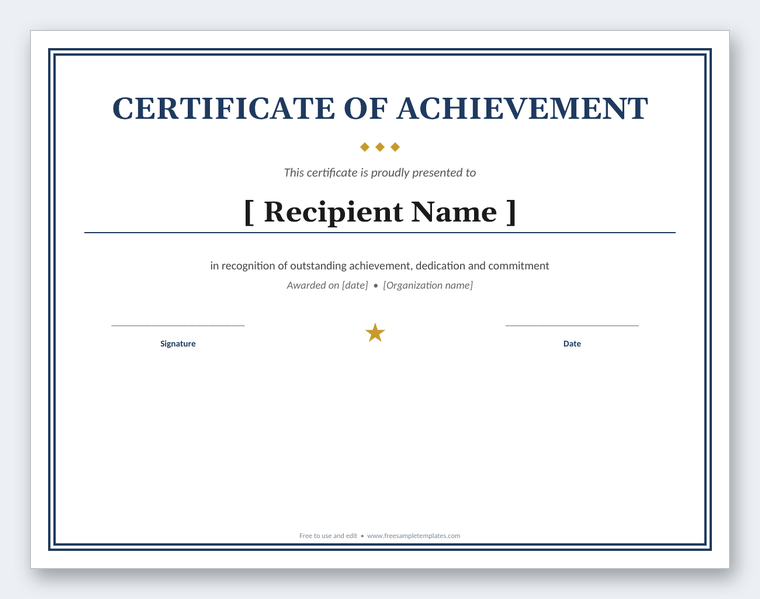
Free Certificate of Achievement (Word Template)
Download this ready-to-use, fully editable certificate of achievement in Microsoft Word (.docx) format. Fill in the fields, adjust the layout to your needs, then print or save it.

Two new templates to download
Choose the Certificate of Appreciation for a specific contribution. Choose the Certificate of Completion when the named activity’s stated requirements have actually been completed.
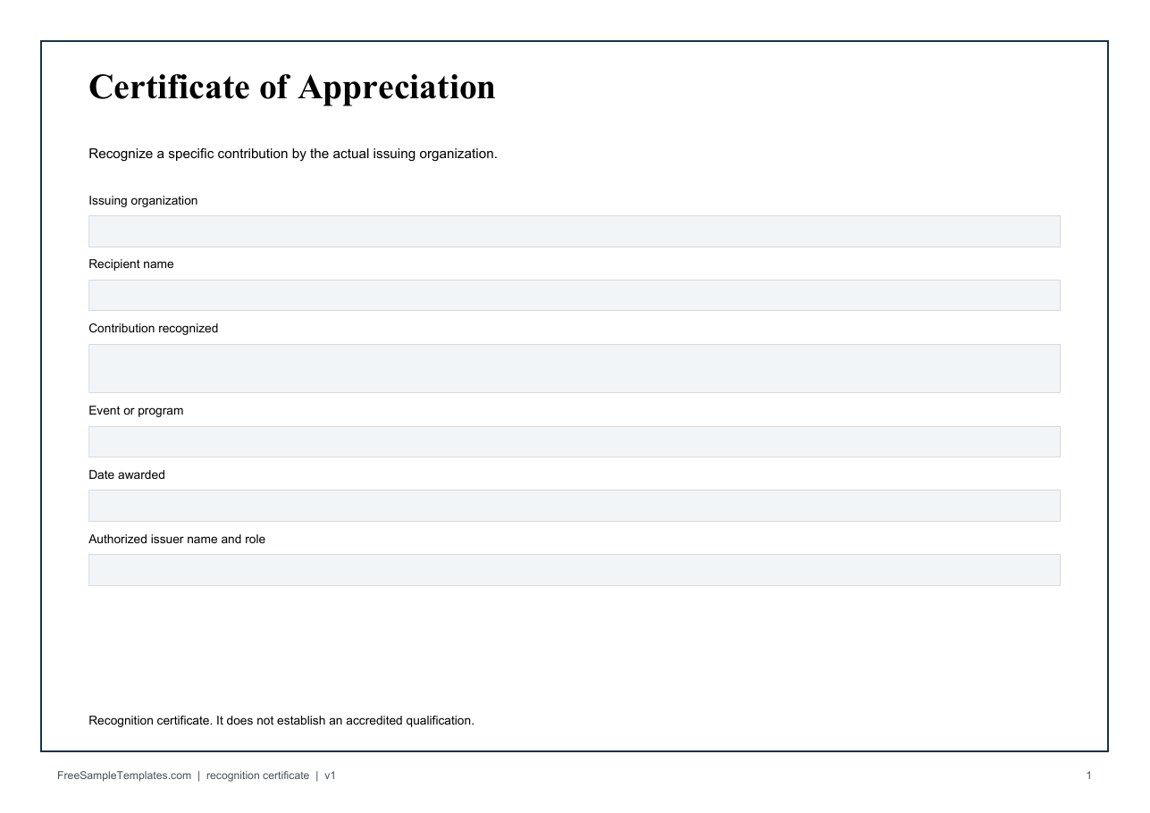
Certificate of Appreciation
Recognize a specific contribution by the actual issuing organization.
Download Certificate of Appreciation (PDF)
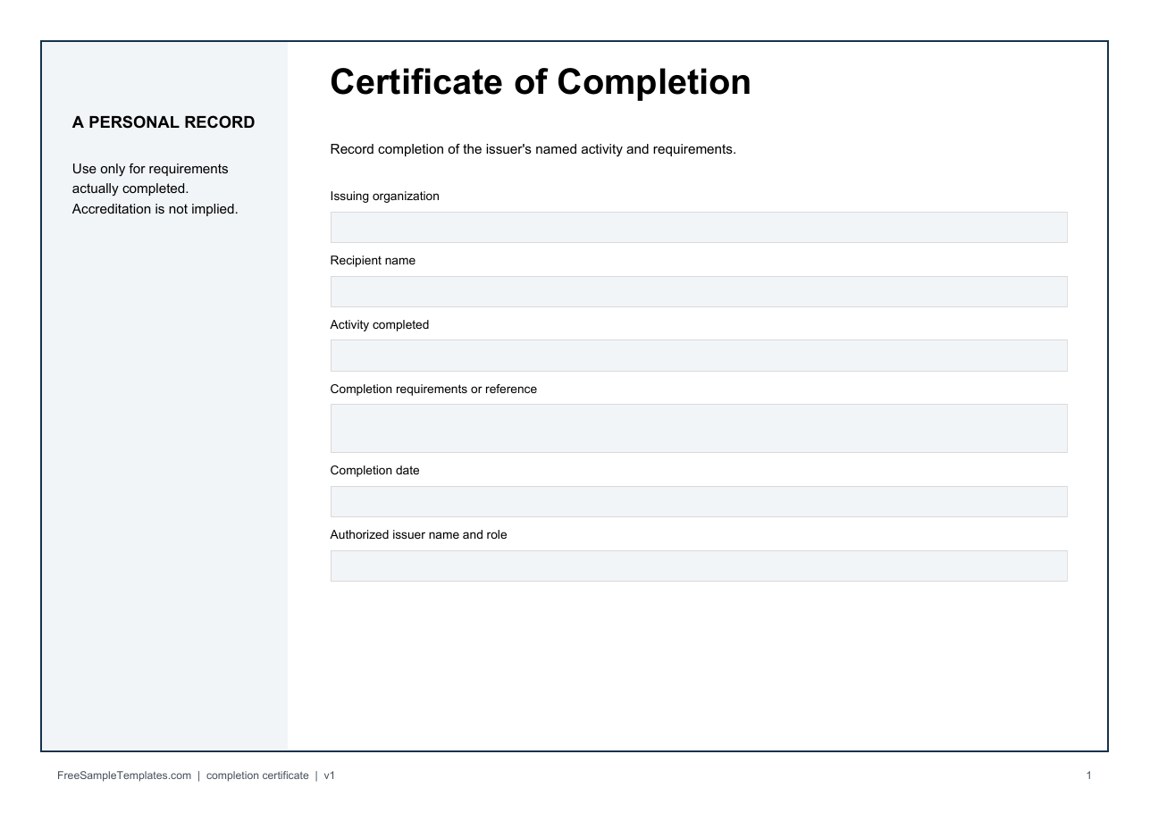
Certificate of Completion
Record completion of the issuer’s named activity and requirements.
Download Certificate of Completion (PDF)
How to use the new downloads
Enter the actual issuing organization and recipient, then make the certificate wording match the underlying event. Appreciation should describe the contribution being recognized. Completion should name the activity and relevant requirements or record reference, with the appropriate completion date and authorized issuer.
For a fictional community workshop, volunteering at registration could receive appreciation, while meeting the issuer’s defined course requirements could receive completion recognition. Do not change one into an accredited qualification simply by adding decorative language. Before printing a batch, check name spelling, dates, issuer authority, and consistency with the underlying records.
What Is a Certificate Sample?
A certificate sample is an example of how a formal certificate can be designed and worded. It provides a visual and written reference that can be adapted for a particular purpose.
A professional certificate normally identifies the recipient and explains the reason for recognition. It may also include the issuing organization’s name, date, signature, certificate number, title, and an appropriate statement of achievement.
Using a certificate sample template can make it easier to create a consistent design for multiple recipients. Schools, companies, and organizations can customize the same basic format for different awards and occasions.
Free Certificate Templates for Different Occasions
A free certificate template can be adapted for many situations. Businesses can create employee recognition certificates, training certificates, appreciation awards, and achievement certificates. Schools and educational organizations can use certificates for academic accomplishments, course completion, attendance, participation, and extracurricular achievements.
Certificates are also commonly used for workshops, seminars, competitions, volunteer programs, professional training, community events, and special recognition.
The wording should match the purpose of the certificate. A certificate recognizing achievement should clearly describe what the recipient accomplished, while a certificate of participation should indicate that the person participated in a particular event or program.
How to Create a Professional Certificate
Start by selecting a certificate design that matches the occasion. Add the organization or institution name, certificate title, recipient’s full name, and the reason for presenting the certificate.
Use clear and professional wording so that the achievement is immediately understandable. Add the date and appropriate signatures, and consider including a logo or other branding elements.
For formal certificates, typography and spacing are important. The recipient’s name should be prominent, while supporting information should remain easy to read. A balanced layout can make even a simple printable certificate template look professional.
Certificate of Achievement and Award Certificate
An achievement certificate recognizes a specific accomplishment, performance, skill, or milestone. It can be presented to students, employees, team members, athletes, volunteers, or participants who have reached a particular goal.
An award certificate is generally presented to recognize exceptional performance or a special contribution. It can be used for employee awards, academic recognition, competitions, community activities, and organizational events.
The wording should be specific enough to explain why the recipient is receiving the certificate rather than relying only on a generic statement of recognition.
Certificate of Completion
A certificate of completion confirms that a person has successfully completed a course, training program, workshop, class, or other structured activity.
It is commonly used by educational institutions, training providers, businesses, online course creators, and professional organizations. The certificate may include the name of the course, completion date, recipient, issuing organization, and authorized signature.
Editable and Printable Certificate Samples
An editable certificate template makes it easy to replace sample information with the actual recipient’s name, organization, date, achievement, and other details. You can also add a logo or modify the wording to suit your event.
A printable certificate template can be printed on standard paper or high-quality certificate paper, depending on the occasion. For formal awards, using heavier paper can give the finished certificate a more professional appearance.
Before printing multiple certificates, proofread names, dates, titles, and signatures carefully. Even a small spelling error can make an otherwise attractive certificate look unprofessional.
Why Use Certificate Samples?
Certificate samples provide inspiration when you are unsure how to structure or word a certificate. They can save design time and help maintain a consistent appearance when preparing certificates for multiple recipients.
They are particularly useful when creating certificates for employee recognition, school awards, training programs, workshops, appreciation events, competitions, and community activities.
A good certificate should be meaningful to the recipient while clearly communicating the achievement or reason for recognition.
Match the statement to the evidence
A participation certificate can state attendance or involvement without claiming assessment of competence. A completion certificate can identify the actual program requirements completed. An achievement award should explain the particular accomplishment rather than imply a broader qualification.
Before issuing a certificate, confirm what the organization’s records support. A person’s name on an attendance sheet does not establish every learning outcome. A template cannot supply the missing assessment, authorization, or record needed for the statement.
Use specific wording that reflects the event. “Participated in the community workshop” and “completed the assessed course requirements” describe different facts. Choose the wording according to what actually occurred, rather than whichever phrase looks most prestigious in the design.
Fictional examples of limited recognition
For an invented community workshop, a participation certificate could identify the participant, workshop name, actual date, and organizing group. It acknowledges participation without presenting the document as a professional licence or an accredited qualification.
For an invented volunteer event, an appreciation certificate could thank the recipient for a named contribution. The issuer can recognize the actual service without inventing a national award or suggesting an endorsement by another organization.
For an invented internal training activity, a completion statement should follow the real completion criteria. If the organization recorded attendance only, the wording should preserve that limit. A decorative border cannot convert attendance into a verified skills assessment.
Make the issuer and authority clear
Name the actual issuing organization and the person authorized to approve the recognition. Use branding through the appropriate authorization. Do not borrow another institution’s logo, seal, or signature image to make a local award appear to be issued elsewhere.
A signature can identify an actual signer’s role, but a copied image is not a substitute for authorization. Keep the blank master clear of completed approval marks. The organization needs its own process for deciding and recording what it issues.
If the certificate is commemorative or an example, make that purpose clear where confusion is possible. A sample should not be used as a replacement for a government-issued record or a credential that requires an authorized issuing process.
Keep a consistent issue record
For multiple recipients, connect the names and award categories with the appropriate source list. Record the actual issue details where the process needs tracking. A certificate number is useful when it links to a real record rather than being a decorative invented code.
Check each recipient’s spelling and the precise award statement before producing the final copies. Similar names or repeated rows can lead to a certificate being assigned to the wrong person. A batch layout makes consistency easier but does not prevent data errors.
For a replacement or correction, identify its relationship to the original through the issuer’s process. Reprinting a certificate should not silently create another achievement or change the stated date. The visual copy and underlying recognition record should remain consistent.
Review external examples before adopting them
The completion destination is an external sample page, while the appreciation, gift, and recognition destinations have their own contexts. Inspect what the selected resource actually provides. Do not assume every preview offers a downloadable Word file, spreadsheet, or unrestricted reuse.
The gift example belongs to a redeemable-benefit context rather than educational recognition. Its terms and issue process need separate consideration. A uniform decorative style does not make a gift certificate and a course-completion certificate perform the same function.
Use examples as layout references while writing accurate content for the actual issuer. An old caption or impressive title should not determine what can truthfully be certified. Keep file-format and availability claims tied to the resource you actually inspect.
Balance readability with presentation
Give the recipient’s name, certificate purpose, issuer, and relevant date clear visual hierarchy. Supporting details should remain readable at the intended print size. Decorative flourishes can frame the message without obscuring what the document actually says.
Try a realistic long name and program title before adopting the master for a batch. These can wrap differently from the sample. Adjust spacing deliberately rather than shrinking essential text until the statement is difficult to read.
Check dates and terminology for consistency. Completion date, presentation date, and issue date can describe different events. Use the relevant label rather than placing several dates on the page without explaining them.
Maintain a usable blank master
Remove actual recipient names, dates, certificate numbers, and approval marks before saving a reusable blank copy. Retain the appropriate labels and authorized branding. Keep completed certificates distinguishable from the master used to prepare the next batch.
Review the master when the issuer’s name, program, recognition categories, or approval process changes. An attractive old layout may contain a role title or statement that no longer applies. Reuse should preserve design work while allowing the facts and process to stay current.
A useful certificate communicates accurate recognition in a readable form. It does not create qualifications or official authority through appearance alone. The strongest design supports a clear statement that the actual issuer can substantiate.
There Are Free Certificate Samples
Certificate of Completion:
Certificate of Appreciation:
Gift Certificate:
Certificate of Recogniation:
Certificate of Recognition:
Frequently Asked Questions
Does a sample create an accredited qualification?
No. A layout does not establish accreditation, professional licensing, or assessment. The statement needs the actual authorized process and supporting records.
Is participation the same as successful completion?
No. Participation records involvement, while completion depends on the activity’s actual criteria. Use wording that matches the evidence.
What formats are the two new downloads?
The two new files are fillable PDFs with different purposes and matching previews. Open them in a compatible PDF viewer, complete the fields and save your copy. They are not DOCX files, and numerical PDF fields do not calculate totals automatically. The original gallery has its own mixed resources and formats.
Can I use a gift certificate for course recognition?
They serve different purposes. A gift certificate describes a redeemable benefit, while recognition or completion wording describes an actual activity or achievement.
Should every certificate have a serial number?
Use one when the issuer’s process needs tracking. A number has practical value when connected to a real issue record.
Can I copy another institution’s seal?
Use branding only through appropriate authorization. A local recognition document should identify its real issuer.
What dates should appear?
Use the relevant completion, presentation, or issue date and label it clearly. Do not substitute an invented date from a sample.
What should be checked for a batch?
Verify recipient names, award categories, exact statements, dates, issuer details, and actual approval before producing the final copies.


