A phone interview follow-up email acknowledges the conversation and reinforces a relevant point or agreed next step. Keep it concise, accurate and tailored to the interview. You can thank the interviewer while the decision is pending; a follow-up should not assume an outcome.
Track agreed dates in a daily schedule, use the employee referral guide to understand referral records and compare endorsement wording in business reference letters. A thank-you, a referral and a recommendation serve different purposes in recruitment.
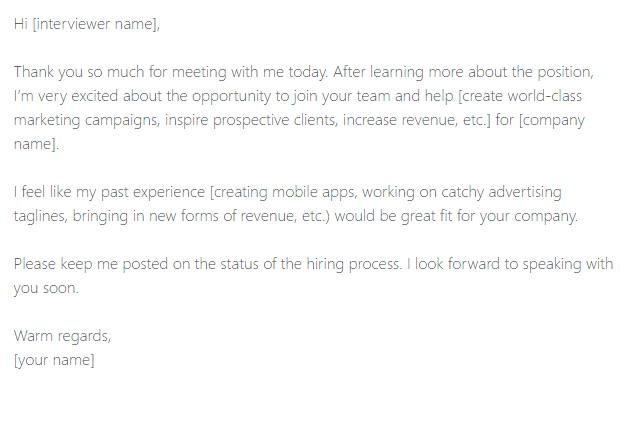
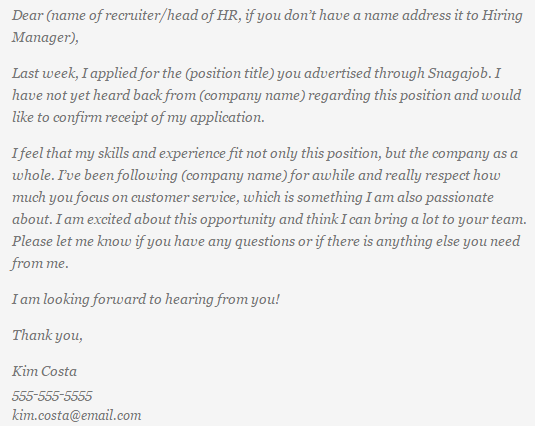
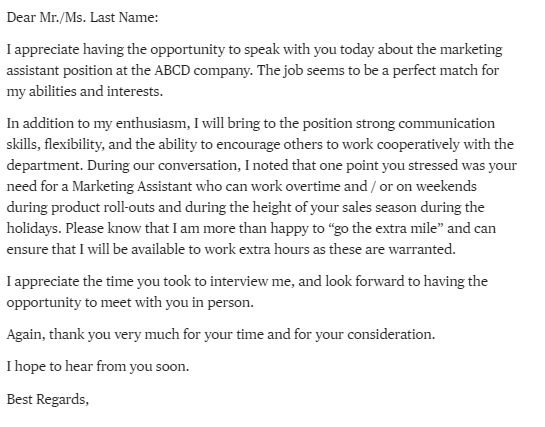
The five previews below link to external interview and follow-up resources. They include different kinds of follow-up advice and examples, so check the actual destination before copying its structure. The collection does not establish that every preview provides an editable download file.
Use the message to continue the conversation professionally, not to repeat your entire application. A specific thank-you or clarification can be useful, but it cannot guarantee selection. Follow the recruiter’s communication instructions and keep later status enquiries separate from the initial thank-you.
Choose the purpose before writing
A thank-you message acknowledges the interviewer’s time and refers to a relevant part of the conversation. It can briefly restate your interest when that interest is genuine.
A clarification message corrects a material factual mistake or supplies information requested during the interview. It should be concise and accurate. Do not use it to rewrite every answer you wish had sounded better.
A status enquiry asks about the process after the stated timeline or appropriate interval. It should identify the role and interview without implying that silence means rejection or acceptance.
A withdrawal message informs the recruiter that you no longer want to continue. It should be clear and courteous rather than pretending to remain interested. Choose the message that matches your situation.
Send to the right person
Use the contact route provided by the recruiter or interviewer. Check the name, spelling, role title, and organization. An old address copied from another application can send the message to the wrong person.
If you spoke with more than one interviewer, follow the process they provided. Separate brief notes can be appropriate when you have the right contacts, but do not search for private addresses or send the same message repeatedly through several channels.
If a recruiter arranged the call, they may be the appropriate route for a message or requested information. Do not bypass an instruction that communications should go through that person.
Use a subject line the recipient can recognize, such as “Thank you — Customer Support Coordinator interview.” Include a reference when it helps distinguish the application.
A short thank-you example
The following sample uses fictional names and a role for illustration.
“Subject: Thank you — Customer Support Coordinator interview
Dear Amira,
Thank you for speaking with me today about the Customer Support Coordinator role. I appreciated learning how the team records unresolved customer requests and coordinates follow-up.
Our discussion reinforced my interest in the position. In my previous administrative work, I maintained shared follow-up records, and I would welcome the opportunity to discuss how that experience relates to your team’s process.
Thank you again for your time. Please let me know if you need any further information from me.
Kind regards, Jordan Lee”
The example acknowledges a specific topic and connects one relevant experience. It does not claim that the candidate has been selected or promise results that were never discussed.
For your own message, refer only to a conversation that actually occurred. Replace the fictional role and experience with accurate details. Do not add a compliment that feels unrelated simply because a sample uses one.
Keep the first message focused
A useful interview thank-you email can be brief. Thank the person, mention a relevant point, and offer any genuinely needed information. Several long paragraphs of praise can obscure that purpose.
Avoid repeating the full résumé. The interviewer already has the application or relevant background. Use the follow-up to add a specific connection, not a second career history.
Do not attach unrequested documents merely to make the message appear more substantial. If the recruiter asked for references or a work sample, provide exactly what was requested through the appropriate process.
A work recommendation letter may be useful at a later stage when requested and approved by the recommender. Do not submit someone else’s letter, signature, or contact information without appropriate agreement.
MIT career guidance recognizes thank-you correspondence after an interview and emphasizes effective employer communication. Treat that as practical guidance rather than a rule that every employer requires a particular message or timing.
Clarify a material fact without overexplaining
If you misstated availability, a qualification, or another important fact, correct it plainly. A short clarification is more useful than a long apology that leaves the actual correction unclear.
A fictional example could read:
“Dear Amira,
Thank you again for today’s conversation. I would like to correct one detail about my availability: I can begin from 18 January, rather than 11 January as I said during the call.
I apologize for the confusion and wanted to make sure you have the accurate date for the recruitment process.
Kind regards, Jordan”
Use this type of message for a real factual correction. Do not send a series of clarifications about minor phrasing that does not affect the information provided. If the interviewer requested a document, identify it and provide the approved version.
If a question remains unclear, ask a focused question through the right contact. Do not assume that the follow-up is permission to negotiate or change terms the employer has not offered.
Respect the recruitment timeline
Take note of any next-step date or communication instruction given during the call. A recruiter may need to complete other interviews or obtain approval. A delay does not automatically reveal the decision.
A thank-you can be sent while the conversation is fresh, subject to the stated process. A status enquiry serves a later purpose. Do not repeatedly ask for an outcome immediately after sending thanks.
If the stated timeline has passed, a brief enquiry can be appropriate. If no timeline was given, use reasonable judgment and the recruiter’s instructions. There is no universal number of days that guarantees a useful response.
A task list template can help record the application, interview date, promised information, and next review point. Keep private application details appropriately protected and avoid turning reminders into repeated messages to the employer.
A status enquiry example
A fictional status message might read:
“Subject: Follow-up — Customer Support Coordinator recruitment
Dear Amira,
I am following up on our telephone interview on 12 October for the Customer Support Coordinator role. You mentioned that an update might be available this week.
I remain interested in the position and would appreciate any information you can share about the next stage or revised timing. Please let me know if you need anything further from me.
Kind regards, Jordan Lee”
The example references an actual stated timeline within the fictional scenario. Do not claim the recruiter promised an update if they did not. Use a neutral question when the timing was only provisional.
After a reasonable enquiry, avoid sending repeated messages without new information. Continue other applications as appropriate rather than treating one unanswered email as a confirmed result.
If your interest or availability changes
Inform the appropriate contact when a material change affects the process. A withdrawal can be simple:
“Dear Amira,
Thank you for considering me and for the telephone interview. After reviewing my plans, I would like to withdraw from the Customer Support Coordinator recruitment process.
I appreciate your time and wish the team well with the appointment.
Kind regards, Jordan Lee”
You do not need to invent a competing offer or disclose private details to justify a courteous withdrawal. If you wish to explain, keep the explanation truthful and proportionate.
If an actual offer arrives, review the approved terms and response process. The offer letter guidance explains why a proposal, interview follow-up, and employment offer are different stages. Do not treat an encouraging interview comment as a confirmed offer.
Avoid common follow-up mistakes
Do not imply that the interviewer is already your employer. Until an appropriate arrangement is made, you are communicating within a recruitment process.
Do not claim skills or experience you do not have because the conversation revealed a desirable qualification. If you can provide relevant additional evidence, describe it accurately.
Avoid false urgency, excessive flattery, repeated calls, or messages through private channels. Respect the recipient’s process and a request not to continue contact.
Do not forward confidential information from a current or previous employer as a work sample. Use material you are authorized to share and follow the recruiter’s requested submission route.
Check spelling and attachments before sending. A clear, accurate message is more useful than elaborate wording with the wrong name or role.
Adapt the gallery resources to your situation
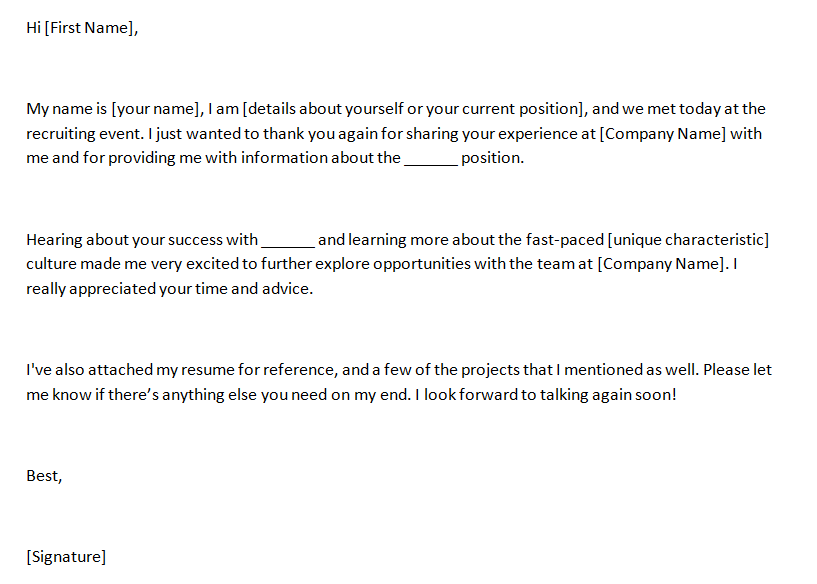
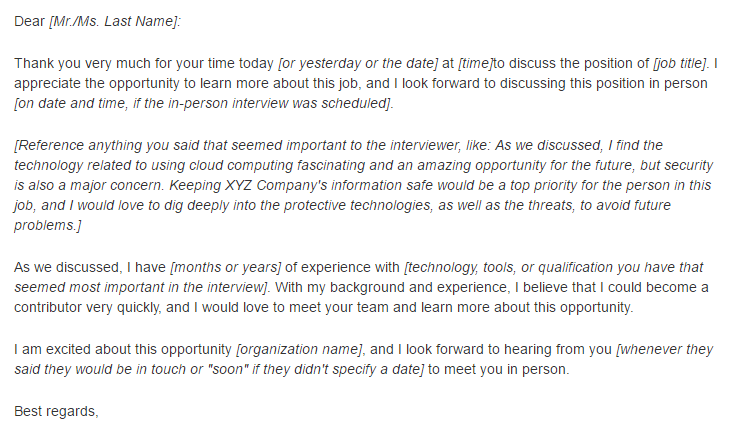
Some destinations may discuss application follow-up rather than specifically a phone-interview thank-you. Match the example to the stage you are in. A request for an interview after applying is different from thanking someone after a completed call.
Check the current resource and format at each destination. A download graphic can lead to an article, not necessarily a file. Do not assume that a pictured email is an editable document.
Use the samples as structure and write your own accurate details. The purpose is a respectful, relevant continuation of the conversation, not a promise that a particular phrase will secure the job.
Below Are Phone Interview Follow Up Email Samples

Phone interview follow-up questions
Must I know that the interview went well before thanking the interviewer?
No. A thank-you acknowledges the conversation and time given. It does not require a confirmed result.
Should I resend my entire résumé?
Not ordinarily unless requested. Keep the message focused and provide any specific information the recruiter asked for.
What if I gave an incorrect start date?
Send a concise factual correction through the appropriate contact route. Make the accurate date clear without a long explanation.
When should I ask about the result?
Follow the recruiter’s instructions and stated timeline. A later status enquiry is different from the initial thank-you, and there is no universal guaranteed interval.
Are the five previews all downloadable email files?
The links lead to different external resources and advice pages. Check each actual destination and adapt its content to your recruitment stage.