
A profit and loss statement template organizes income and expenses for a specified period. State the basis of the figures and distinguish actual results from forecasts. Check categories and source records so the resulting surplus or loss can be reviewed rather than inferred from cash movements alone.
Trace sales through a sales log, support expenditure with an expense report and examine cost assumptions in an cost analysis spreadsheet. Connect the figures to their sources while keeping sales, cash receipts and profit clearly distinguished.
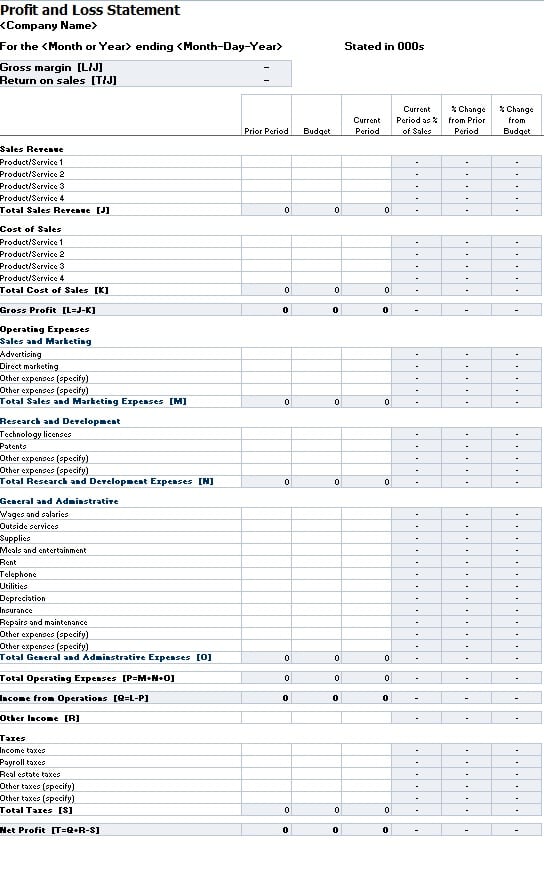
The original resource below is a DOCX destination with one linked image preview. Although the earlier introduction described Excel, the preserved file link names a Word document. Review the actual file before expecting spreadsheet formulas, automatic calculations, or an accounting-system export.
Use the statement alongside detailed records. An expense report organizes expenditure for review, a check register tracks account transactions, and a sales plan sets targets for future activity. A target is not actual income, and an account balance is not the same as period profit.
Identify the business and reporting period
Write the entity or business name and the exact start and end dates. “Monthly report” is incomplete when readers cannot tell which month or year it covers. A defined period establishes the scope of the figures and makes comparisons more meaningful.
Identify the reporting currency and accounting basis where appropriate. Consistent labels help readers understand what the amounts represent. If the report is prepared for a specific recipient or purpose, use the applicable requirements rather than assuming that a general sample is sufficient.
The Australian business.gov.au profit-and-loss guide describes a statement listing sales and expenses and notes monthly, quarterly, or annual reporting. The appropriate frequency and formal reporting obligations for your business depend on its actual circumstances and jurisdiction.
Distinguish actual results from forecasts
An actual statement uses the records for the defined period. A forecast uses estimates and assumptions about a future period. Both can use a similar layout, but the report should clearly identify which kind of figures it presents.
Do not insert a sales target into an actual statement simply because the target appears in a plan. A target expresses an intended result; actual income needs the relevant accounting records. Likewise, a planned cost does not establish that the cost was incurred.
If actual and forecast columns appear together, label them and preserve the calculation definitions. A variance can help describe the difference, but it should not blur the source of the figures. Any estimate used in a provisional report needs clear identification.
Build the report from traceable records
Use the appropriate bookkeeping or accounting records for the selected period and basis. Keep a connection between the summary line and the underlying detail. The statement can group many transactions, while the supporting records explain how each total was assembled.
An invoice, receipt, bank transaction, or expense report may supply relevant information, but these records serve different purposes. Avoid treating each document as a new separate expense when several describe the same transaction. A receipt and its matching payment can belong to one underlying event.
Resolve unclear entries through the real accounting process. A missing classification should remain a question for review rather than becoming whichever category makes the report look better. Unsupported figures can distort the summary even when the arithmetic is correct.
Use categories that fit the business
A simple layout may distinguish revenue, direct costs, and operating expenses. The appropriate categories depend on the business and its accounting requirements. A service business and a goods business may need different detail, so do not copy irrelevant headings merely to fill the page.
Keep categories understandable and consistent between periods when the comparison requires that consistency. If a category changes, explain the effect where useful. A larger total can reflect a changed grouping rather than a real increase in the underlying activity.
Avoid inserting an item into more than one category. A cost shown as a direct cost should not also appear in operating expenses unless the accounting treatment genuinely requires distinct amounts. The summary needs a coherent classification rather than a collection of independently copied totals.
Understand the subtotal sequence
In a simplified layout, revenue less the stated direct costs produces a gross-profit subtotal. Further expenses lead to a later result according to the report’s defined scope. Make the labels reflect what is included, especially where additional items remain outside a subtotal.
Do not label an intermediate result as final net profit when taxes, finance costs, or other applicable items have not been considered. The correct treatment depends on the business and accounting framework. Clear scope is more useful than a confident label attached to an incomplete calculation.
A template can organize subtotals, but it does not decide the accounting treatment. Review the categories and definitions before relying on the result. Formal reporting or a significant decision may require an appropriate accountant’s review beyond the layout.
Fictional example: a small service operation
Consider an invented service operation reporting five thousand units of revenue for a period. Its stated direct costs are one thousand five hundred, leaving three thousand five hundred in the simplified gross-profit calculation. These numbers illustrate arithmetic rather than a benchmark for a real business.
The example then records two thousand in the operating expenses included in its scope. Subtracting those expenses from the three thousand five hundred subtotal produces one thousand five hundred before any other applicable items excluded from the example. The label must describe that limited scope.
If another expense of three hundred belongs in the same period and category scope, the corresponding simplified result becomes one thousand two hundred. Omitting the expense would overstate that result even though the original subtraction was mathematically correct.
The example deliberately does not prescribe a tax calculation or establish a complete reporting framework. A real statement needs the actual accounting basis, classifications, records, and applicable adjustments. Replace fictional figures and review the report’s definitions before using the layout.
Keep profit distinct from cash movement
A profit-and-loss statement and a cash-flow statement answer different questions. The Australian business.gov.au cash-flow guide describes cash flow in terms of money coming in and going out. A period’s accounting result should not be treated as the account’s immediately available cash.
Under an accrual basis, timing differences can arise between recognizing an item and receiving or paying cash. The appropriate treatment depends on the selected basis and applicable rules. Do not change recognition simply to make the statement match a bank balance.
For a decision about payment timing, use the relevant cash records and forecasts as well as the profit summary. A positive reported result alone does not establish that a particular account has funds available for every planned payment.
Compare periods on a consistent basis
Use comparable dates and periods when reviewing changes. Comparing one month with a full quarter without explanation can create a misleading impression. Identify any difference in period length, business scope, or reporting basis that affects interpretation.
Look at both the amount and its context. A revenue increase may accompany a change in costs, and a changed expense total may reflect a different activity level. The report records results; it does not automatically explain every reason for the change.
If the business uses a prior-period column, check that the earlier figures correspond to the labels shown. Copying last year’s numbers under the wrong dates can undermine the comparison. Keep revised figures and any relevant explanations traceable.
Use the Word layout deliberately
A DOCX resource can provide a table and headings without automatic spreadsheet calculations. Inspect the actual content and calculate totals through a suitable process. Do not assume that typing numbers into a Word table produces a checked accounting report.
Adjust labels and space to fit the business’s legitimate categories. Keep the period, currency, scope, and subtotals visible. An attractive one-page layout should not force important explanatory notes to disappear when they are needed to understand the result.
If you transfer the structure into a spreadsheet, review formulas, added rows, signs, and references. This is a new working file that needs its own checks. The original Word file link does not establish that the transferred sheet has functioning calculations.
Review omissions and duplicate entries
Check completeness against the source records for the reporting period. Identify missing documents, unresolved classifications, or adjustments still awaiting review. A report should not look final when material questions about its contents remain open.
Review credit notes, refunds, and corrections through the applicable accounting process. Their treatment should preserve the connection to the underlying event. Avoid adding a payment record and its related invoice twice or overlooking a correction because it occurred on another day.
Recalculate each subtotal and confirm that the final figure uses the intended lines. A correct addition cannot compensate for an omitted expense or misclassified revenue. Review both the arithmetic and what the arithmetic includes.
Preserve the reporting record
Keep the completed statement distinguishable from the blank master. Record a version or preparation date when revisions could cause confusion. If a correction is made, identify the updated report so that recipients can understand which figures are current.
Retain the relevant supporting records according to the applicable requirements and business process. This guide does not set a universal retention period. The statement is a summary and should not be used to discard the documents needed to support its figures.
A useful profit-and-loss template brings order to a defined report. It cannot establish every legal obligation, guarantee a financial outcome, or replace appropriate accounting treatment. Its value comes from accurate records, clear scope, consistent categories, and transparent review.
Download Profit and Loss Statement Template:

Frequently Asked Questions
Is the original download an Excel spreadsheet?
The preserved destination names a DOCX file. Review it as a Word resource and do not assume that it supplies spreadsheet formulas.
Is profit the same as cash in the bank?
No. A profit-and-loss statement summarizes a period’s accounting result, while cash records show money movements and balances. The selected accounting basis affects timing.
Can the layout be used for a forecast?
It can organize a forecast if suitable, but label estimated figures clearly. A forecast should not be presented as actual results.
Which dates should appear on the statement?
Include the exact beginning and ending dates of the reporting period. Add other preparation or version dates when they help identify the report.
Does the template decide which expenses are deductible?
No. It organizes figures. Tax treatment and accounting classifications depend on the applicable rules and circumstances.
Can I compare monthly and quarterly totals directly?
Explain the different period lengths and scope. Use comparable periods where the purpose requires a meaningful like-for-like comparison.
Do all small businesses have the same reporting duties?
No. Obligations depend on jurisdiction, entity type, and circumstances. A general template does not establish an exemption or a universal requirement.
What should I check before sharing the report?
Review the period, currency, accounting basis, categories, supporting records, omissions, duplicate entries, subtotals, and any unresolved questions.


