
A logic model template is a visual planning tool used to show how the resources, activities, outputs, and expected outcomes of a program or project are connected. A blank logic model template provides a ready-made structure that can be customized for nonprofit programs, education projects, community initiatives, healthcare programs, research, grants, and organizational planning. Instead of creating a logic model from scratch, you can use a prepared logic model form and add the information relevant to your program.
A logic model helps turn a broad project idea into a clear sequence of actions and expected results. It can show what resources are available, what activities will be performed, what those activities will produce, and what short-term or long-term changes are expected.
What Is a Logic Model?
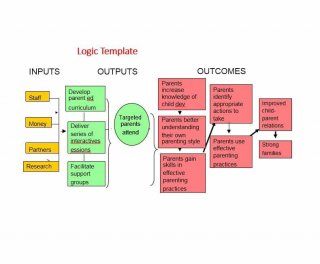
A logic model is a visual representation of how a program is expected to work. It connects inputs and resources with planned activities, outputs, outcomes, and long-term goals.
A logic model template can be especially useful when developing a new program because it encourages planners to think about the relationship between what they invest, what they do, and what they hope to achieve.
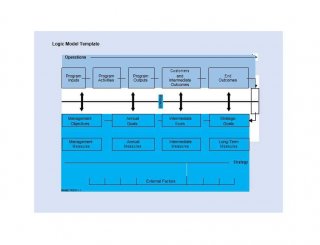
The exact structure can vary. Some logic models use columns for inputs, activities, outputs, outcomes, and impact, while others include assumptions, external factors, indicators, or evaluation measures.
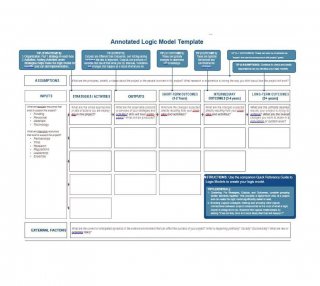
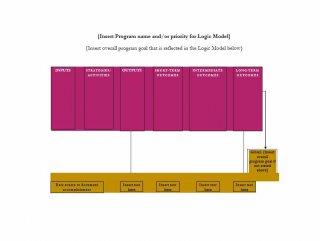
Blank Logic Model Template
A blank logic model template is useful when you want complete flexibility over the content of your program plan. You can enter your own resources, activities, outputs, short-term outcomes, long-term outcomes, and goals.
Blank templates are particularly useful for students, nonprofits, grant writers, program managers, educators, researchers, and organizations developing strategic initiatives.
Logic Model for Program Planning
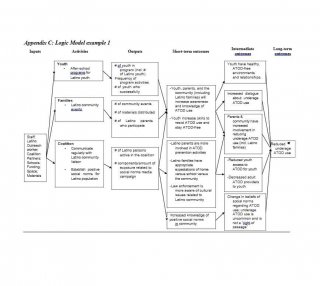
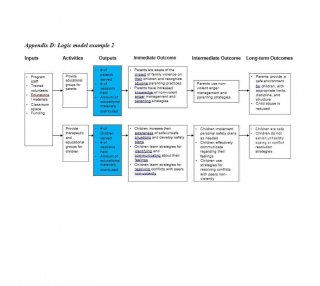
A program logic model can help an organization explain how a planned program is expected to produce results. For example, a community education program may use staff, funding, facilities, and educational materials as inputs. Workshops and training sessions become activities, while attendance and completed sessions may represent outputs. Improved knowledge or behavior can then be considered outcomes.
This structure makes it easier to communicate the purpose and expected results of a program to managers, funders, stakeholders, and project teams.
Logic Model for Grant Proposals
A logic model for grant proposals can help demonstrate how funding and resources will be used to achieve measurable results. Grant applications often require organizations to explain their activities, expected outcomes, evaluation methods, and impact.
A well-organized logic model can make these relationships easier to understand and can provide a foundation for developing performance measures and evaluation plans.
Logic Model vs. Theory of Change
A logic model and a theory of change are related but are not necessarily identical. A logic model generally provides a structured visual overview of how program inputs, activities, outputs, and outcomes are connected. A theory of change usually provides a broader explanation of why those activities are expected to create the desired change.
Both tools can be used together when developing, managing, and evaluating programs.
How to Create a Logic Model
Start by identifying the ultimate goal or desired impact of your program. Then work backward to determine the outcomes that should lead toward that goal. Identify the activities required to achieve those outcomes and the outputs that will result from those activities.
Finally, identify the resources or inputs needed to carry out the program. Review the complete model to make sure each stage logically connects to the next.
An editable logic model template can make this process easier because you can revise the content as the program develops. Keep the language specific and measurable whenever possible so the model can also support future evaluation.
Blank Logic Model Templates:

Frequently Asked Questions
1. What is a logic model template?
A logic model template is a structured visual document used to organize the relationship between program resources, activities, outputs, outcomes, and goals.
2. What is a blank logic model template?
A blank logic model template provides an empty framework that can be customized with the specific inputs, activities, outputs, outcomes, and goals of a project or program.
3. What are the main parts of a logic model?
Common components include inputs, activities, outputs, short-term outcomes, long-term outcomes, and impact. Some models also include assumptions, external factors, indicators, and evaluation measures.
4. What is a logic model used for?
A logic model can be used for program planning, grant applications, project management, evaluation, strategic planning, nonprofit programs, education initiatives, research, and community projects.
5. Can nonprofits use a logic model template?
Yes. A nonprofit logic model template can help organizations explain how their resources and activities are expected to produce measurable outcomes and long-term impact.
6. Can I customize a blank logic model?
Yes. An editable logic model can be customized with your program goals, resources, activities, outputs, outcomes, indicators, and other project-specific information.
7. Is a logic model the same as a theory of change?
No. They are related planning tools. A logic model generally maps program components and expected results, while a theory of change explains the reasoning behind how and why those activities are expected to produce change.
8. Can a logic model be used for a grant proposal?
Yes. A grant logic model can help communicate the connection between proposed activities, expected outputs, measurable outcomes, and the overall goals of a funded program.

