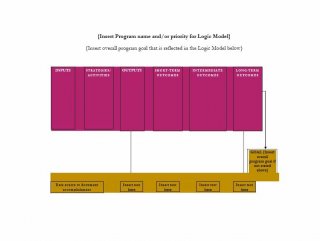
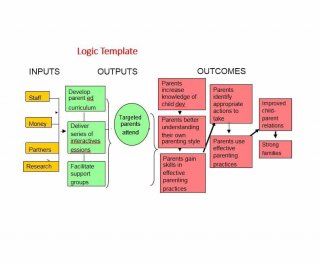
A blank logic model template explains how program resources and activities are expected to lead to outputs and outcomes. Define the audience, assumptions and measures before completing the diagram. The model presents a proposed pathway that can be tested rather than evidence that the results have occurred.
Turn the model into assigned steps with an action plan, schedule delivery in a daily schedule and explain supporting evidence in a white paper when a detailed case is needed. Keep activity counts, expected outcomes and observed results clearly distinguished.
The seven previews below link to six DOC files and one ZIP archive, based on the visible resource extensions. Compare the space available for activities, results and notes before choosing a layout. Inspect the actual document to confirm its editable structure; a preview does not establish the full set of fields or the contents of an archive.
Use the model for a defined program rather than a collection of unrelated organizational goals. Identify who the program serves, what it will do and why those activities are expected to help. The basic guide below is followed by a fictional workshop example, measurement questions and common gaps to check before sharing the model.
What Is a Logic Model?
A logic model is a visual representation of how a program is expected to work. It connects inputs and resources with planned activities, outputs, outcomes, and long-term goals.
A logic model template can be especially useful when developing a new program because it encourages planners to think about the relationship between what they invest, what they do, and what they hope to achieve.
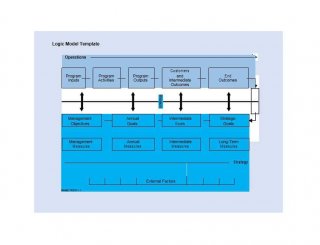
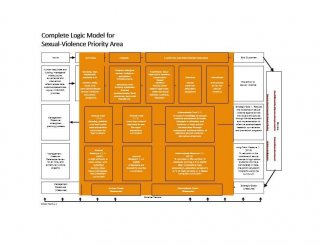
The exact structure can vary. Some logic models use columns for inputs, activities, outputs, outcomes, and impact, while others include assumptions, external factors, indicators, or evaluation measures.
Blank Logic Model Template
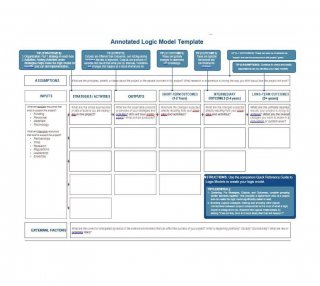
A blank logic model template is useful when you want complete flexibility over the content of your program plan. You can enter your own resources, activities, outputs, short-term outcomes, long-term outcomes, and goals.
Blank templates are particularly useful for students, nonprofits, grant writers, program managers, educators, researchers, and organizations developing strategic initiatives.
Logic Model for Program Planning
A program logic model can help an organization explain how a planned program is expected to produce results. For example, a community education program may use staff, funding, facilities, and educational materials as inputs. Workshops and training sessions become activities, while attendance and completed sessions may represent outputs. Improved knowledge or behavior can then be considered outcomes.
This structure makes it easier to communicate the purpose and expected results of a program to managers, funders, stakeholders, and project teams.
Logic Model for Grant Proposals
A logic model for grant proposals can help demonstrate how funding and resources will be used to achieve measurable results. Grant applications often require organizations to explain their activities, expected outcomes, evaluation methods, and impact.
A well-organized logic model can make these relationships easier to understand and can provide a foundation for developing performance measures and evaluation plans.
Logic Model vs. Theory of Change
A logic model and a theory of change are related but are not necessarily identical. A logic model generally provides a structured visual overview of how program inputs, activities, outputs, and outcomes are connected. A theory of change usually provides a broader explanation of why those activities are expected to create the desired change.
Both tools can be used together when developing, managing, and evaluating programs.
How to Create a Logic Model
Start by identifying the ultimate goal or desired impact of your program. Then work backward to determine the outcomes that should lead toward that goal. Identify the activities required to achieve those outcomes and the outputs that will result from those activities.
Finally, identify the resources or inputs needed to carry out the program. Review the complete model to make sure each stage logically connects to the next.
An editable logic model template can make this process easier because you can revise the content as the program develops. Keep the language specific and measurable whenever possible so the model can also support future evaluation.
Describe the intended pathway without claiming a result
CDC program-evaluation guidance connects activities with expected outcomes and distinguishes resources, outputs and contextual factors. It also notes that models can vary in detail and format. The important planning question is how the proposed work relates to the intended change, rather than whether the drawing contains a particular number of boxes.
Use wording that reflects the program’s stage. Plans to deliver and intends to improve describe a proposal. Delivered and observed improvement describe findings that need evidence. A blank model completed during planning should not read as a final evaluation report.
Identify the population and setting clearly. A workshop for adults using a community computer room has a different context from an online course offered to anyone. The model should give reviewers enough information to understand who can participate and what arrangements the proposed activities depend on.
A fictional digital-skills workshop model
Imagine a community center proposing four introductory sessions on using email and finding information online. Its inputs include an instructor’s time, a usable computer room, agreed session materials and administrative support. The planned activities are delivering the sessions and providing supervised practice during them.
The immediate outputs could be sessions delivered and participants attending. The intended short-term outcome could be participants demonstrating the defined tasks after the sessions. A longer-term aspiration might concern continued independent use, but that would need a separate suitable follow-up plan before the center could claim it occurred.
These details are an invented planning example, not an evaluation of a real program. They illustrate why delivery and participant change are different. Four sessions delivered can be a completed output even if the desired learning result has not been established.
Define what a count actually counts
Decide whether an attendance figure means visits, unique people, registrations or completed participation. Ten attendees appearing at four sessions can create forty attendance occurrences, but that does not mean forty different people took part. The measure’s definition should be visible in the evaluation notes.
An attendance sheet can support a record of who attended each session under the program’s process. It does not by itself measure the ability to use email or demonstrate a task. If learning is an intended outcome, identify how that outcome will be assessed.
Set the period for each measure. A count at the end of the sessions and a follow-up observation later answer different questions. The model can show both if they serve the plan, but the team needs a practical way to collect each one.
Match outcomes with suitable evidence
Write the intended change clearly enough that the team can discuss how it will be observed. More confidence is different from successfully completing a task. If both matter, define them separately instead of treating one general satisfaction response as proof of all outcomes.
A feedback questionnaire offers examples of organizing responses, though the restaurant-focused questions on that page must be adapted to the program’s actual topic. Participants can report whether instructions were clear or whether they found a session useful. Those responses should be identified as feedback rather than automatically treated as an objective skills test.
For a task demonstration, state the task and assessment approach in the program’s evaluation plan. Consider what support is allowed and how observations will be recorded consistently. The model can refer to that plan without squeezing every assessment instruction into a result box.
Identify assumptions and external influences
An assumption might be that participants have access to the equipment needed for practice or can attend the planned sessions. Make important assumptions visible so a reviewer can ask whether they are reasonable. An assumption hidden in an arrow is difficult to examine.
An external factor might be a change in access to the venue or a service the program relies on. Record factors that materially affect the pathway, while keeping the model focused. A long list of every imaginable problem can obscure the conditions that are actually important.
For the fictional workshop, the team might identify working computers and participant access to the relevant services as conditions to check. That does not establish that those conditions will always remain true. The team should decide how a change would affect the activities or intended results.
Connect the model with the proposal and budget
A proposal form can organize a request for work or resources, while the logic model explains the program’s intended pathway. Make the documents consistent: activities shown in the model should have an appropriate resource basis in the plan, and requested resources should support identifiable activities.
If four sessions are planned, a budget prepared for two sessions needs explanation or revision. The drawing should not promise activities that the operational plan cannot support. Similarly, a proposal should not add a claimed outcome that the model and evaluation approach do not address.
Check the funder’s actual instructions where the model supports an application. Some formats may require particular sections, limits or definitions. The downloadable layout is a starting point; it does not establish that the application meets a specific funder’s requirements or will receive support.
Revise the model as the program becomes clearer
Keep a version date and distinguish a planning draft from the version approved for use. If the program changes from four sessions to another format, revisit its activities, outputs and expected outcomes together. Changing only one box may leave an inconsistent pathway.
Record significant reasons for revisions in a companion note when needed. A reviewer should be able to tell whether an outcome was clarified, an activity removed or an assumption found unrealistic. Version history can help a team understand why the current plan differs from the original proposal.
Review the final model with the people responsible for delivery and evaluation. Ask whether the activities can be carried out, the measures can be collected and the reasoning is understandable. A useful model helps the team examine and communicate the program rather than merely presenting an attractive series of arrows.
Blank Logic Model Templates:

Blank logic model template FAQs
How many formats are linked in the collection?
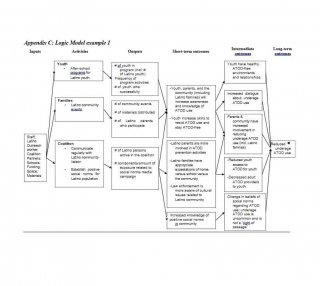
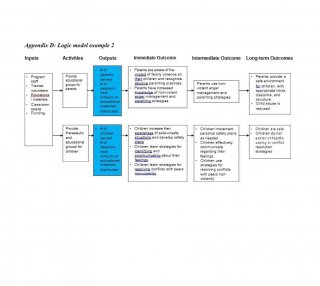
The seven previews have six DOC links and one ZIP link. Inspect the actual document or archive for its structure and compatibility. The visible extensions do not establish that every layout has identical fields.
Is an output the same as an outcome?
An output concerns the products of the activities, while an outcome concerns intended change. In the fictional workshop example, sessions delivered and attendance are outputs; demonstrating a defined skill is a different result needing suitable assessment.
Does the diagram prove the program caused a change?
No. A planning model explains an expected pathway. Observed results and causal conclusions require an appropriate evaluation and evidence. Keep intended outcomes distinct from findings about a completed program.
Must every model use the same columns?
No. Formats and levels of detail can vary. Choose or adapt a layout that makes the program’s activities, intended results and relevant conditions understandable, while following any actual application or evaluation requirements.
What should I review before sharing it?
Check the population, activities, resources, result definitions, assumptions and measurement plan. Compare the model with the proposal and operational plan. Label the version and program stage so readers can distinguish a draft expectation from a reported result.